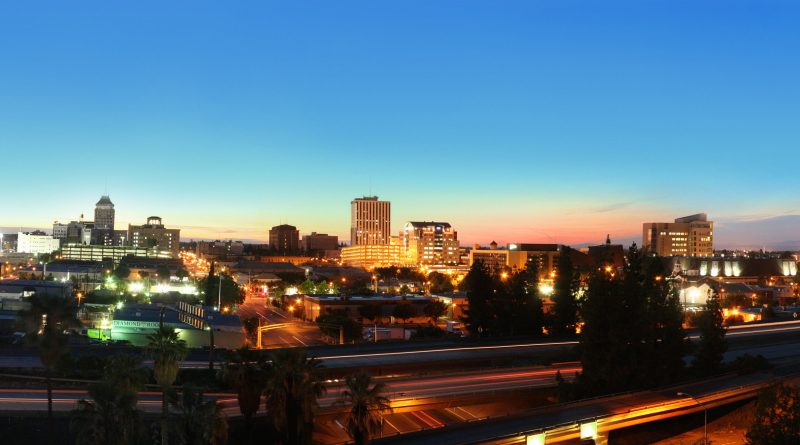
Fresno skyline — Photo: JMora24 — CC BY-SA 4.0, via Wikimedia Commons
Measure S Transportation Tax Heads to November Ballot — Here’s What Your Family Needs to Know
Fresno County families will decide this November whether to keep paying a half-cent sales tax for roads, buses, and bike paths — a 30-year, $7.4 billion choice that will shape how your kids get to school, whether your street gets fixed, and how much of your grocery bill goes to transportation.
Measure S, cleared for the ballot by a judge’s ruling, would replace the expiring Measure C tax that’s been on the books since 1986. The new version shifts money away from freeways and toward neighborhood streets, school-route safety projects, and bus service — a fundamental change in where transportation dollars go.
“We want to earn voter support and their trust for this measure,” said Veronica Garibay, co-director of Leadership Counsel for Justice and Accountability, who was involved in crafting the measure. “Our strategy and our plan is to talk directly to the voters, even door to door, and make the case for why they should support Measure S.”
But Fresno County Board of Supervisors Chairman Garry Bredefeld is campaigning against it. “Between now and Nov. 3, we will make the case directly to voters about how their hard-earned money will be misused for 30 years,” Bredefeld said, calling it “a betrayal of every resident who has waited decades for their roads to be fixed.”
The ballot fight itself was contentious. After supporters gathered enough signatures to qualify the measure, the county Board of Supervisors ordered a 30-day impact report — a move that would have delayed the vote until March 2028, after the current tax expires. State Assemblymember Esmeralda Soria then authored a bill requiring the measure be placed on this November’s ballot instead. The county sued the state. Judge Jonathan Skiles ruled the state law valid, ending the legal battle.
The biggest shift from the old tax to Measure S is this: 65% of revenue now goes to existing neighborhood roads, compared to 34.6% under Measure C. Regional projects like freeways drop from 30.4% to just 5%.
Each of Fresno County’s 15 cities and the county itself would get $400,000 a year for road maintenance. The rest gets divided by an “80/20” formula — 80% based on population, 20% on how many road miles each city maintains.
“Measure C has historically emphasized building out freeways and some of our major roads,” said Andy Levine, a Fresno Unified School District trustee serving as campaign manager for Measure S. “That choice has come at the expense of investing in and improving our local roads, which is why across all of the listening and engagement we’ve done for the last two years, residents have been loud and clear that they wanted to see a redirection of priority to local existing neighborhood roads.”
Supervisor Nathan Magsig worries the small regional-project share will make it “difficult, if not impossible” to secure state and federal matching funds for large roadway improvements.
Measure S limits cities to spending only 5% of their funds per year on road-expansion projects — and only if every street in that city reaches a “Pavement Conditions Index” score of 65 or above (considered “fair”). Right now, Fresno’s 1,800 miles of roads average a score of 60. Mendota’s roads score 36.
Critics say that threshold is impossible to meet. “They’ll never have the opportunity to improve Manning Avenue out to Parlier or do something out to Mendota,” said Henry Perea, a former city councilman and county supervisor who backed a competing measure that failed to qualify. “That work will never ever happen in the next 30 years if this measure passes.”
Measure S also bars using local-road money for new streets in “new growth areas” or “new town developments” — what supporters call a “no-sprawl” rule.
The measure mandates at least 120 miles of new bike paths or protected bike lanes by 2057 — at least 84 miles in Fresno and Clovis, at least 36 in unincorporated areas. It requires at least 150 safety projects “designed to improve walkability, safety and connectivity for students and reduce serious injuries and fatalities.”
“The plan is about safety,” Garibay said. “Get people from point A to point B safely, whether they walk, bike, ride or roll.”
A quarter of the tax revenue — 25% — goes to public transit, up slightly from 24% under Measure C. Fresno Area Express gets 70% of transit funds, Fresno County Rural Transit gets 20%, and Clovis Transit gets 10%. To keep receiving money, each agency must show year-over-year improvements in ridership, service frequency, wait times, and on-time performance.
Another 4% of revenue pays for free bus fares for seniors 62 and older, people with disabilities, active-duty military, veterans, students, and children.
Bredefeld called the measure “a 30-year, multi-billion dollar blank check designed to get people out of their cars and onto buses, bikes and scooters.” Supporters say the goal is “to make sure that there are all options and modes of transportation for people to be able to get to everywhere they need to get to,” Garibay said.
Oversight changes too. The Fresno County Transportation Authority, which managed Measure C funds, would be eliminated. The Fresno Council of Governments would take over, with annual independent audits required from each city and the county. A Citizens Oversight Committee — 11 members selected by COG’s policy board — would have authority to review audits, recommend spending, and hold quarterly public meetings. Under Measure C, residents lacked any real power in oversight.
Because Measure S is a citizen-led initiative, it needs only a simple majority to pass. Previous versions of Measure C required two-thirds approval, including a failed renewal attempt in 2024.
The Breakdown
- What it is: A half-cent sales tax projected to raise $7.4 billion over 30 years, replacing the expiring Measure C tax that’s been in place since 1986.
- Where the money goes: 65% to existing neighborhood roads (up from 34.6%); 25% to public transit; 5% to regional projects like freeways (down from 30.4%); 4% for free bus fares for seniors, people with disabilities, military, veterans, students, and children; 1% for administration.
- Road expansion limits: Cities can spend only 5% per year on road-expansion projects, and only if every street reaches a “fair” pavement rating (PCI score 65 or above — a scale measuring pavement quality where 65 is considered “fair” condition). Fresno’s roads average 60; Mendota’s average 36.
- Required bike/pedestrian projects: At least 120 miles of bike paths or protected lanes by 2057, plus at least 150 safety projects for students and pedestrians.
- No-sprawl rule: Local-road money cannot be used for new streets in new-growth areas or new-town developments.
- Bus service requirements: Transit agencies must show year-over-year improvement in ridership, frequency, wait times, and on-time performance to keep receiving funds.
- Oversight structure: Eliminates the Fresno County Transportation Authority; shifts responsibility to Fresno Council of Governments, with annual audits and an 11-member Citizens Oversight Committee holding quarterly public meetings.
- Threshold to pass: Simple majority (50% + 1), because it’s a citizen initiative. Previous Measure C efforts required two-thirds approval.
What This Means for You
This is a vote about how safe your kids’ route to school is, whether your street gets paved, and whether your aging parent can afford to take the bus. It’s also a vote on what kind of growth Fresno County prioritizes — fixing what’s already built, or expanding outward.
If Measure S passes, you’ll keep paying the same half-cent sales tax you’ve paid since 1986, but far more of it will go toward the street in front of your house, the crosswalk your child uses, and the bus route your family might actually rely on. If it fails, the current tax expires June 30, 2027, and there’s no replacement — meaning significantly less money for roads, transit, and safety projects across the county.
The fight over this measure has already cost taxpayer dollars — the county sued the state to keep it off the ballot, a lawsuit Supervisor Bredefeld defended but that the county ultimately lost. That’s public money spent on a legal fight over whether you get to vote at all, rather than on the roads or services the tax is supposed to fund.
Your choice in November will decide not just how much longer you wait for your street to be fixed, but whether the county’s transportation priorities match what families who actually use these roads, sidewalks, and bus stops need — or whether the old freeway-first model continues for another 30 years.
What You Can Do
Measure S will appear on the November 3, 2026 ballot. You can vote early by mail or in person on Election Day.
What to Watch
Supporters say this measure reflects two years of community input demanding safer neighborhood streets and better transit. Opponents, including two sitting county supervisors, say it locks in the wrong priorities for 30 years and makes major road projects “difficult, if not impossible.” Both sides will be campaigning hard between now and November 3.
The real question is whether the priorities written into Measure S actually match what your family experiences every day. Is the street in front of your house — the one your kids play on, the one you drive to work on — in worse shape than the freeway? Do you know a senior who can’t afford the bus fare, or a child who has to cross a dangerous intersection to get to school? That’s what 65% for neighborhood roads and 25% for transit is supposed to address.
But here’s what the official story doesn’t tell you: Measure S is fundamentally a choice about who benefits from public spending. A measure that mandates bike lanes and limits road expansion is betting that Fresno County’s future is denser, more walkable, more transit-dependent — not more sprawled out.
That bet might be right for the climate, for public health, for housing affordability. It also might not match how most families in this county actually live and work right now.
If your job, your kids’ school, your grocery store, your doctor are all miles apart and there’s no bus route that connects them, 120 miles of bike lanes won’t change your life — repaving the potholed road you drive on will.
If you’re a farmworker in Mendota where roads score 36 out of 100 and there’s no transit at all, it’s fair to ask whether this measure actually prioritizes you, or whether “equity” means something different when written by advocates in Fresno.
The measure’s restrictions — the PCI threshold cities likely can’t meet, the no-sprawl rule, the spending caps — aren’t accidents. They’re designed to prevent exactly the kind of growth some officials and developers want.
Whether that’s wise long-term planning or a 30-year straitjacket depends on whether you think Fresno County’s current development pattern is the problem or the reality.
Watch how the campaign unfolds. Are the voices you hear from people whose streets are actually failing, whose kids are actually at risk walking to school? Or are you hearing from advocacy organizations, union-backed campaigns, and elected officials with their own transportation-funding priorities? Both might be right — but they’re not the same thing.
One more thing: Measure C failed renewal in 2024 under a two-thirds requirement. Measure S only needs 50% + 1 because it’s a citizen initiative. That’s a lower bar, yes — but it also means this version of transportation funding, with all its trade-offs, could pass even if a large minority of voters think it’s the wrong approach. Thirty years is a long time to lock in a policy you’re not sure about.