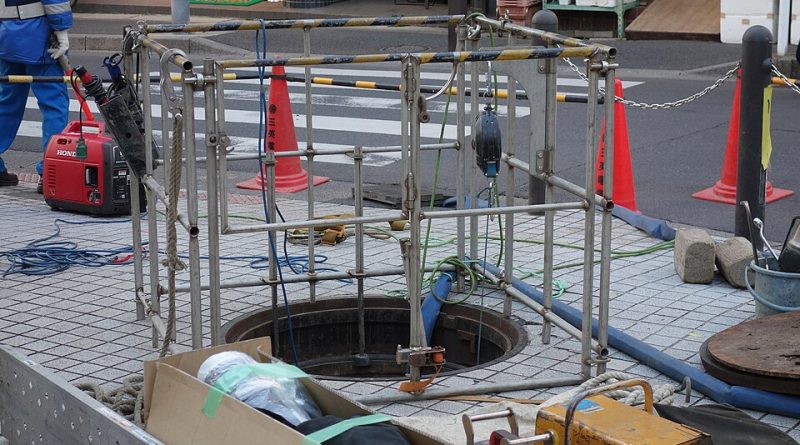
Fresno Council Approves $189K Add-On to Sewer Inspection Contract — No Timeline Extension — Photo: Ka23 13 — CC BY-SA 4.0, via Wikimedia Commons
Fresno Council Approves $189K Add-On to Sewer Inspection Contract — No Timeline Extension
The Fresno City Council approved a $189,820.50 contract add-on on March 27, 2025, for National Plant Services Incorporated, raising the Year 3 total for a citywide sewer inspection contract to $1,020,754.71. The change order compensates the Long Beach-based contractor for additional traffic control requirements — no timeline extension was granted.
The contract covers closed-circuit television inspection of large sewer mains across various council districts. The original Year 3 award in April 2024 was $830,934.21, meaning this adjustment represents a 22.8% increase mid-contract.
Staff cited “adjustments of all bid item unit costs” to offset the added traffic control work. The material provides no detail on what triggered the additional requirements, what the traffic control entails, or why unit costs across the board required recalibration rather than a line-item addition for the specific scope change.

The Breakdown
- The council vote occurred March 27, 2025, on the consent calendar — bundled with other items, no separate debate.
- National Plant Services held the original Year 3 contract at $830,934.21; the add-on brings the revised total to $1,020,754.71.
- The stated reason: “adjustments of all bid item unit costs to compensate for additional traffic control requirements.”
- No working days added — the contractor absorbs the added scope within the existing timeline.
- The contract covers CCTV inspection of large sewer mains citywide, a requirements contract spanning multiple years (this is Year 3).
What This Means for You
This is $189,820.50 of taxpayer money allocated by your city council to adjust a sewer inspection contract mid-stream. The council approved it without separate discussion as part of a consent-calendar bundle. If you’re evaluating how your council manages capital contracts — whether they flag cost adjustments for scrutiny or route them through as routine procedural approvals — this vote is a data point. The decision also affects how much of the city’s Public Utilities budget goes toward inspection overhead versus other maintenance or infrastructure priorities you might weigh when those officials stand for reelection.
What to Watch
The material leaves three questions unanswered, each one a standard lens for evaluating contract change orders. First: what specifically changed to require additional traffic control, and why wasn’t that scope anticipated in the original bid? Mid-contract adjustments are common when field conditions surprise, but “additional requirements” with no stated cause is thin justification for a 22.8% increase. The staff report or project records would show what drove this.
Second: why did “additional traffic control requirements” necessitate adjusting “all bid item unit costs” rather than a standalone line item for the added work? That phrasing suggests the entire cost structure of the contract was recalibrated, not just the traffic control piece — if so, what margin or risk allocation got renegotiated in the contractor’s favor, and was that the most cost-effective path available to the city? The bid file and change-order breakdown would answer that.
Third: the contractor gets more money with no additional time — a compressed timeline with expanded scope typically means higher unit rates, which is exactly what this change order describes. That’s a real cost trade-off: the city keeps the schedule but pays a premium to do it. Was that trade-off explicitly modeled against the alternative of extending the timeline at lower rates, or was “no additional working days” treated as non-negotiable? The Capital Projects Department’s cost-benefit analysis, if one exists, would show whether this was the least-cost option or simply the fastest one.