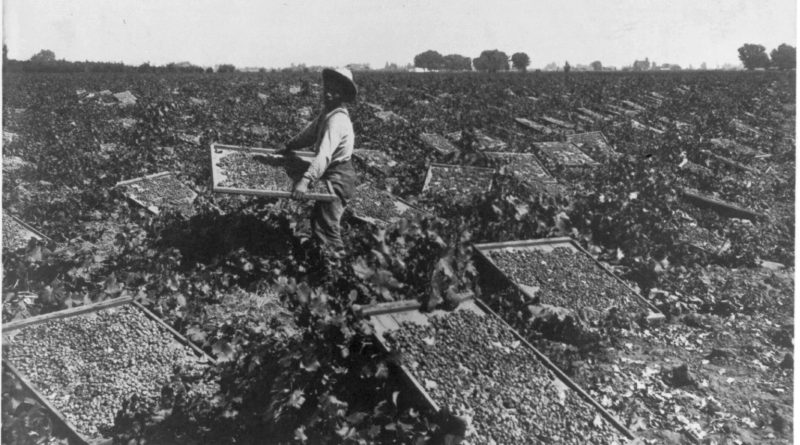
Fresno County agriculture — Photo: Miscellaneous Items in High Demand, PPOC, Library of Congress — Public domain, via Wikimedia Commons
Fresno Council Votes to Convert 9,000 Acres of Farmland Into 45,000 Homes
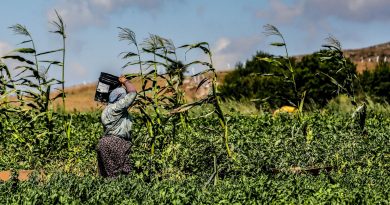
Fresno City Council voted December 18 to approve a plan converting roughly 9,000 acres of unincorporated farmland on the city’s southeast edge into residential and commercial development — space for up to 45,000 new homes and as many as 37,000 jobs.
The Southeast Development Area plan passed “as amended,” though the material doesn’t state the vote tally or what amendments were made. The decision follows nearly two decades of planning for the area, originally called the Southeast Growth Area when it entered the city’s planning sphere in 2006.
The Council also certified the environmental impact report, which found the project would cause unavoidable harm to farmland, air quality, aesthetics, and noise levels even after mitigation. Staff recommended the Council adopt a “statement of overriding considerations” — a finding that the project’s benefits outweigh the environmental damage it will cause.

The plan spans land generally bounded by the Gould Canal to the north, McCall and Highland Avenues to the east, Jensen and North Avenues to the south, and Locan, Temperance, and Minnewawa Avenues to the west. Full buildout is projected to take more than 25 years, depending on market demand.
The Breakdown
- The plan creates ten new land-use categories: Regional Town Center, Community Town Center, Neighborhood Town Center, Office Center, Flexible Research & Development, Mixed Residential, Neighborhood Residential, Rural Residential, Rural Cluster Residential, and Institutional.
- Development will require new water, sewer, and transportation infrastructure. A public facilities financing report was prepared but the material doesn’t state how that infrastructure will be funded or what it will cost the city.
- The environmental review found significant, unavoidable impacts to agricultural land (converting 9,000 acres of farmland), air quality, aesthetics/light/glare, and noise. The Council adopted findings that housing need, job creation, and General Plan implementation outweigh those harms.
- Staff recommended focusing initial development on “South SEDA,” the southern portion of the plan area, under a “Consolidated Business Park Alternative” that would mean 2,100 fewer homes and 1,000 fewer jobs than the full plan allows.
What This Means for You
This vote locks in the framework for where Fresno grows for the next generation — not infill in existing neighborhoods, but outward expansion into what is currently farmland.
The plan’s stated goals include “housing affordable to a range of household incomes,” but the material provides no required affordability percentage, income target, or enforcement mechanism — the claim is policy language, not a binding commitment.
What to Watch
The material states the plan would provide housing “affordable to a range of household incomes” and promote “complete communities” with walkable, mixed-use town centers. Those are the same goals the city has articulated for multiple planning efforts over the past decade. The question is whether this one delivers.
A few things worth watching:
Why is public planning capacity and infrastructure investment going toward enabling 9,000 acres of new construction rather than making the city’s large existing housing stock more affordable or its existing neighborhoods more complete?
Who actually benefits from a project like this? The residents it’s framed around, or the developers who build it?
Concentrated housing developments on a city’s edge are a pattern seen in many cities’ planning histories. Whether a project like this stabilizes a neighborhood over time or concentrates poverty and strains public services is something worth monitoring as development proceeds.
Why did the environmental review find the damage unavoidable even after mitigation? Converting 9,000 acres of farmland is permanent. The Council’s finding that job creation and housing goals “override” that harm is a policy choice — one a voter can agree or disagree with, but not one that makes the farmland come back.