
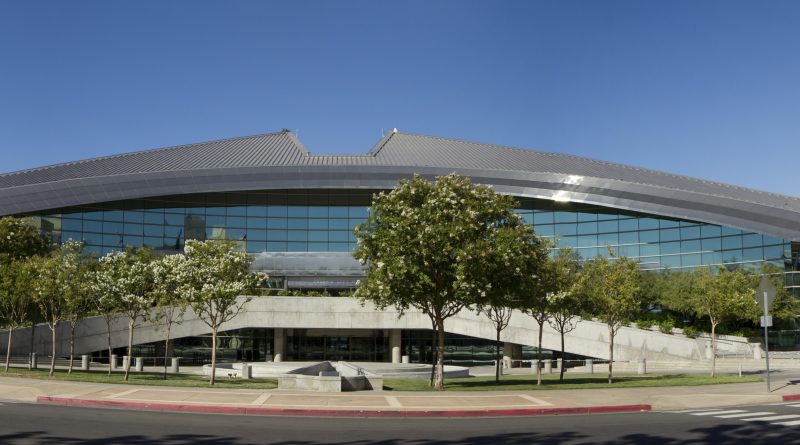
Fresno City Hall — Photo: Jeff Stiefer — CC BY-SA 3.0, via Wikimedia Commons
Fresno County Approves $10.5 Million Phone System Financing Without Competitive Bidding
The Fresno County Board of Supervisors approved a $10.5 million financing agreement on January 27, 2026, to upgrade the county’s aging phone infrastructure to a cloud-based Cisco Webex system. The board waived competitive bidding requirements and debt committee review to secure zero-percent financing before a January 31 deadline.
The five-year agreement with Cisco Systems Capital Corporation finances replacement of phone equipment scheduled to lose vendor support by December 2027. Chief Information Officer Mike Kerr told supervisors the existing on-premises system faces “a greater number of system outages, increased security risk, and cost exposure” as Cisco phases out support.
Of the total financing amount, approximately $5.6 million covers the phone system upgrade itself — $1.9 million more than maintaining the current system until end-of-life. The remaining $5 million finances support contracts and consolidation of existing Cisco software licensing and cybersecurity agreements. Cisco Capital offered a $1.3 million credit against prior agreements to offset upgrade costs.

The board suspended normal competitive bidding rules, finding that Cisco Capital was “the only financial institution offering a zero annual percentage rate.” Staff warned that waiting until the next fiscal year would risk losing both the zero-percent financing and the $1.3 million credit. The General Services Department purchasing division reviewed and approved the sole-source justification.
Supervisors also waived submission to the county’s Debt Advisory Committee, a panel that typically vets all multi-year financing proposals before board approval. Staff cited the need to meet Cisco Capital’s January 31 deadline “to leverage cost savings and ensure a seamless transition.”
The county experienced a countywide network outage in July that limited services and affected phone lines, though staff reports do not directly link that incident to the phone system replacement decision.
The new cloud-based Webex system will allow county employees to make and receive calls using desk phones, computers, or mobile devices. Because Cisco hosts the system remotely, the county will maintain fewer on-site servers and reduce hardware refresh cycles.
Costs will be recovered through chargebacks to county departments using the system. The Information Technology Services Department budget already includes appropriations for the payments through the agreement’s 55-month term.
The Breakdown
- Total financing: $10,545,634 over approximately 55 months at zero-percent interest
- Phone system upgrade cost: $5,581,000 (compared to $3,664,200 to maintain existing system until vendor support ends)
- Support and software consolidation: $5 million
- Cisco Capital credit applied: $1,315,000
- Vendor support for current system ends: December 31, 2027
- Agreement effective date: February 1, 2026
What This Means for You
This vote demonstrates how your elected supervisors handle technology procurement when staff claim time pressure. The board chose to bypass two review processes — competitive bidding and debt committee vetting — to meet a vendor’s financing deadline, accepting the vendor’s assertion that it was the only source of zero-percent financing without testing that claim in the market.
The decision commits county departments to repaying $10.5 million through internal chargebacks over the next five years. Whether the time pressure justified waiving normal oversight procedures is a question worth considering when evaluating how the board manages major technology contracts and protects against vendor lock-in.
What to Watch
The real question this financing raises: why does a zero-percent offer from the vendor selling the equipment require abandoning competitive bidding? The county is borrowing from Cisco Capital to purchase Cisco equipment.
Zero-percent financing sounds appealing, but it’s worth asking whether the $5.6 million system price already builds in the cost of that “free” financing, and whether a competitive process might have surfaced either lower equipment costs or independent financing that made the math work differently. When a vendor offers zero-percent terms, someone is paying the financing cost — the question is whether it’s reflected in a higher purchase price the county never compared against alternatives.
The staff report frames the choice as “accept this deal or lose the savings,” but offers no documentation of what competing bids might have shown. Whether the county actually saved money, or simply locked itself into a sole-source relationship on a tight deadline, will become clear as the system performs and costs are tracked against the projections over the next five years.
The county experienced a network outage in July that limited services and affected phone lines. The staff reports to the board in January made no mention of such an outage, which occurred months after the financing decision was approved.