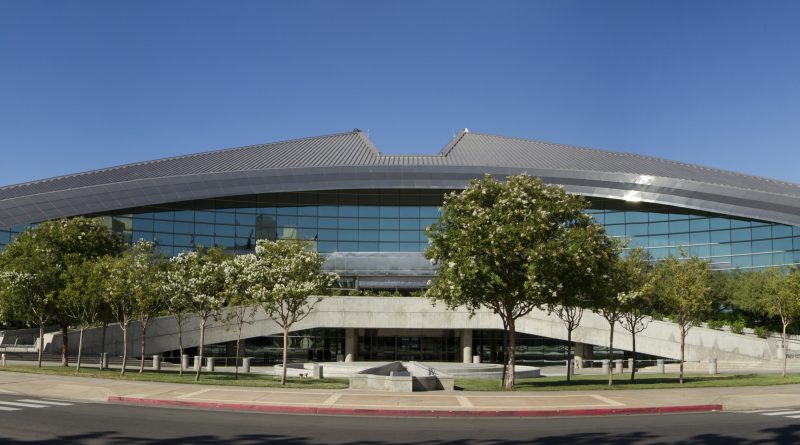
Fresno City Hall — Photo: Jeff Stiefer — CC BY-SA 3.0, via Wikimedia Commons
Fresno City Council President Pushes Three Ballot Measures for November
Fresno City Council President Nelson Esparza wants voters to decide three things in November: how the city gets its transportation money, whether taxpayers will pay for roads and sewers in the Southeast Development Area, and whether to close what he calls a loophole in term limits.
Esparza held press conferences last week introducing the measures. All three go before the full council Thursday.
The first measure is a response to the county’s rejected transportation tax — Measure C failed, leaving a $54 million gap. Esparza’s proposal would keep the same tax rate but redirect the money straight to the city instead of sharing it with the county.

“They’ll pay the same amount of sales tax that they do now, but see increased service levels because we won’t be sharing the money with the rest of the county at that point,” Esparza said.
The second measure targets the Southeast Development Area — SEDA. It would block the city from using general fund money to build infrastructure in most of the area. The South SEDA portion, driven by Mayor Jerry Dyer, would be exempt.
Esparza framed it as fiscal discipline. “This measure that I’m bringing forward is really going to ensure the city stays fiscally solvent by not overinvesting, overextending, and trying to build the infrastructure out there.”
The third measure addresses term limits. Esparza says there’s a loophole that lets city officials sit out, then come back for another eight years, and repeat.
“So we’re going to see about putting a stop to that loophole within the city charter,” he said. He planned to formally introduce that one Monday morning.
The Breakdown
- The first measure maintains the current sales tax rate but redirects revenue from the county to the city — claiming to increase city services without raising taxes on residents.
- The second measure prohibits using general funds for infrastructure in most of the Southeast Development Area, except the South SEDA portion associated with the mayor.
- The third measure closes what Esparza describes as a term-limit loophole allowing officials to cycle in and out of office repeatedly.
What This Means for You
You’ll be voting on these in November if the council approves them Thursday. The first one determines whether Fresno keeps transportation money that used to go countywide. The second one decides whether your tax dollars pay to build roads and sewers in SEDA. The third one changes how long someone can hold office — and when.
What You Can Do
The full council votes on whether to put these on the ballot this Thursday. If you have a position on any of them, that’s the meeting to watch. Contact information for your council district representative is available on the city’s website.
What to Watch
The sales-tax measure raises a straightforward question: if the county couldn’t pass a transportation tax and Fresno is now going to keep that money instead of sharing it, what happens to the roads and transit systems in the rest of the county that were supposed to get a share? Esparza frames this as “increased service levels” for the city, but service levels don’t increase just because you stop sharing — they increase if you actually spend the money differently. What’s the plan?
The SEDA measure is pitched as fiscal responsibility — not overextending on infrastructure. But prohibiting general-fund spending on most of SEDA while exempting the mayor’s South SEDA project isn’t a blanket fiscal rule, it’s a specific carve-out. Why is one part of the development area worth public investment and the rest isn’t? And if the idea is that developers should pay for their own infrastructure, why doesn’t that apply equally?
The term-limit measure is the one to watch most carefully. Esparza describes a “loophole” but doesn’t say what the new limit would be or when it takes effect. Timing matters — does this apply to current officeholders or only future ones? Does it start counting terms from now or from when someone first took office? A term-limit change can be genuine reform or a way to lock in or lock out specific people, depending on how it’s written. The details aren’t public yet.