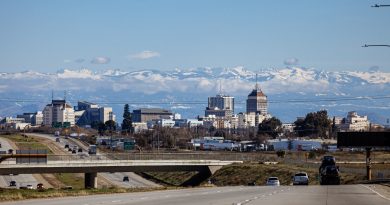

Fresno skyline — Photo: Etherealsmoke — CC BY-SA 4.0, via Wikimedia Commons
Fresno City Council Debates $600K Price Tag for Four November Ballot Measures
The Fresno City Council is weighing whether to spend up to $600,000 in general-fund dollars to place four proposed measures on the November ballot — a cost some councilmembers say would be better spent fixing sidewalks and roads that residents have waited decades to see repaired.
Each of the four measures carries an estimated $150,000 price tag to put before voters. The proposals cover extending city leadership term limits, changing the redistricting process, addressing future transportation funding, and setting guardrails for the Southeast Development Area Plan (SEDA) — the last of which the council voted 4-3 on Thursday to pull from the agenda entirely, leaving it only one more week to make the November ballot.
The decision on whether the cost is justified has split the council. Councilmember Mike Karbassi defended the spending, particularly for a proposed Measure C sales tax tied to future city funding needs. “If you think potholes are bad now, when we lose $50 million next year without any funding source to backfill that, there are going to be cuts, and the public is going to feel that,” Karbassi said, warning that the city faces the expiration of the countywide transportation tax. He argued that spending $150,000 could be a worthwhile investment if the measure generates significant revenue: “Sure, you can fix one section of sidewalk or one section of road for $150,000, but if we don’t pass it, there’s going to be a lot of roads that get zero.”
Councilmember Brandon Vang rejected that calculus outright. “Whether it’s $150,000, $450,000 or $600,000, I’d rather put it on infrastructure that goes to fix a sidewalk or a street and many of my people in District 5 have been waiting for that for decades,” Vang said. Councilmember Annalisa Perea raised similar concerns: “I would much rather see that money spent fixing sidewalks or trimming city trees.”
Perea also noted that some of the measures were introduced just days before the vote, with council members receiving full information only on Monday. When asked about funding sources, Perea said, “I know one of the authors has committed to finding the money. But at this point, my understanding is there is no dedicated funding source.” Karbassi confirmed the cost would come from the general fund — “which is exactly the funds that we are looking to shore up from the measures.”
The SEDA ballot initiative — formally titled “No Debt on Development” and introduced by Council President Nelson Esparza — faced particular resistance. Vang cited the council’s still-outstanding request, made seven months ago in December, for a financial report from Mayor Jerry Dyer’s administration on how to pay for SEDA’s first phase, which is in Vang’s district. A Fresnoland report showed that first phase, touted by Dyer as affordable, has $440 million in infrastructure costs not covered by existing developer fees, and that the ballot initiative, if approved by voters, would open the door for subsidies for that industrial-focused phase.
Vang also cited letters threatening lawsuits if the initiative were to pass: “My office, the council members and the mayor’s office have received letters threatening to move forward with lawsuits with regards to this item.” The initiative also would have restricted the use of some public funds eligible to pay for infrastructure in SEDA’s later phases — a provision opposed by the region’s major developer advocacy group. The council has until Aug. 7 to approve the SEDA initiative for the November ballot.
The Breakdown
- Four proposed ballot measures are under consideration for November: extending city leadership term limits, changing the redistricting process, addressing future transportation funding, and setting guardrails for the Southeast Development Area Plan (SEDA).
- Each measure costs an estimated $150,000 to place before voters — a total of $600,000 if all four proceed, funded from the city’s general fund with no dedicated funding source identified.
- The council voted 4-3 on Thursday to pull the SEDA measure (“No Debt on Development”) from the agenda, leaving one week until the Aug. 7 deadline to place it on the November ballot.
- The SEDA measure would allow public subsidies for SEDA’s first phase, which has $440 million in unfunded infrastructure costs, while restricting some public funds for later phases.
What This Means for You
If the council proceeds with all four measures, you’ll be voting on them in November — but the $600,000 cost to put them on the ballot comes from the general fund. Councilmembers say their constituents have been waiting decades for sidewalk repairs, street fixes, and tree trimming. For the SEDA measure specifically, a yes vote would authorize public subsidies to cover part of the $440 million infrastructure gap in the first phase of the development. The council requested a financial report on how to pay for SEDA’s first phase seven months ago in December, and that request remains outstanding. This is the council deciding what you get to vote on, and what you don’t — with one week left for the SEDA measure to make the cut.
What You Can Do
The Fresno City Council has until Aug. 7 to approve the SEDA “No Debt on Development” initiative for the November ballot. The council’s next meeting before that deadline is the final opportunity for public comment on whether the measure should proceed. Contact your councilmember to weigh in on whether the cost of placing these measures before voters is justified, or whether the funds should go toward immediate infrastructure needs instead.
What to Watch
The immediate question is whether the council will bring the SEDA measure back for a vote before the Aug. 7 deadline, or let it die — and whether the remaining three measures will all proceed, locking in the full $600,000 general-fund cost. Beyond that: one of the proposed measures is a sales tax tied to future city funding needs, with Karbassi warning the city will lose $50 million next year when the countywide transportation tax expires. Meanwhile, the council acknowledges it has no dedicated funding source to pay for the ballot measures themselves, and seven months after requesting a financial report on how to pay for SEDA’s first phase, that report has not been delivered.
The SEDA measure’s first phase has a $440 million infrastructure gap — costs not covered by existing developer fees. If the measure makes the ballot and passes, it would authorize public subsidies for that first phase while restricting some public funds for later phases. The council requested a financial report on how to pay for this phase seven months ago, but has not received it.