State Rail Authority Approved Over Half a Million in Wasteful Consultant Travel, Inspector Finds — Photo: Richard Moross from London — CC BY 2.0, via Wikimedia Commons
State Rail Authority Approved Over Half a Million in Wasteful Consultant Travel, Inspector Finds
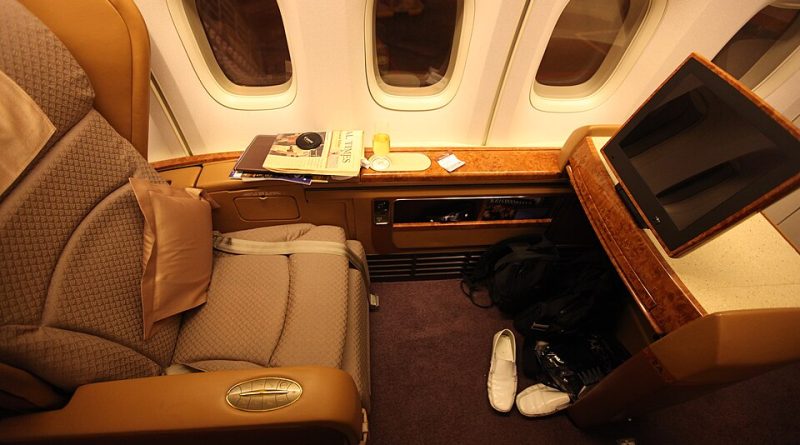
An Inspector General report found California’s High-Speed Rail Authority approved more than half a million dollars in travel expenses for consultants that included first-class flights, international travel, and rideshare trips to an escape room, a nightclub, and a cigar lounge in Washington, D.C.
The report identified four consulting firms — KPMG, Nossaman, AECOM-Fluor Joint Venture, and SYSTRA/TYPSA Joint Venture — that submitted travel expenses with vague or no explanation, according to material reviewed. Inspector General Benjamin Belnap stated the Authority “improperly reimbursed consultants for travel expenses that appeared unallowable under regulations intended to ensure economy to the State.”
The report stated that paying for travel when it is not necessary or when it exceeds what is allowed by state regulations or contract terms is a waste of public funds and inconsistent with the Authority’s role as steward of public resources.
The findings show the high-speed rail’s large funding pool, combined with failed oversight, made it easier for consultants to misuse funds through improper billing, according to the material. Consultants operated with inadequate oversight, submitting charges that violated state rules and contract terms.
According to the material, one consultant pushed back against staff questioning an expense and said he didn’t need to justify in-person travel since the rail authority’s chief executive had made the request. He said it would be “inappropriate to second-guess the CEO’s direction ‘as other consultants in other Authority offices are learning the hard way.'” The expense was approved.
The project began with only ten state employees managing the entire effort. Rather than building in-house engineering expertise, the Authority handed that responsibility to consultants. Before long, government employees reported to consultants, who then managed other consultants — an arrangement the material describes as unusual and improper.
One consulting firm alone employed about 470 people and hired additional consultants across offices in Sacramento, Fresno, and San Francisco, according to the material. Contracts for engineers averaged $427,000, compared to rail authority in-house costs of $131,000 per engineer, according to state documents cited in the material.
After nearly two decades, California has spent more than $18 billion without laying a single mile of high-speed track, according to the material. The project’s cost estimate has grown from an original $33 billion promise to $231.3 billion, based on 2025-2026 reports cited.
The Inspector General warned that funding for the initial Merced-to-Bakersfield segment could run out by December 2027. The report also identified transparency failures, including business plan drafts that omitted legally required elements, and procurement failures including missed deadlines, delayed contract awards, and weak conflict-of-interest safeguards.
Construction is underway across the Central Valley. In Fresno County, the largest cluster of completed structures includes downtown viaducts, grade separations, bridges, and major earthworks. In Madera County to the north, work includes guideway grading, viaducts, and the San Joaquin River crossing. Kings and Tulare counties are seeing work on overpasses, underpasses, and long stretches of graded right-of-way. In Kern County north of Bakersfield, work includes viaducts, grade separations, and the approach into metropolitan Bakersfield.
The material describes it as a half-built system with no trains, no track, and no credible path to service.
The Breakdown
- The Inspector General found the High-Speed Rail Authority approved over $500,000 in consultant travel expenses that violated state regulations — including first-class flights, international travel, and rideshare trips to entertainment venues.
- Four consulting firms submitted travel expenses with vague or no explanation; the Inspector General stated the Authority “improperly reimbursed” these expenses.
- One consultant told staff he didn’t need to justify travel because the CEO requested it, warning that other consultants were “learning the hard way” not to question the CEO’s direction. The expense was approved.
- Consultant contracts for engineers averaged $427,000, compared to $131,000 for in-house rail authority engineers, according to state documents.
- After nearly two decades and more than $18 billion spent, no high-speed track has been laid. The project’s cost estimate has grown from $33 billion to $231.3 billion.
- Funding for the Merced-to-Bakersfield segment could run out by December 2027, according to the Inspector General.
What This Means for You
This project exists because California voters approved the bond measure that funded it, and its leadership is appointed by the Governor you elect. The Authority’s approval of wasteful spending — and a structure where consultants override staff and tell employees not to question the CEO — is exactly the kind of stewardship failure that should shape how you think about who oversees state agencies and whether the people in charge are protecting public money or enabling those who profit from it.
The $18 billion spent so far, and the $231.3 billion total estimate, are taxpayer dollars. Every dollar approved for a first-class flight or a nightclub rideshare is a dollar not available for the track, the stations, or the operation this project was supposed to deliver. When you vote for Governor and when you weigh state spending priorities, this is the record of what happens when oversight fails.
What to Watch
Start with who actually benefited from the $500,000-plus in wasteful travel the Inspector General documented. The material names four consulting firms — KPMG, Nossaman, AECOM-Fluor Joint Venture, and SYSTRA/TYPSA Joint Venture — but doesn’t break down how much each firm billed or which individuals took the trips. A full accounting of who traveled where, for what stated purpose, and which Authority officials approved each expense would show whether this was carelessness or something worse.
Then ask why a consultant felt confident telling staff that questioning an expense would be “inappropriate” because the CEO requested it, and why staff approved it anyway. That pattern — where a consultant invokes the CEO’s authority to shut down oversight — suggests the Authority’s leadership either directed that deference or tolerated it. The material does not name the CEO who made the travel request or the consultant who invoked that authority. Naming both, and asking the CEO directly whether that instruction was given, would clarify whether this was a single consultant overstepping or a culture the leadership created.
The Inspector General also identified transparency failures — business plan drafts missing legally required elements, delayed contract awards, and weak conflict-of-interest safeguards. The material does not state what conflicts of interest exist or which contracts were delayed. Releasing the full Inspector General report, the business plan drafts, and the delayed contract awards would let the public see what the Authority is withholding and why.
Finally, consider the deeper pattern: a project launched with ten state employees to manage billions of dollars, then handed to consultants who now outnumber and outrank the state’s own staff. One consulting firm alone employed 470 people and hired still more consultants. Consultant engineers cost $427,000 on average; in-house engineers cost $131,000. The material states this arrangement is “unusual and improper” but does not explain who made the decision to structure it this way or whether any official or firm profited from that choice. Campaign finance records, contracts with the four firms named, and the employment history of the officials who approved this structure would show whether this was poor planning or a designed outcome.
After $18 billion and two decades, there is no track. Funding may run out in December 2027. The question is whether the next Governor — the one you elect — will demand that kind of accounting or accept the Authority’s assurances that the problem has been addressed.