Fresno City Council approves 90-day Tower District safety plan after string of shootings
The Fresno City Council voted unanimously Thursday to approve a 90-day pilot program consolidating food vendors, upgrading street lighting, installing security cameras, and increasing police presence in the Tower District following multiple shootings in recent weeks.
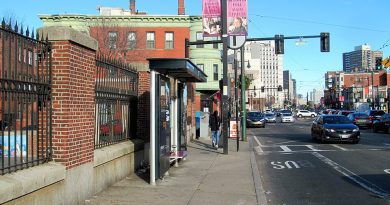
The vote came after what officials described as a spike in violent incidents along Olive Avenue, the district’s commercial corridor lined with restaurants, coffee shops, bars, and nightclubs operating until 2 a.m. Multiple shootings — some allegedly carried out by minors and at least one fatal — occurred in late-night hours.
“All of [this program is done] for the purpose of enhancing the safety of the patrons, the business owners, as well as the vendors,” Mayor Jerry Dyer said. “We believe it is one of many solutions that are going to help us to enhance safety in the Tower District.”

The day before the council vote, hundreds of residents, business owners, and vendors gathered at Tower Theater. Some called for more police officers on the streets, tougher penalties for those involved in crimes, and accountability from parents if minors are involved. Others questioned whether increased police presence would address underlying causes of youth violence. A handful urged officials not to blame food vendors for the safety issues.
The approved changes took effect immediately. Public Works crews doubled street-light wattage from 38 watts to 75 watts. White curbs now designate drop-off and pick-up zones along Olive Avenue. Loading zones operate 10 p.m. to 6 a.m., Thursday through Monday, with a three-minute maximum limit. Standard parking remains outside those hours.
Food vendors must now operate in a designated Vending Market Zone at the southwest corner of Van Ness and Olive avenues. Councilmember Miguel Arias said space will be allocated first-come, first-served to vendors with city permits, at no cost.
The city is placing additional police presence at three establishments: MIA, Bobby Salazar’s Taqueria, and Vibez. Arias said the businesses themselves pay for the extra security detail. “We think this additional policing, specifically targeted and paid for by the businesses for attracting so many folks out of the area, is going to effectively deal with some of the issues that we’ve had,” Arias said.
The city will also increase enforcement of an existing municipal curfew requiring minors under 18 to be home by 10 p.m. “There’s already a curfew in the City of Fresno for anybody that’s a minor, and they need to be home by 10 p.m.,” Arias said.
Councilmember Annalisa Perea, who represents the Tower District north of Olive Avenue, described the plan as experimental. “This is a pilot program, so we’re going to test this out for 90 days, see what works, see what doesn’t work, and hopefully continue to adjust as needed,” Perea said.
Lewis Everk, owner of Tower District bar MIA, said business owners were not included in early planning. “It was a little bit disheartening to know that the city made decisions without consulting us first, because I think a lot of those things that they originally made decisions on, they will have to go back and kind of readjust or undo,” Everk said.
The city has dealt with crimes involving minors since spring. The police department stepped up efforts to monitor young people in late hours after multiple fights broke out in early April, leading to stabbings. Some incidents happened during the Art Hop event in downtown Fresno and at River Park Shopping Center in north Fresno.
Council President Nelson Esparza said he had previously been skeptical of claims that mobile food vendors were the root of the problems. “I was willing to entertain this at least temporary change,” Esparza said. “We’re not getting rid of them, we’re just sort of consolidating them, which I think could be a good thing.”
The city tried in 2024 to split the Art Hop event to limit crowd sizes but was met with backlash.
The Breakdown
- The 90-day pilot program was approved in October 2026.
- Street-light wattage doubled from 38 watts to 75 watts along Olive Avenue.
- Security cameras will be installed, though the material does not state how many or where specifically.
- Food vendors relocated to a single Vending Market Zone at Van Ness and Olive.
- Loading zones operate 10 p.m. to 6 a.m., Thursday through Monday, three-minute maximum. Vehicles over six feet in height must find alternative parking.
- Additional police presence at three named establishments, paid for by the businesses themselves.
- Increased enforcement of the existing 10 p.m. curfew for minors under 18.
- Parking prohibited along Olive Avenue sidewalks.
What This Means for You
The Fresno City Council — the body voters elect to make decisions like this — voted to implement these changes after a pattern of violent incidents in a commercial district. The vote authorizes taxpayer-funded upgrades (street lighting, security cameras, police enforcement) and new restrictions on where vendors can operate and where vehicles can park.
This is a pilot program, meaning the council will reassess it in 90 days. How voters judge the officials who approved this depends on whether the changes reduce violent incidents without displacing vendors or harming businesses, and whether the council actually sought input from affected parties before voting.
The next city council election is in 2028. Perea, Arias, and Esparza are the councilmembers directly quoted in the material, though the vote was unanimous.
What You Can Do
The material does not state a public comment period, review date, or contact method for the council’s 90-day assessment. Fresno City Council meetings are public, and the next scheduled meeting would be the place to weigh in on whether the pilot program should continue past 90 days.
What to Watch
The material does not state what the street-light upgrades, security cameras, or other infrastructure cost taxpayers, or who is installing the cameras and under what contract. Public Works Director Brian Russell and Councilmember Arias are quoted describing the changes, but no dollar figure or contract award appears in the material. The staff report or approved budget line would show the amount.
Three businesses — MIA, Bobby Salazar’s Taqueria, and Vibez — are paying for additional police presence themselves. The material does not state how much they are paying, what the terms of that arrangement are, or whether the city negotiated it or the businesses volunteered. A private entity paying for public law enforcement raises the question of who controls where officers go and what they enforce. Does the business paying for the detail decide where the officer stands and who gets removed, or does the police department retain full discretion? The material does not answer this.
Lewis Everk, a business owner directly affected by the changes, said the city made decisions without consulting the businesses first. The material does not state whether the city held any business-owner meeting before the vote, or whether the community meeting at Tower Theater the day before the vote was the first time affected parties were asked for input. If the city consulted no one before designing the plan, that is a pattern worth naming: decisions made and then presented to the people who have to live with them, rather than shaped with their input.
The council is consolidating food vendors into a single zone and increasing curfew enforcement for minors, based on a stated connection between late-night crowds and violent incidents. The material does not state what evidence the city has that vendors or minors caused the shootings, or whether the shootings involved vendors or minors at all. Mayor Dyer and the councilmembers quoted say the changes will “enhance safety,” but that is a prediction, not a documented outcome. Did the city analyze where the shootings actually happened, who was involved, and what the precipitating factors were, or is this plan a response to public pressure rather than to data? The staff report or a police analysis would show whether the measures target the documented causes of the violence or simply the most visible groups.
Finally, this is the city’s second attempt to manage large crowds in commercial districts after the 2024 Art Hop split was met with backlash. A pattern emerging: the city tries crowd-control measures, faces public resistance, and either reverses or tries a new version. A question worth asking 90 days from now is whether this pilot program actually reduced violent incidents, or whether the city will be back at the council dais proposing yet another version.