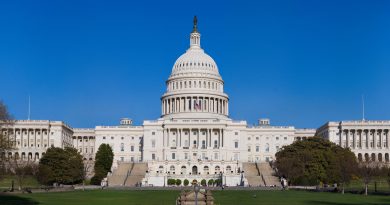

Central Valley Congressman's Medicaid Vote Draws Challenge in District Where 62% Rely on Program — Photo: Bill Gillette — Public domain, via Wikimedia Commons
Central Valley Congressman’s Medicaid Vote Draws Challenge in District Where 62% Rely on Program
Danielle Velling, 33, depends on monthly injections to manage her severe asthma in California’s Central Valley, one of the most polluted regions in the country. She gets the medication through Medi-Cal, California’s name for Medicaid. Now she’s worried she could lose that coverage — and she’s not alone.
In California’s 22nd Congressional District, which includes Bakersfield, Porterville, Delano, Wasco, and part of Hanford, 62% of residents are enrolled in Medicaid — one of the highest rates in the nation. About half a million people in the district rely on the program, according to the Kaiser Family Foundation. Many more have friends or family who do.
That dependence has put health care at the center of a congressional race between six-term Republican Rep. David Valadao and Democratic challenger Randy Villegas, a political science professor at College of the Sequoias in Visalia and local school board member.
The flashpoint: Valadao’s vote for HR 1, the One Big Beautiful Bill Act, federal legislation signed by President Donald Trump that changes Medicaid eligibility and adds new work requirements. In February 2025, Valadao said publicly that he would not support a bill that included reductions in Medicaid coverage. Five months later, he cast what supporters and critics alike describe as the deciding vote for the measure.
The Congressional Budget Office estimates that 7.8 million people nationwide would lose insurance coverage by 2034 because of the new Medicaid rules, which include work requirements, decreased eligibility for legal immigrants, and more onerous reporting requirements. The Center for American Progress, a liberal think tank, estimates that more than 60,000 people in the 22nd District could lose their coverage starting in January.
Valadao defended his vote in a televised debate earlier this month, arguing that the law will not deny health insurance to anyone the program is intended to help. “Medicaid was created to protect the most vulnerable, our elderly, our children and people with disabilities,” he said. “This [law] does not in any way shape or form affect anyone it was that the program was originally created for.”
He added that the law “requires that people who have the ability to work that they actually show up and they try to work. It’s not an actual cut.”
Valadao’s campaign office did not respond to requests for comment for this story.
Villegas, the son of Mexican immigrants who grew up working weekends at a swap meet and later in his family’s auto repair shop, became the first in his family to attend college, eventually earning a doctorate. He says programs like Medi-Cal and WIC helped make that path possible.
“I am somebody who actually grew up relying on Medi-Cal and somebody who’s going to fight to restore that funding,” Villegas said at a Bakersfield campaign office opening last month. “Nobody should have to choose between rationing their medicine and going to the doctor and paying for groceries.”
Villegas has aligned himself with the progressive wing of the Democratic Party and has been endorsed by Sen. Bernie Sanders of Vermont and Rep. Alexandria Ocasio-Cortez of New York. Sanders appeared at a Bakersfield rally for Villegas on October 4. Villegas touts his support for Medicare for All and says he refuses corporate donations.
Matthew Casarez, executive director of the Tulare County Republican Party, said Valadao “voted for tax cuts for working families, no tax on tips, no tax on overtime and no tax on social security for seniors.” Those tax breaks will expire in 2028 unless they are extended by Congress. According to a Congressional Budget Office report, the tax relief favors more affluent households, while the lowest-income households lose the most once cuts to Medicaid and food assistance are factored in.
The race has attracted national attention since California voters approved Proposition 50, which allowed the state to redraw congressional districts to favor Democrats. The 22nd District was one of five targeted statewide. The Cook Political Report rates the contest as a “toss up.” In 2024, Valadao won 53.4% of the vote. House Speaker Mike Johnson traveled to California in late September to campaign for Valadao and other Republicans facing challenges in the aftermath of the redistricting.
Andrea Aldaz, 29, who works for the Kern County Department of Human Services where the majority of her clients are on Medi-Cal, has been volunteering for Villegas. She grew up on Medi-Cal, as did many in her extended family. Her mother is still on Medi-Cal and receives coverage for her diabetes through the program, including medication and transportation when she needs it.
Audrey Chavez, 59, who runs Martin’s Meats & Deli in Bakersfield with her husband, called Valadao’s office before the vote last year to urge him not to support the bill. She used Medi-Cal during her four pregnancies, including one that ended in a miscarriage. “We have to have someone who’s willing to know our district, who knows the needs of the population and who speaks to those needs regardless of party,” she said.
The Breakdown
- HR 1, the One Big Beautiful Bill Act, changed Medicaid eligibility by adding work requirements, decreasing eligibility for legal immigrants, and adding more reporting requirements.
- The Congressional Budget Office estimates 7.8 million people nationwide would lose coverage by 2034 under the new rules.
- The Center for American Progress estimates more than 60,000 people in California’s 22nd Congressional District could lose coverage starting in January.
- In the district, 62% of all residents and 87% of children rely on Medi-Cal, according to the Kaiser Family Foundation — about half a million people total.
- Rep. Valadao said in February 2025 he would not support a bill that included reductions in Medicaid coverage, then voted for HR 1 five months later.
- The race is rated a “toss up” by The Cook Political Report following redistricting under Proposition 50, which redrew congressional districts to favor Democrats.
What This Means for You
If you’re one of the half-million people in the 22nd District enrolled in Medi-Cal, or if a family member is, the Congressional Budget Office says the changes to Medicaid that Rep. Valadao voted for could cost you that coverage — as soon as January, according to one analysis. The question facing voters in this race is whether they trust Valadao’s argument that the law only affects people “who have the ability to work” and leaves “the most vulnerable” protected, or whether they believe Villegas’ claim that the law will cost tens of thousands of people in the district their coverage. The answer to that question — who is right about what this law will actually do — determines whether your vote in this congressional race is a vote to keep your family’s health coverage or a vote that puts it at risk.
What You Can Do
The race between Rep. David Valadao and Randy Villegas is on the ballot in the 22nd Congressional District, which includes Bakersfield, Porterville, Delano, Wasco, and part of Hanford. The Cook Political Report rates it a toss-up. If you live in the district, your vote in this race will help decide whether the person representing you in Congress supports or opposes the Medicaid changes already signed into law.
What to Watch
The material does not state how much taxpayer money the federal government spent on Medi-Cal in the 22nd District before HR 1, or how much it will spend under the new rules — that figure would show the actual dollar value of the cuts, not just the number of people affected.
Valadao says the law “does not in any way shape or form affect anyone” Medicaid was “originally created for” — the elderly, children, and people with disabilities. But the Congressional Budget Office says 7.8 million people nationwide will lose coverage by 2034, and the Center for American Progress says more than 60,000 people in this district could lose coverage starting in January. Who’s right? The material does not identify which of those 60,000 people fall into Valadao’s “originally created for” category and which don’t, or whether the work requirements, immigrant-eligibility changes, and reporting requirements will in practice hit people Valadao says are protected. The answer is in the data on who actually loses coverage when the new rules take effect — enrollment figures by category (elderly, children, disabled, working-age adults) would show it.
Valadao said in February he would not support a bill that included reductions in Medicaid coverage, then voted for HR 1 five months later. What changed between February and July? The material does not say whether the bill itself changed in a way that satisfied his stated concern, whether he was offered something in exchange for his vote (a project, a provision, or a promise), or whether he simply changed his position. Valadao’s office did not respond to requests for comment. The answer might be in the Congressional Record, committee transcripts, or his own public statements between February and the vote — if they exist.
Matthew Casarez says Valadao “voted for tax cuts for working families, no tax on tips, no tax on overtime and no tax on social security for seniors.” But the Congressional Budget Office says “the tax relief favors more affluent households, while the lowest-income households lose the most once cuts to Medicaid and food assistance are factored in.” Who actually comes out ahead in a district where 62% of residents are on Medicaid — a family that gets a tax cut but loses health coverage, or a family that keeps coverage but gets no tax cut? The CBO’s net-effect analysis by income bracket would show which households in this district are better or worse off under the law as a whole, not just under one piece of it.