City Council Commits $3 Million to 120-Unit Affordable Housing Development in Southeast Fresno
The Fresno City Council approved a $3,000,000 federal HOME Investment Partnerships Program loan to FCTC Family II, LP on March 19, 2026, funding development of Sarah’s Court II Apartments — a 120-unit affordable rental housing project at 200 N. Salma Avenue in District 5. Eleven of the 120 units will be restricted as HOME-assisted affordable housing under a 55-year covenant recorded on the property.
The total estimated project cost is $37,310,555. The $3 million public contribution is structured as a residual receipts loan.
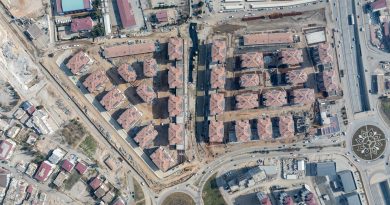
The project sits adjacent to the completed Sarah’s Court I Apartments within the Fancher Creek Master Plan Development in southeast Fresno. FCTC Family II, LP will develop the project, which targets two- and three-bedroom units for the eleven income-restricted HOME-assisted apartments.
The Breakdown
- City Council Vote: Approved 3/19/2026
- Public Funding: $3,000,000 in federal HOME program funds, structured as a residual receipts loan
- Total Project Cost: $37,310,555 (the remaining $34+ million comes from sources not specified in the staff report)
- Developer: FCTC Family II, LP
- Location: 200 N. Salma Avenue, District 5, within the Fancher Creek Master Plan Development
- Unit Count: 120 total rental units; 11 HOME-assisted affordable units with income restrictions
- Affordability Term: 55-year covenant recorded on the property for the 11 HOME-assisted units
- Unit Types: Two- and three-bedroom apartments for the income-restricted units
What This Means for You
Your City Council voted to commit $3 million of federal housing dollars to subsidize construction of 120 rental units, of which only 11 will carry income restrictions tying them to the public investment. The per-unit public subsidy works out to roughly $272,727 for each of the 11 restricted apartments — a figure that raises the value-for-money question directly when the public share buys affordability restrictions on less than 10% of the total units built.
What to Watch
The staff report offers no breakdown of the remaining $34+ million in project financing — who is contributing what, and on what terms. That gap matters because the public’s $3 million represents less than 10% of the total cost, yet the framing presents this as public investment in affordable housing without stating who actually profits from the project or what the developer’s equity stake is.
What records would show this: the full financing plan, the developer’s equity contribution, and the terms of any private debt or tax-credit allocation.
The affordability covenant runs 55 years on the 11 HOME-assisted units — a term that sounds long but leaves the question of what happens to those units after 2081 unanswered. Does the covenant allow conversion to market rate, or does the city retain any control? The material does not say, and the City Attorney’s office approved implementing documents the public has not seen.
Finally, the staff report names no timeline for construction start, completion, or lease-up, and offers no performance benchmarks or accountability checkpoints between now and occupancy. Voters should ask: when does the developer break ground, when do the first tenants move in, and what happens if the project stalls or underperforms — does the city recapture the $3 million, or does the developer keep it regardless of outcome?