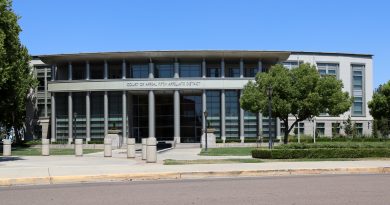
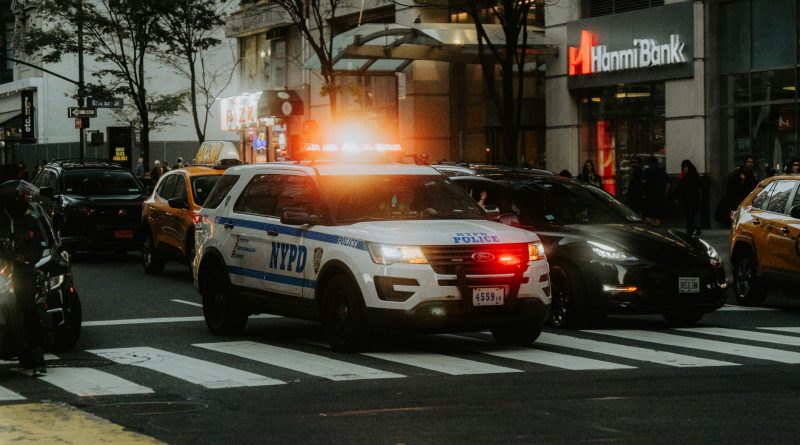
police car patrol city street — Photo by Luke Miller via Pexels
Fresno Police Defend Surveillance Cameras as State Lawmakers Push New Limits
Fresno Police Department is standing by its use of roughly 70 Flock Safety license plate readers, even as California lawmakers advance a bill that would sharply limit how long police can keep the data the cameras collect and who can access it.
At a community forum in Fresno, residents raised privacy concerns about the cameras directly with the department. Meanwhile, the Los Angeles Police Department suspended its own use of Flock technology over worries about data security and distribution.
The cameras work by capturing license plate numbers in real time and cross-referencing them with law enforcement databases of stolen cars, missing persons, and wanted vehicles. At least 230 California police and sheriff’s departments use them. Critics say the AI access to everyone’s daily movements amounts to an invasion of privacy that leaves the door wide open for misuse.

Fresno Police Chief Mindy Casto told reporters the department conducts monthly audits of camera usage and is exploring whether those audits can be made public.
“Once they understand what the technology actually does, not what it might do in 50 years, not what someone thinks it could do, but what it actually does day in and day out… it takes a picture of a car,” Flock CEO Garrett Langley told ABC7. “Most people go, this makes a lot of sense. I want my kids to be safe.”
Senate Bill 1013, authored by Riverside Democratic Sen. Sabrina Cervantes, would generally limit police to keeping license plate data for 30 days unless it’s part of an active investigation or a search for a missing person. The bill would also prohibit police from contracting with camera companies that give federal or out-of-state authorities default access to local plate databases.
That provision responds to Flock Safety’s earlier pilot program that allowed federal authorities to search local data — something police departments learned about after the fact, according to Tracy Rosenberg of Oakland Privacy, a bill supporter. Flock says it has ended those federal pilot programs and that “by default, sharing with federal agencies is disabled.”
At least 39 police agencies and officers’ unions oppose the bill. They say the technology has proven critical for solving crimes. Tustin Police Chief Sean Thuilliez pointed to a May murder case where license plate readers helped detectives quickly rule out a prime suspect and arrest the actual suspect at the Mexico border within one weekend.
Berkeley Police reported that after installing 52 Flock cameras last year, the technology contributed to 58 arrests, helped recover 37 stolen vehicles, and helped raise the department’s robbery-case clearance rate from 34% to 49%.
Governor Gavin Newsom vetoed a similar bill last year, writing that forcing departments to purge data could hinder cold-case investigations and searches for missing people, and that the state budget had no money for required audits. This year’s bill makes the audit program contingent on future funding and allows longer data retention for missing-persons cases.
The bill has advanced through the Legislature with only Republicans voting against it. It is now pending before the Assembly Appropriations Committee. Newsom’s office declined to say whether he has a position on the current version.
Meanwhile, U.S. Rep. Thomas Massie of Kentucky said he will soon sponsor a federal bill to withhold money from police departments that deploy Flock and similar cameras to “surveil law-abiding citizens.”
The Breakdown
- Fresno Police uses about 70 Flock Safety license plate readers and conducts monthly audits of camera usage; Chief Casto is exploring making those audits public.
- Senate Bill 1013 would limit police to keeping license plate data for 30 days (unless it’s part of an active investigation or missing-persons search), prohibit contracts that give federal or out-of-state police default access to local data, and add training and search-tracking requirements.
- At least 230 California police and sheriff’s departments use automated license plate readers; critics cite cases where California officers violated an 11-year-old state law prohibiting sharing the data with federal authorities and out-of-state users.
- Flock Safety previously ran pilot programs that gave federal authorities access to local plate databases; the company says it has ended those programs and that “ICE does not have direct access to Flock cameras, systems or data.”
What This Means for You
Whether you’re driving to work, picking your kids up from school, or running errands, your license plate is being photographed and logged by cameras that Fresno Police — an agency overseen by a city administration you elect — decided to deploy. The question before state lawmakers right now is whether police should be allowed to keep that record of your movements indefinitely, or whether there should be a limit on how long they hold data about people who aren’t suspected of any crime.
If SB 1013 becomes law, it would force Fresno Police to delete most plate data after 30 days instead of holding it as long as the department wants. If Governor Newsom vetoes it again, or if it stalls in the Legislature, the current practice continues — your plate data stays in a database with no mandatory expiration date. The difference matters because it’s the difference between a short-term investigative tool and a permanent record of where you’ve been.
What You Can Do
SB 1013 is pending before the Assembly Appropriations Committee. You can contact your state Assembly member to say whether you support the bill’s limits on how long police keep license plate data and who can access it. You can also attend Fresno City Council meetings to ask whether the Police Department’s monthly camera audits will be made public, as Chief Casto said the department is exploring.
What to Watch
Chief Casto said the department is “exploring” whether audits can be made public — that’s not a commitment, and it’s worth asking directly what those audits actually show and when the public will see them. Monthly audits mean nothing for accountability if no one outside the department ever reads them.
Flock Safety says federal access is now “disabled by default,” but the company’s own track record shows that wasn’t always true — and “by default” is not the same as “prohibited.” If SB 1013 doesn’t pass, there’s nothing stopping a future version of the same pilot program from quietly reappearing, and local departments learning about it after the fact again.
The bigger question is what you’re actually getting in exchange for the surveillance. Berkeley’s numbers sound impressive — 58 arrests, 37 stolen cars recovered — but the material doesn’t break down how many of those cases actually required plate readers versus how many would have been solved anyway with traditional police work. A technology that helps solve one murder is valuable; a technology that logs every innocent person’s movements to solve one murder is a different calculation, and the departments using these cameras aren’t publishing the data that would let you weigh that tradeoff yourself.