
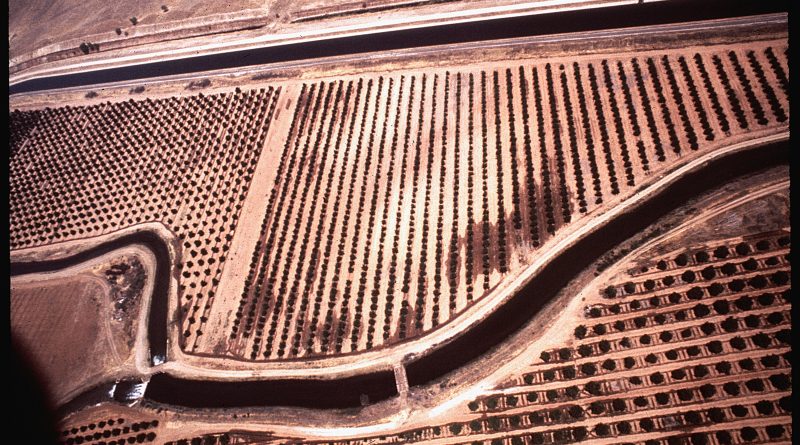
Fresno irrigation canal — Photo: Gene Daniels — Public domain, via Wikimedia Commons
Fresno Irrigation District Completes $6 Million Groundwater Basin to Meet State Deadline
The Fresno Irrigation District finished building a 35-acre groundwater recharge basin in north Fresno, designed to sink an average of 840 acre-feet of water annually into the aquifer. The district held a ribbon-cutting ceremony June 18 at Jameson and Barstow Avenue for what’s now called the Carter Bybee Groundwater Recharge Basin, named after the family who previously owned the land.
The $6 million project was paid for through the state Department of Water Resources’ Sustainable Groundwater Management Act funds, a federal Bureau of Reclamation drought program, and the district’s own land assessments.
The basin is part of the district’s work to meet a state mandate requiring local agencies to bring overpumped aquifers into balance by 2040. The Fresno region has been labeled critically overdrafted by the state — meaning more water has been pumped out than nature puts back in.

The Breakdown
- The 35-acre basin will recharge an average of 840 acre-feet of water per year into the aquifer beneath north Fresno.
- Funding came from state SGMA grants, a federal drought program, and local district assessments — the cost breakdown between those three sources isn’t stated in the material.
- The district recharged 27,315 acre-feet through its own basins in 2025, plus another 46,773 acre-feet through flood-control and partner-agency basins within its boundaries.
- The Sustainable Groundwater Management Act requires local entities to balance their aquifers by 2040 — the Fresno region is currently overdrafted, pumping more water out than is being replaced.
What This Means for You
This basin is one piece of a much larger groundwater challenge that will shape how Fresno grows — or doesn’t — over the next 15 years. The state’s 2040 deadline requires local agencies to bring overpumped aquifers into balance.
What to Watch
The district says it recharged 27,315 acre-feet through its own basins in 2025. That’s progress, but the gap between what’s being recharged and what’s being pumped out isn’t stated in the material.
The real test will be whether the district can sustain recharge in dry years, not just during last year’s flooding. Recharge basins work when there’s surplus water to sink — the material doesn’t address what happens when the next drought comes and there’s no surplus to capture.