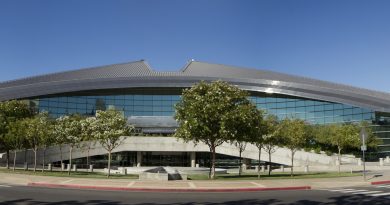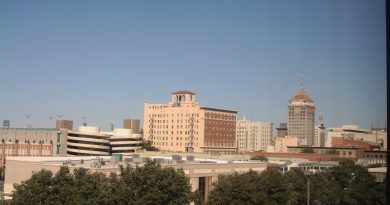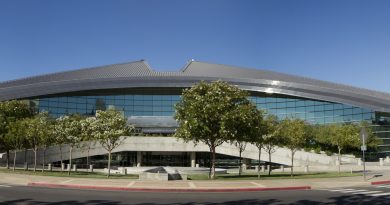
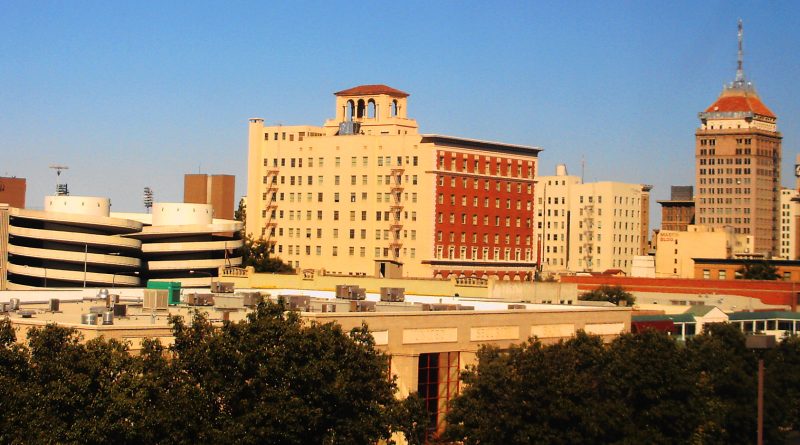
Fresno skyline — Photo: Qymekkam — CC BY-SA 3.0, via Wikimedia Commons
Who’s Bankrolling Fresno’s Next City Council? Follow the Money Behind November’s Runoffs
Three Fresno City Council seats are headed to November runoffs, and the donors writing checks to reshape the council tell you exactly whose interests the next governing body might serve. A fourth seat, District 5, may avoid a runoff depending on final vote counts.
A new political action committee called the One Fresno Coalition — backed by its sister PAC, the Central Valley Council PAC — has pumped over $78,000 into the June primary races, more than any other single source. Both were launched by political consultant Alex Tavlian. The money went to candidates Mayor Jerry Dyer publicly endorsed: Rob Fuentes in District 1, Danielle Parra in District 5, Nav Gurm in District 7, and Fernando Alvarez in District 3, where Dyer stayed neutral.
The PACs don’t have a website. Dyer told Fresnoland he has nothing to do with them, despite the name echoing his own One Fresno Foundation.
So who’s funding them? The Central Valley Council PAC’s largest donor is SPH Placements, LLC — an Atlanta-based firm owned by David Hanna, who runs a private equity and venture capital company and owns industrial development in Savannah. Hanna contributed over $205,000. He’s never donated in Fresno before this cycle.
Other major backers include companies holding city contracts: Mid-Valley Disposal ($90,000), West Coast Waste ($20,000), and American Ambulance ($10,000). Local developers Granville Homes ($40,000) and Peter Stravinski ($35,000) also chipped in.
Why route money through a PAC instead of giving directly to candidates? Fresno caps individual contributions at $5,900, and California’s Levine Act — a pay-to-play law — bars companies doing business with the city from donating more than $500 to a candidate during certain periods. A PAC lets donors with a direct stake in council decisions contribute far more.
Who Else Is Spending Big
The Fresno City Employees Association PAC, representing over 900 white-collar city workers like planners and building inspectors, put $35,000 into the four contested races. They backed Joaquin Arambula for District 3, incumbent Brandon Vang in District 5, Fuentes for District 1, and both Esequiel Martinez Lott and Gurm in District 7. Their contract expires this December — whoever wins in November will negotiate the next one.
The firefighters’ union spent over $30,200 backing Vang, Fuentes, and Gurm. Their contract is up for renegotiation in June 2027.
Richard and Karen Spencer, who own Harris Construction — one of the largest firms building public buildings across the region, from Clovis Unified’s Terry Bradley Educational Campus to new libraries under construction in Clovis and Reedley — gave $22,700 to support Fuentes in District 1 and AJ Rassamni in District 7. Richard Spencer previously bankrolled the failed Measure E sales tax for Fresno State and hosts fundraisers for national figures like Vice President J.D. Vance.
The Fresno Teachers’ Association jumped into city elections for the first time, spending $20,000 to back Fuentes, Arambula, Vang, and both Gurm and Martinez Lott. Union president Manuel Bonilla said the decision centered on candidates’ positions on the Southeast Development Area plan, or SEDA — a proposal that could close up to 11 Fresno Unified schools if fully adopted, due to enrollment losses from shifting housing patterns.
“What happens in the city impacts our classroom, and what happens in the classroom impacts the city,” Bonilla told Fresnoland. “Educators get the blame of society’s policies.”
Rounding out the top 10 donors: the California Real Estate Political Action Committee ($17,000), the Fresno Chamber of Commerce PAC ($17,000), employment attorney Pawanpreet Dhaliwal ($12,501), the California Working Families Party ($11,807), and the Youth Save Democracy PAC ($11,800).
What’s at Stake
The incoming council will decide budgets that determine whether funds go toward expanding streets, water, and sewer infrastructure for SEDA — opening southeast Fresno farmland to sprawl development — or toward other parts of the city. SEDA could come to a vote as soon as this summer, or Mayor Dyer could leave it for the next council.
The council will also negotiate contracts with the city employees’ union and the firefighters’ union, both of which expire within the next year. Contract talks mean decisions about raises, staffing levels, and how much of the city’s tightening budget goes to labor costs versus services.
Only one incumbent, Brandon Vang, was on the June ballot. As of Wednesday, he appeared to narrowly avoid a runoff with challenger Danielle Parra, who Mayor Dyer backed. Three other seats are headed to November runoffs. A fifth seat could open if Mike Karbassi wins his Board of Supervisors race in November, potentially triggering a special election for northwest Fresno’s District 2.
Dyer has generally had productive working relationships with the current council, receiving unanimous support for his past three budgets and little pushback on major decisions — from raising trash rates in 2024 to expanding the city’s industrial and warehousing footprint to managing the transition between police chiefs. His most frequent sparring partner has been Councilmember Miguel Arias in District 3, whose term ends in December, over homeless shelter funding and policies like SEDA.
The Breakdown
- One Fresno Coalition and Central Valley Council PAC, both started by political consultant Alex Tavlian, have spent over $78,000 combined backing Mayor Dyer’s endorsed candidates.
- The Central Valley Council PAC’s largest donor is Atlanta-based SPH Placements, LLC, owned by David Hanna ($205,000+), who has never donated in Fresno before.
- Companies holding city contracts — Mid-Valley Disposal ($90,000), West Coast Waste ($20,000), American Ambulance ($10,000) — are among the PAC’s major backers, along with developers Granville Homes ($40,000) and Peter Stravinski ($35,000).
- The Fresno City Employees Association PAC ($35,000), firefighters’ union ($30,200+), and Fresno Teachers’ Association ($20,000) all backed candidates ahead of contract negotiations the next council will control.
- Richard and Karen Spencer, who own Harris Construction, gave $22,700 to two candidates. Spencer previously funded the failed Measure E sales tax and hosts national political fundraisers.
What This Means for You
When you vote in November’s city council runoffs, you’re deciding who negotiates the city’s labor contracts, who votes on whether to greenlight SEDA’s sprawl into farmland, and who controls budgets that determine whether your tax dollars fund new infrastructure in undeveloped southeast Fresno or maintain services in the neighborhoods where you already live.
The donor list tells you whose calls those councilmembers are likely to take first: out-of-state private equity investors you’ve never heard of, waste companies and ambulance services holding city contracts, developers with land to sell, and unions whose members’ paychecks the council controls. These aren’t small-dollar donations from neighbors — this is money spent to buy access and influence over decisions that directly affect your water rates, your trash service, your streets, and whether your kid’s school stays open.
If the candidates backed by these donors win, you’ll know exactly whose priorities shaped the council’s votes for the next four years — and it probably wasn’t yours.
What You Can Do
November’s general election will decide the three council runoffs. Registration deadlines and polling locations will be posted closer to the election. You can track campaign finance filings — who’s giving to whom, and how much — through the City of Fresno’s campaign disclosure portal.
If you want to know where a candidate actually stands on SEDA, labor contracts, or how they’ll vote on the city budget, ask them directly at a candidate forum or through their campaign contact information before you vote.
What to Watch
The material states that California’s Levine Act — the pay-to-play law — bars companies doing business with the city from donating more than $500 to a candidate during certain periods. But those same companies can give unlimited amounts to a PAC, and that PAC can then spend on behalf of a candidate. That’s not a loophole — it’s the design. Whether the next council will tighten that, or whether they’ll simply cash the checks and vote accordingly, is the question you should be asking every candidate before November.
Here’s the other thing worth watching: the donor funding the Central Valley Council PAC’s spending — David Hanna, the Atlanta private equity investor — has never touched Fresno politics before. Why now? What does an out-of-state venture capitalist with industrial development interests stand to gain from a friendlier Fresno City Council? The material doesn’t say, but SEDA is a plan to open farmland to industrial and residential sprawl, and someone with the resources to write a $205,000 check doesn’t do it for fun. Whether this council will ask that question out loud, or simply accept the help and move on, tells you everything about whose city this will be for the next four years.