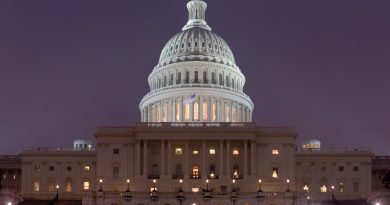

Fresno skyline — Photo: Etherealsmoke — CC BY-SA 4.0, via Wikimedia Commons
Fresno County Faces $69-295M Deficit From Federal Budget Cuts — Election Services, Social Programs on the Line
The Fresno County Board of Supervisors just adopted a $5.5 billion budget for fiscal year 2026-27, but the real story is what’s missing: somewhere between $69 million and $295 million in federal funding, wiped out by last year’s “One Big Beautiful Bill.” The departments taking the biggest hit — public health, behavioral health, social services — are the ones Fresno can least afford to lose ground on.
President Trump’s H.R. 1 didn’t just trim the margins. It restructured funding obligations for CalFresh and Medi-Cal, shifting the cost burden from federal to state and county budgets in what policy analysts are calling “The Big Shift.” For Fresno County, that means CalFresh loses half its usual federal contribution — about $7.5 million — while new work requirements threaten to kick thousands off the rolls entirely. Over a quarter-million county residents were enrolled in CalFresh in 2025; an estimated 30,000 could lose Medi-Cal coverage under the new rules.
The county’s own Registrar of Voters, James Kus, flagged “election administration” as one of the services at risk. Translation: reduced voter guides, longer wait times at vote centers, slower results reporting. The elections budget is locked through the next two fiscal years, but impacts could start showing up between 2027 and 2029 — right when the next presidential election cycle hits.
Tania Pacheco-Werner, executive director of the Central Valley Health Policy Institute at Fresno State, isn’t mincing words: “These changes were done on purpose. This is not a mistake, and that’s important for people to remember now when we’re faced with the consequences of it.”
The county’s already felt a preview. Last year, a $12 billion CDC funding cut cost Fresno $11 million in federal grants, leading to job losses and early contract terminations. The West Family Fresno Resource Center lost funding affecting “thousands” of residents, according to executive director Yolanda Randles. The Central California Food Bank saw 67,000 new visitors during last fall’s federal shutdown when CalFresh funding briefly stopped.
New federal CalFresh requirements mandate recipients ages 18-64 work a minimum number of hours to stay eligible, with few exceptions. That rule kicks in June 1, and Sanja Bugay, director of the county’s social services department, says that’s when “we’ll really know who falls in and who falls out.” The county also faces higher penalties for payment errors — their current 4% error rate was already an improvement, but Bugay expects that rate to climb “just on the natural because of H.R. 1 implementation.”
Some revenue offsets are in play: supervisors initiated a process for a transient occupancy tax that could appear on this year’s ballot, and new solar projects will be subject to property taxes starting in 2027 when a state incentive policy ends. But those measures are nowhere near guaranteed to fill a $69-295 million hole.
Fresno County is lobbying state lawmakers — alongside a coalition of counties — for more than $6 billion over the next two years to cover the shortfall. Gov. Gavin Newsom’s January budget proposal included funding to cover anticipated losses, but state budget analysts believe his estimates are off by billions. The revised state budget proposal is due in May; the county’s own recommended budget, with more accurate revenue estimates, is coming in June.
The Breakdown
- Federal H.R. 1 (the “One Big Beautiful Bill Act”) cut or restructured funding for safety net programs, creating a $69-295 million projected deficit for Fresno County’s 2026-27 budget.
- CalFresh loses half its usual federal contribution (~$7.5 million); new work requirements for recipients ages 18-64 take effect June 1, potentially affecting thousands of the 250,000+ county residents enrolled in 2025.
- An estimated 30,000 residents could lose Medi-Cal coverage under new work requirements; the county faces higher penalties for payment errors and is considering hiring staff to monitor compliance.
- Election administration is flagged as at-risk: potential cuts include reduced voter guides, longer vote-center wait times, and slower results reporting, with impacts possible between 2027-2029.
- The county is lobbying for $6+ billion in state funding over two years; Gov. Newsom’s January budget included some coverage, but state analysts say his estimates are billions short. Revised state budget due May; county’s recommended budget due June.
What This Means for You
The Board of Supervisors’ unanimous vote on this budget locks in how the county will operate for the next year. The federal policy shift that created this deficit isn’t a one-time event; parts of H.R. 1 phase in through 2034, meaning this is the beginning of a multi-year budget squeeze.
If you or someone you know relies on CalFresh or Medi-Cal, the June 1 work-requirement deadline is when eligibility gets reassessed. If you vote in Fresno County, the Registrar’s warning about election-service cuts isn’t hypothetical — it’s a capacity question the county is actively weighing as it tries to stretch dollars further.
The outcome of the state budget process in May and the county’s final revenue estimates in June will determine whether these cuts stay theoretical or become operational reality.
What You Can Do
The county resumes budget discussions in June following the unveiling of its recommended budget. Board of Supervisors meetings are public; if election services, social programs, or public health are stakes you care about, that’s when the county decides what gets funded and what doesn’t.
What to Watch
The county is banking on the state to cover a multi-hundred-million-dollar hole, but the state’s own budget is under stress — and state analysts are already saying the governor’s January proposal undercounts the problem by billions. If the May revised state budget doesn’t materialize the $6+ billion counties are asking for, Fresno’s going to be making hard calls about what services to cut or what new revenue to chase.
Fresno County has an 8.5% unemployment rate — nearly double the national average. Imposing work requirements on CalFresh and Medi-Cal recipients in a region where finding any job is already a struggle doesn’t just reduce the rolls, it shifts the cost.
The state legally requires counties to provide basic health coverage to many of these individuals, and the county is considering reevaluating eligibility criteria for indigent care following an anticipated increase. The county is also considering hiring new workers necessary to monitor Medi-Cal’s updated work requirements.
The elections-administration warning is worth taking seriously. Reduced voter guides, longer wait times, slower results — those aren’t just inconveniences, they’re capacity constraints that affect voter confidence and participation.
If the county has to choose between funding election infrastructure and covering health costs from federal policy changes, you’re looking at a direct trade-off between two core government functions. That’s the cost of a budget hole this size: it’s not one program taking a hit, it’s every service competing for the same shrinking pool.