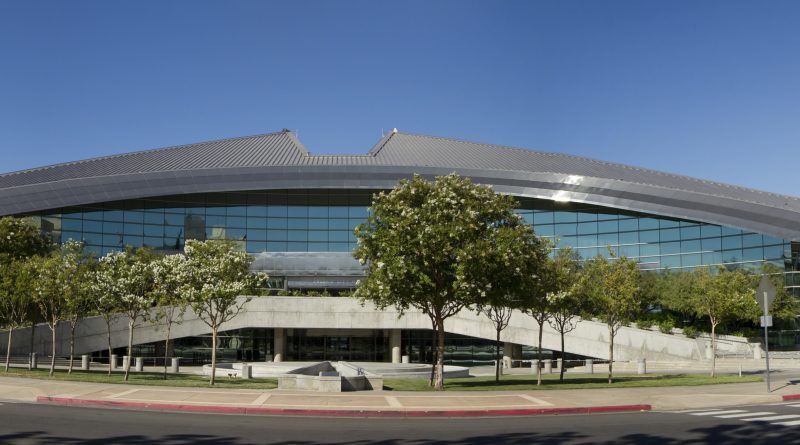
Fresno City Hall — Photo: Jeff Stiefer — CC BY-SA 3.0, via Wikimedia Commons
Fresno City Council to Consider Tobacco Licensing Ordinance Targeting Illegal Sales
Fresno City Council leaders introduced a proposal Tuesday requiring every business selling tobacco products to obtain a city license — a measure they say will give the city power to shut down shops selling illegal flavored tobacco and vaping products marketed to children.
Council President Nelson Esparza and Vice President Mike Karbassi, joined by Councilmember Tyler Maxwell and members of the Fresno County Tobacco-Free Coalition, announced the ordinance at City Hall ahead of its formal introduction at Thursday’s council meeting.
Fresno is the largest California city without such a requirement, Esparza said. “Every major city we compare ourselves to has one, but we do not.”
The proposed ordinance would require every retailer selling tobacco products, vaping devices, or smoking paraphernalia to obtain a license tied to a specific business location. Unlike the city’s existing smoke shop ordinance, which applies to a narrow group of businesses, this program would cover every tobacco retailer in Fresno.
Retailers would be required to sell only products authorized by the U.S. Food and Drug Administration and included on California’s approved unflavored tobacco list. The city could seize illegal products during inspections, with repeat violations triggering escalating penalties including license suspension and eventual revocation.
“If you sell illegal products, we’re going to seize them,” Karbassi said. “If you continue selling illegal products that target kids, eventually we’re going to shut you down.”
Officials said the first violation would generally result in a warning, with penalties escalating only for repeat offenders. The licensing fee, not yet determined, would fund inspections and enforcement through a self-supporting program rather than relying on general city resources. Additional staff would be hired to assist with inspections.
Karbassi framed the measure as leveling the playing field for businesses already following the law. “For years, the corner stores that check IDs and pay their taxes have been undercut by shops flooding neighborhoods with illegal products,” he said. “What we are creating is a fair market.”
Local advocate Baolia Xiong of the Fresno County Tobacco-Free Coalition said the proposal follows years of advocacy. “A lot of the retailers are selling illegal products. They are selling flavored products that are now illegal in the state of California,” Xiong said.
The Breakdown
- The ordinance would require a city license for every business selling tobacco, vaping products, or smoking paraphernalia — tied to a fixed location.
- Retailers must sell only FDA-authorized products on California’s approved unflavored tobacco list.
- First violations would generally receive warnings; repeat violations could lead to product seizure, fines, license suspension, and eventual revocation.
- An annual licensing fee, amount to be determined through future cost analysis including factors such as products sold and business size, would fund inspections and enforcement.
- Additional staff would be hired to assist in inspections.
What This Means for You
If the council passes this ordinance, Fresno will have a mechanism to permanently shut down tobacco retailers who repeatedly sell illegal products — something the city currently cannot do. The ordinance would give the city additional enforcement authority, and creates a funding stream for regular inspections without drawing from the general budget. This is the kind of policy decision where the council’s vote determines what enforcement tools the city has, and whether shops flouting state law face real consequences or just keep operating.
What You Can Do
The ordinance is scheduled for formal introduction at Thursday’s Fresno City Council meeting. Residents can continue reporting businesses selling unauthorized tobacco products to the city as enforcement efforts continue.
What to Watch
The licensing fee structure — how much businesses will pay, and whether the fee varies by business size or product type — remains undetermined and will be established through a future cost analysis. That analysis will shape whether this program actually funds itself as promised, or whether enforcement still leans on stretched city resources.
The real test is whether the city follows through on the “shut you down” language when it matters. Creating enforcement authority is one thing; using it consistently against repeat offenders, including shops with political or community connections, is another. Will the city actually revoke licenses, or will the escalating-penalty structure turn into warnings that never reach the final step?
There’s also the question of whether this helps or just shifts the problem. If a shop selling illegal products loses its license, does the space sit vacant, does a compliant business move in, or does the same operation reopen under a new name? The ordinance creates accountability on paper — whether it changes what’s actually on the shelves in your neighborhood depends on what the city does after the vote, not just during the press conference.