Federal Program Pays 80% of Water Conservation Costs for Fresno District Growers; City Separately Pursuing State Drought Grant — Photo: Hrushi3030 (talk) — Public domain, via Wikimedia Commons
Federal Program Pays 80% of Water Conservation Costs for Fresno District Growers; City Separately Pursuing State Drought Grant
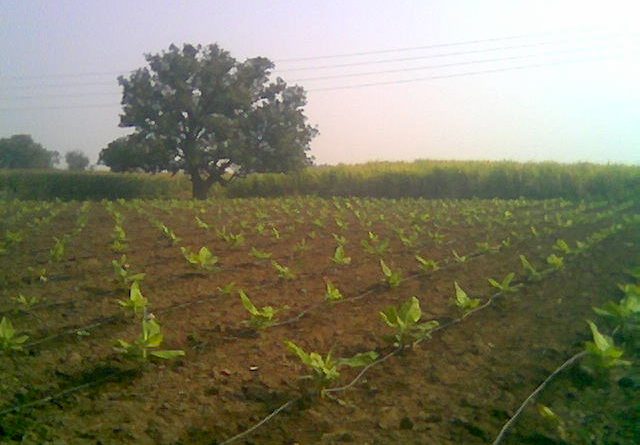
Fresno Irrigation District growers can receive up to 80% reimbursement for water conservation projects through a federal program run by the Natural Resources Conservation Service and Bureau of Reclamation, according to Kassy Chauhan, the district’s special projects manager. The Environmental Quality Incentives Program (EQIP) WaterSMART Initiative funds drip irrigation systems, soil moisture sensors, and large-scale recharge basins.
In fiscal years 2024 and 2025, 34 district farmers received nearly $2.3 million for on-farm projects. The district itself received $800,000 toward construction of the Kenneson & Sanchez groundwater recharge basin, Chauhan said. Figures for fiscal year 2026 awards are not yet available.
The district holds a “priority area” designation that limits competition to growers and districts within the same geographic area. That designation expires after the current grant cycle. “We will advocate that the application be opened up so we can apply again. However, there are no guarantees,” Chauhan wrote.

Farmer Arshdeep Singh, who grows mandarins and lemons on 100 acres in southeast Fresno, received $200,000 from the program several years ago toward a $470,000 project. The work included a new irrigation system, storage reservoir, pumping station, moisture sensors, and bird perches.
The reservoir reduced his groundwater pumping. “Pretty much, all year, we turn on our well like two, three, maybe – maximum – five times,” Singh said. He cautioned that the application process is long and competitive, suggesting growers plan three or four years ahead because funding does not cover all applicants.
Separately, the Fresno City Council on February 9, 2023, authorized the city to apply for a state Urban Community Drought Relief Grant to expand its Lawn to Garden Water Conservation Rebate Program. The state allocated $545 million to the California Department of Water Resources for drought relief to urban communities. The city’s application sought funding to provide additional rebates for residential and commercial customers replacing lawns with water-efficient landscaping on a first-come, first-served basis.
The Breakdown
- The federal EQIP WaterSMART program reimburses 40% to 80% of project costs for water conservation improvements, including drip irrigation, soil sensors, and recharge basins.
- Fresno Irrigation District growers currently receive priority treatment, competing only against other growers and districts in their geographic area rather than a national pool — that designation expires after this grant cycle.
- In fiscal years 2024 and 2025, 34 district farmers received $2.3 million total; the district itself received $800,000 for a recharge basin project.
- One grower spent $470,000 on conservation improvements and received $200,000 in federal reimbursement; he now pumps groundwater a maximum of five times per year.
- The City of Fresno separately sought a state drought grant in February 2023 to expand rebates for customers replacing lawns with water-efficient landscaping; the material does not state whether that application was approved or how much the city requested.
What This Means for You
If you farm within Fresno Irrigation District, you currently have access to federal funding that can cover up to 80% of water conservation project costs, but that priority-area advantage expires after this cycle — whether it gets renewed depends on a federal agency decision you have no direct vote on. The program’s existence and funding level are set by Congress and administered by an executive-branch agency, meaning your ability to reduce groundwater pumping and cut operating costs hinges on decisions made in Washington. For city residents, your City Council authorized applying for state drought-relief funding to expand lawn-replacement rebates in 2023; whether that program actually exists, and how much funding it received, depends on whether the state approved the application — information not provided in this material.
What You Can Do
Fresno Irrigation District growers interested in applying for EQIP WaterSMART funding can contact the Natural Resources Conservation Service Fresno office. The district held a webinar on the program on October 19. Plan three to four years ahead if you intend to apply, as funding does not cover all applicants and the process is competitive.
What to Watch
The priority-area designation that currently gives Fresno Irrigation District growers an edge over a national applicant pool expires after this grant cycle. Chauhan said the district “will advocate” to reapply, but offered no guarantee. If the designation is not renewed, local growers will compete nationally for the same federal dollars — a harder path to funding that depends on a federal agency decision voters cannot directly control. The material does not state what criteria the federal agencies use to award priority-area status, nor who else is competing for it.
The City of Fresno authorized applying for state drought-relief funding in February 2023, but the material provides no information on whether the state approved that application, how much the city requested, or whether the expanded lawn-rebate program actually launched. If it did, the relevant questions are how many Fresno customers used it, how much water the program saved, and how much of the savings came from lawns that would have been replaced anyway versus new conservation driven by the rebate. If the application was rejected, voters should know why and whether the city plans to reapply.
For the $2.3 million already distributed to 34 farmers in fiscal years 2024 and 2025, the material provides no data on how much water those projects actually conserve or whether the conservation justifies the public subsidy. One grower went from pumping groundwater throughout the year to pumping five times per year — a reduction — but that is one case, not a program-wide outcome. The material also does not state how much federal money flowed to the district’s own $800,000 recharge basin or what total project cost that $800,000 represents. Did the federal government pay 80% of an unknown total, or was the district’s share $800,000 with federal money covering the rest? That distinction matters for understanding the public investment.