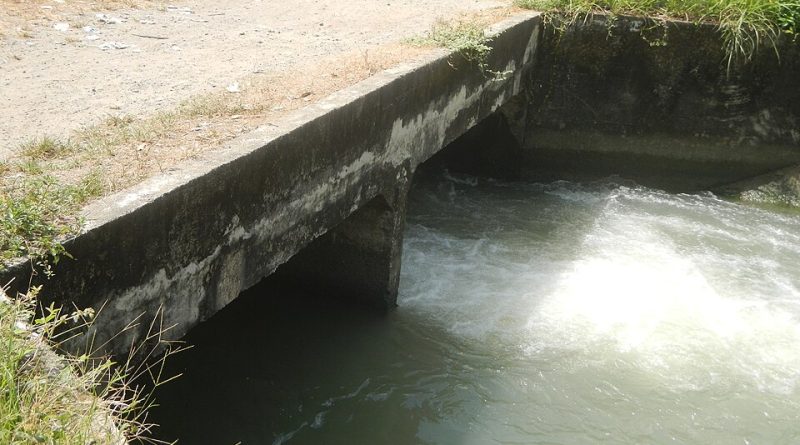
Water District Vote Cuts One Grower's Board Power After Missed Meetings Stalled Projects — Photo: JFVelasquez Floro — CC0, via Wikimedia Commons
Water District Vote Cuts One Grower’s Board Power After Missed Meetings Stalled Projects
Buena Vista Water Storage District growers voted 53,365 to zero earlier this month to expand the district board from five seats to seven, cutting board member John Vidovich’s voting share from 40% to 28.6%.
Of 68,000 votes available districtwide, zero opposed the expansion, according to district General Manager Tim Ashlock.
The expansion directly addresses a quorum problem: Vidovich, who controls Sandridge Partners LP, and Craig Andrew, who works for Sandridge, have missed numerous meetings. On a five-member board, their absences meant the district often lacked a quorum to conduct business, delaying projects. A seven-member board means their absences will no longer prevent a quorum.

Growers could not vote Vidovich or Andrew off the board under the district’s land-ownership voting system — Sandridge owns enough land in the northern end of Buena Vista that both seats were secure regardless of other growers’ preferences.
Days after the board expansion passed, growers approved a land assessment fee 25,194 to 17,794, authorizing the district to assess land up to $94 per acre for up to 30 years to fund the 300-acre McAllister Ranch Water Bank project.
“Without the seven-man board, there would have been a lot more ‘no’ votes,” Buena Vista farmer Beau Antongiovanni said of the assessment fee. “A lot of people had more trust with the expansion that the board would spend the money right.”
The district has worked for more than 15 years to convert McAllister, a failed housing development on the southwest edge of Bakersfield, into a water bank. Progress stalled repeatedly when the board lacked a quorum.
At a meeting in late June, growers confronted Vidovich after he questioned contracts for the water bank. Vidovich said he wanted costs defined before spending millions. Growers responded that district staff had already laid out options, costs, and vendor comparisons.
“As long as I’ve known you it’s been build, build, build and now you’re stalling. I don’t get it,” one farmer said during that meeting.
The new seven-division map assigns: Division 1, Jeof Wyrick; Division 2, vacant; Division 3, Julien Parsons; Division 4, Tom Toretta; Division 5, vacant; Division 6, John Vidovich; Division 7, Craig Andrew. The board will consider how to fill the vacant seats at its November meeting.
The Breakdown
- The board expansion vote passed with 53,365 votes in favor and zero opposed, out of 68,000 available votes districtwide.
- The expansion cuts Vidovich’s voting share from 40% to approximately 28.6% on the expanded board.
- A seven-member board means Vidovich and Andrew’s absences will no longer block district business.
- The land assessment fee authorizes charges up to $94 per acre for up to 30 years to fund the McAllister Ranch Water Bank, a 300-acre project the district has pursued for more than 15 years.
- The assessment vote margin was 25,194 in favor to 17,794 opposed — the narrower result compared to the unanimous board expansion suggests growers were watching whether the board structure would change before committing to the funding mechanism.
What This Means for You
Buena Vista Water Storage District is a local governing body whose board members are elected by landowners within the district, weighted by acreage owned. This vote restructures how that board functions and who holds power on it — a direct consequence of how the district’s voting system concentrates authority in the hands of large landowners. The board expansion reduces one grower’s ability to control or delay district decisions, and the assessment fee vote commits landowners to funding a specific water infrastructure project for up to three decades.
If you own land within Buena Vista’s boundaries, you are subject to both the new board structure and the assessment fee the vote authorized. The district’s November meeting, where the board will decide how to fill the two vacant seats, will determine who represents those divisions going forward.
What to Watch
The material does not state whether the assessment fee of up to $94 per acre will be applied uniformly across all district land or adjusted by parcel. If the fee is uniform, the largest landowners — including Sandridge — will pay the largest absolute amounts, but smaller landowners will face the same per-acre rate. If the fee structure varies, the material does not state how.
The material also does not state the total cost of the McAllister Ranch Water Bank project, how much of that cost the assessment fee is expected to cover, or what other funding sources the district has secured or is pursuing. A 30-year assessment window at up to $94 per acre suggests a substantial total, but the figure is not given.
Vidovich’s stated concern at the June meeting was defining costs before spending millions. The material does not state whether the district has published a detailed project budget, a timeline for when construction will begin, or a breakdown of the contracts Vidovich questioned. Growers at that meeting said staff had already laid out options, costs, and vendor comparisons, but the material does not state whether those documents are public or what they contain.
The board expansion solves the quorum problem but does not change the land-ownership voting system that gave Vidovich 40% of the board in the first place. The material does not state whether other large landowners now hold comparable shares on the expanded board, or whether the two vacant seats will be filled by appointment or by election. The November meeting will show whether the district appoints candidates or schedules elections, and whether the same growers who pushed for expansion also seek the new seats.