Photo: Mjustinred (talk) — CC BY-SA 3.0, via Wikimedia Commons
Fresno’s Only Domestic Violence Shelter Turns People Away as Funding Uncertainty Grows
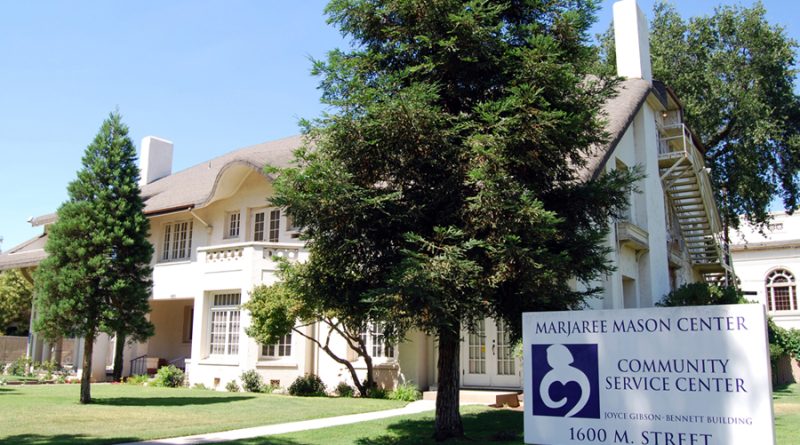
The Marjaree Mason Center, Fresno County’s only shelter exclusively serving people escaping domestic violence, has just 40 rooms for individuals and families fleeing danger — forcing staff to turn many people away as demand outpaces capacity.
The shelter, located in a quiet subdivision, offers private rooms for each household, trauma therapy, children’s counseling, and help finding housing. Unlike many shelters with shared dormitory-style rooms, the center prioritizes privacy for people recovering from violent situations. But with space for only about 140 people at a time and an average stay of just 30 days, the facility struggles to meet the needs of Fresno County — which has one of the highest rates of domestic violence calls to law enforcement in California.
“We make sure that every single family, every single individual has their own room for their own confidential space, especially because of the trauma that they’ve endured and the trauma that the kids have endured,” said Leticia Campos, the center’s chief programs officer.
The 30-day window often isn’t enough time to help people into new housing while supporting their mental health, especially for those who have experienced financial abuse and have barriers like evictions on their record or lack of employment history.
Nova Coburn, who stayed at the center during a violent relationship that ended in 2023, now lives on the street in Fresno’s Tower District. She said the shelter housed her temporarily but never connected her with permanent housing. “I never got a real explanation for why, and nothing else happened for me,” she said. Coburn has been unhoused for four years and is currently on multiple waiting lists for housing.
The center’s limitations stem largely from unstable funding. Government funding — which makes up most of the center’s budget — can swing dramatically year to year, reflecting changing political priorities. Jennifer Willover, housing policy analyst for the California Partnership to End Domestic Violence, said most funding is one-time or short-term. “Every year, housing and homelessness providers, as well as domestic violence service providers, are constantly kind of holding their breath because at the federal and state level, we don’t really have long-term investments in both services,” she said.
State funding for homelessness peaked at $6.9 billion in the 2022-2023 fiscal year but dropped to $2 billion in 2025-2026. Federal programs like the Violence Against Women Act have left nearly a third of their budget unallocated over the last year, while Victims of Crime Act grants for victim assistance dropped from $3.3 billion in 2018 to $779 million in 2024.
Laura Moreno, who chairs the Fresno Madera Continuum of Care — the county body handling federal homelessness funding from the U.S. Department of Housing and Urban Development — said the unpredictable nature of funding makes it difficult to get people into stable housing. “All we’re doing is we’re picking people back up as they fall into [domestic violence] or homelessness,” she said. Under the Trump administration, HUD has made last-minute policy changes with tight deadlines that send teams scrambling. “We are constantly having to plan [for] different scenarios,” Moreno said.
That uncertainty translates to fewer options and longer wait times for survivors. In California, the average wait time for a housing voucher is 28 months. During that time, people may live on the street, in shelters, with friends and family, or return to abusers.
Campos said clients frequently struggle to find homes in Fresno’s competitive housing market, even with support from the center, and sometimes return to abusers who may be upset they left.
The Breakdown
- The Marjaree Mason Center is the only shelter in Fresno County exclusively serving people escaping domestic violence
- It has 40 rooms for about 140 people at a time, with an average stay of 30 days
- High demand forces staff to turn many people away, though specific data on how often wasn’t provided
- Federal funding has declined sharply — Victims of Crime Act grants dropped from $3.3 billion nationally in 2018 to $779 million in 2024
- State homelessness funding fell from $6.9 billion in 2022-2023 to $2 billion in 2025-2026
- Most government funding is allocated one to three years at a time, making long-term planning difficult
- The average wait for a housing voucher in California is 28 months
What This Means for You
If you or someone you know needs to escape domestic violence in Fresno, the Marjaree Mason Center may not have space available when you need it. Even if you get a room, you’ll likely have just 30 days to find permanent housing in a competitive market with long waitlists — and the center’s ability to help depends on government funding that changes unpredictably from year to year. The funding instability affecting the center means fewer resources for prevention and longer wait times for housing assistance, increasing the risk that survivors will return to dangerous situations or end up homeless.