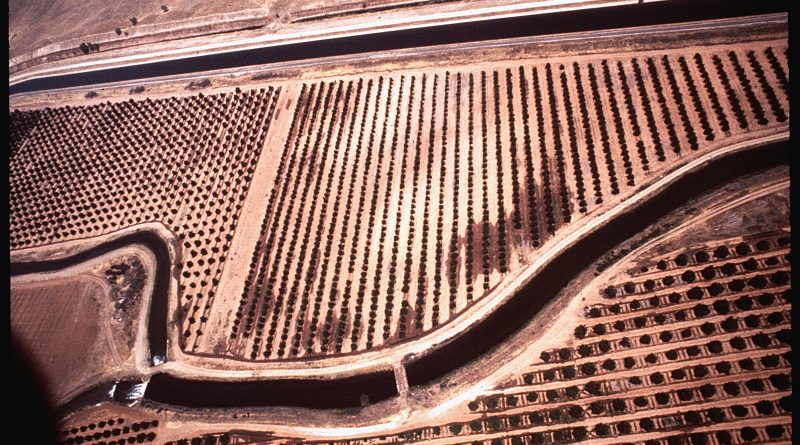
Fresno irrigation canal — Photo: Gene Daniels — Public domain, via Wikimedia Commons
Fresno County Water District Posts 20-Year Violation Record While Quadrupling Rates — Residents Eye Legal Action
A county-owned water district in the Fresno County foothills has been violating state drinking water standards for two decades while residents now face bills nearly four times what they paid last year — $291 per month on average versus $75 in 2024, according to district data.
Water Works District 40 serves roughly 200 residents in Shaver Springs, between Tollhouse and Shaver Lake. The State Water Resources Control Board lists the system’s water quality as “failing” in its public database and warns that infants and small children should not drink the water due to elevated manganese. Adults are advised to use alternative drinking water due to increasing uranium and gross alpha particles — radioactive contaminants — in Well 7.
State records show violations dating to at least 2006. The system currently exceeds maximum contaminant limits for manganese, iron, uranium, and gross alpha particles.

The $291 monthly bill includes a $196.53 base charge before any water usage. Fresno city residents pay roughly $45 per month in base charges and $70 total on average, according to estimates cited in the source material.
County representatives told KVPR the rate spike is covering a budget deficit — the district had accrued over $140,000 in debt to the county as of 2024, per a district rate study. A district FAQ states: “The cost of providing water and sewer service is paid by the customers who receive those services.”
Fresno County Supervisor Nathan Magsig, who represents Shaver Springs, held a town hall in late August where he initially assured residents state data showed the water was safe to drink. Resident Graham Brown responded: “All I’ve heard is…how you wasted money towards the community that you’re actually trying to serve.”
Magsig told KVPR he has since learned specifics about uranium and other contaminants in the system. At a late September Board of Supervisors meeting, he presented video of the water system being flushed until water ran clear — though multiple residents told KVPR their home water remains discolored.
Resident Jennifer Taber told supervisors at a September 8 meeting: “Do not wait for a courtroom to determine what should have been done here.” Residents say they are considering legal action if solutions don’t materialize.
The district has contracted an engineering feasibility study, funded by the state, to evaluate long-term fixes including new wells or treatment systems. That study is expected to complete in November 2026. The state water board says nearly $400,000 in technical assistance has been awarded, which could reduce bills by up to $38 per household monthly.
The issue has entered the political arena: Will Brown, challenging Magsig for California’s 12th Senate District, told the board the USDA responded immediately when he contacted them and said they had no record of prior county inquiries about Shaver Springs. County special districts manager Chris Bump told KVPR the county is “working with the state closely” on the funding process.
The Breakdown
- Water Works District 40 is owned and operated by Fresno County and has violated state drinking water standards since at least 2006 for contaminants including uranium, manganese, iron, and gross alpha particles.
- In 2025, the average monthly water and sewer bill rose from $75 to $291 — residents pay $196.53 in base charges before using any water.
- The county says the rate hike is paying down a $140,000+ district deficit accumulated as of 2024.
- State agencies rate the water quality as “failing” and warn infants and small children should not drink it; adults are advised to use alternative water due to radioactive contaminants in Well 7.
- An engineering feasibility study on long-term fixes is underway, expected to complete November 2026.
What This Means for You
This is a county-owned asset managed by an elected Board of Supervisors — which means voters decide who oversees it. Supervisor Magsig represents this district on the board; his opponent in the 12th Senate District race is actively highlighting the county’s management of this system as a campaign issue.
The rate structure also raises questions voters should press: residents are now being asked to cover the full cost of the system through a $140,000 deficit repayment. The deficit accumulated as the system violated state standards for years.
What You Can Do
Fresno County Board of Supervisors meetings are open to public comment. Supervisor Nathan Magsig represents District 5, which includes Shaver Springs. Contact information for his office and the full board is available on the county website. The next board meeting schedule is posted at fresnocountyca.gov.
Residents told KVPR they are seeking lower water rates, investigation of water quality violations, and a financial audit of Water Works District 40. If you are a Shaver Springs resident affected by these issues, those are the specific requests already on the record at board meetings.
What to Watch
Start with the question residents are already asking: why are customers covering a $140,000 deficit the county accumulated while the system violated state standards for 20 years?
The feasibility study, due November 2026, will name a fix — new wells, treatment systems, or another option. But a feasibility study is not the same as a funding commitment or a construction timeline. The state has awarded $400,000 in technical assistance so far, which could trim bills by $38 per household per month — that still leaves residents paying $253 monthly if nothing else changes, more than triple what Fresno city customers pay for a system that meets state standards.
The district FAQ states costs are “paid by the customers who receive those services.” Whether rural water districts must be fully self-funding regardless of their capacity to pay is a policy question worth surfacing before the next election.
Finally: residents are openly discussing legal action. If a lawsuit naming the county and the water district gets filed, watch what it alleges about the timeline of known contamination, the county’s response, and who authorized the rate hikes.