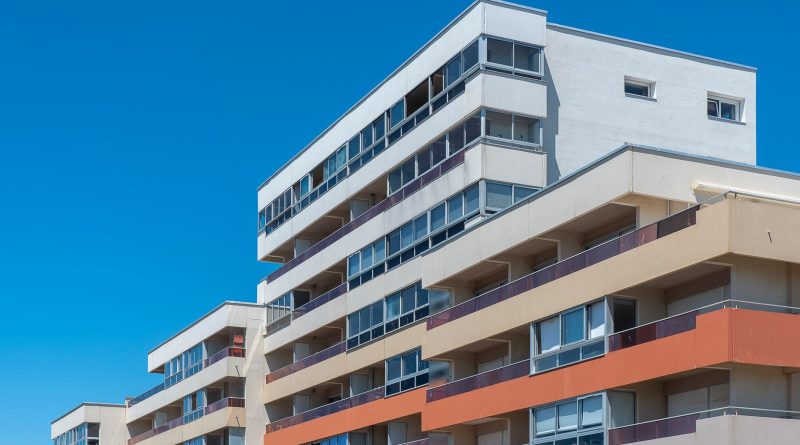
apartment construction housing development — Photo by Jan van der Wolf via Pexels
Fresno Council Reviews Financial Estimates for Scaled-Back South SEDA Development
Fresno city staff presented a financial analysis for the proposed South Southeast Development Area — South SEDA — to the City Council last week, laying out projected revenues, costs, and upfront infrastructure requirements for the scaled-back version of a development plan the council had previously sent back for revision.
The analysis projects $45.1 million in tax revenue against $27.9 million in service expenditures — police, fire, and other operations — for a net general-fund surplus of $17.2 million. Mayor Jerry Dyer characterized the figure as conservative.
Jennifer Clark, director of the Planning Department, stated the development would “pay for itself” and generate a net positive general fund impact available to existing residents and neighborhoods.

The financial model assumes a phased development requiring an $86 million enterprise revenue bond for infrastructure, plus $65.9 million in upfront sewer costs — rising to $72 million by the anticipated 2029 construction start, Dyer noted. Dyer stated the city knows there are “a number of financial opportunities” for repaying these costs but did not specify them.
Several residents questioned the financial assumptions during the presentation. Helen Raming stated, “If this is passed, this is an open checkbook. That is just so not right.” Dillon Savory said, “As the young people in my office would say the math ain’t mathing.”
The South SEDA area under review comprises nearly 2,000 acres divided into two sections: land south of Jensen Avenue, designated for what the city calls “flexible research and redevelopment,” and property east of Temperance Avenue, planned primarily for residential use.
City officials estimate the residential portion could accommodate about 10,000 housing units. Brett Thompson, speaking during the council discussion, called out the proposed density: “This concentration of population density is proposed to be developed onto just 467 acres of land.”
No vote was taken. The council is planning its next move following the report.
The Breakdown
- The South SEDA plan is a reduced version of a larger 9,000-acre proposal the council sent back in December 2025 for further financial analysis and revision.
- The revised proposal focuses on two areas: land south of Jensen Avenue (flexible research and redevelopment) and land east of Temperance Avenue (residential, up to 10,000 units).
- The city’s financial analysis projects $45.1 million in tax revenue, $27.9 million in service costs, and a $17.2 million net general-fund surplus.
- The plan requires an $86 million enterprise revenue bond and $65.9 million in upfront sewer costs (rising to $72 million by 2029).
What This Means for You
This financial analysis precedes a council vote on whether to approve the South SEDA Specific Plan — a vote that will determine whether the city commits to development on the southeast edge of Fresno, including how much public money the city borrows or commits upfront through the $86 million bond and $72 million in upfront sewer costs.
What to Watch
First: the city’s own financial analysis projects a $17.2 million surplus, but several residents challenged the assumptions behind that figure. The analysis assumes $45.1 million in tax revenue — generated by future development — against $27.9 million in service costs. Mayor Dyer stated the city knows there are “a number of financial opportunities” for repaying the $86 million bond and $72 million in upfront sewer costs but did not specify what those opportunities are.
Second: the residential portion of South SEDA — 10,000 housing units on 467 acres — represents a concentrated density that resident Brett Thompson highlighted during the council discussion.