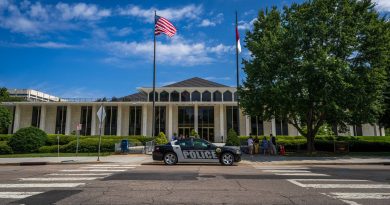
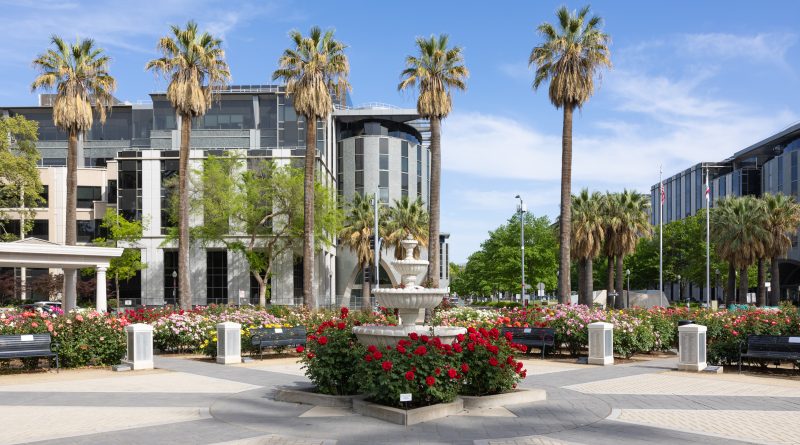
California State Capitol — Photo: Frank Schulenburg — CC BY-SA 4.0, via Wikimedia Commons
State Lawmakers Move to Override Fresno County Supervisors on Transportation Tax Vote
Two state legislators have taken the unusual step of rewriting a healthcare bill to force a transportation tax onto Fresno County’s November ballot — bypassing the Board of Supervisors’ decision to delay the measure.
Assemblymember Esmeralda Soria and State Senator Anna Caballero on Monday amended Assembly Bill 1923 into an “emergency statute” requiring Fresno County to place the Better Roads, Safe Streets initiative before voters this fall. The measure would replace Measure C, a half-cent sales tax for transportation projects that expires in June 2027.
The move came after the Fresno County Board of Supervisors voted in July to delay placing the initiative on the ballot until after completing a 30-day impact study — effectively pushing any voter decision to 2028. The initiative had gathered more than 30,000 signatures from county voters.
“Voters, not a select few County Supervisors, should have the final say about this initiative,” Soria said in a statement.
Supervisor Nathan Magsig, whose vote decided the July delay, says the state action “usurps the authority of us at the local level and the processes we have in place.”
“When our power and authority is taken away,” Magsig said, “I believe that at the end of the day it really hurts the public.”
Board Chair Garry Bredefeld called the state lawmakers “corrupt Sacramento politicians” pursuing a “disgraceful” effort to influence local elections. He told reporters the county is considering all options, including litigation, to “protect our citizens.”
Soria’s spokesperson, Brody Fernandez, countered that “what is unprecedented is the Fresno Supervisors using their authority to request a report on an initiative strategically to push that initiative off the ballot.”
The supervisors’ stated reason for the delay was concern that the measure was too “prescriptive” — particularly requirements to focus on disadvantaged communities, maintain a pavement condition index of 65% before capacity projects, and potentially add dedicated bus lanes where roads are expanded.
“I felt that it was so prescriptive that it would make it very difficult for the county to be able to spend its portion,” Magsig said.
Without a Measure C replacement, the financial impact would be severe. The City of Fresno projects losing roughly $54 million annually and 217 jobs, plus elimination of weekend evening bus service. Clovis anticipates a $6.3 million annual hit. The Fresno County Rural Transportation Authority expects to lose about $4 million yearly. County staff said they expect to lay off 90 employees.
Fresno Mayor Jerry Dyer and 10 other mayors in the county sent letters to Soria and Caballero on July 31 asking for help getting the measure on the ballot. Fresno City Councilmember Miguel Arias said 80% of Fresno County mayors, representing more than 800,000 residents, support the measure.
The bill must pass both houses of the state legislature with a two-thirds vote — it’s an “urgency” measure designed to take effect immediately — and be signed by Governor Gavin Newsom by Friday to get the initiative on the November ballot. It goes before Assembly and Senate Elections Committees on Wednesday.
The legislative maneuver, known as “gut-and-amend,” replaced AB 1923’s original purpose — extending Soria’s Distressed Hospital Loan Program. Soria’s office said she is seeking other options to pass that extension.
Michael Lane, policy director at the San Francisco-based think tank SPUR, called Fresno’s situation “unprecedented.” He noted that when the state legislature intervened in Bay Area transportation policy in 2018, it was at the request of a coalition of counties — not over their objection.
“That’s an important move by the legislature,” Lane said, “trying to protect that legislative process and the ability of the citizens to gather signatures and place a measure on the ballot.”
The county’s 30-day impact study is scheduled to be presented to the Board of Supervisors on Aug. 11 — after the Aug. 7 deadline for placing measures on the November ballot.
The Breakdown
- The Better Roads, Safe Streets initiative would continue a half-cent sales tax in Fresno County for transportation projects, replacing Measure C when it expires in June 2027.
- Measure C currently generates approximately $114 million annually for the county.
- The Fresno County Board of Supervisors voted in July to delay the measure for a 30-day study, pushing any vote to 2028.
- State lawmakers Esmeralda Soria and Anna Caballero rewrote AB 1923 to require the county to place the initiative on the November 2026 ballot.
- The bill needs a two-thirds vote in both legislative houses and the Governor’s signature by Friday to meet ballot deadlines.
- The measure includes requirements to focus on disadvantaged communities, maintain pavement quality before expanding roads, and potentially add bus lanes on expanded roadways.
What This Means for You
This is about who decides what appears on your ballot — and whose judgment you trust more. The state legislature is attempting to override local elected officials to give you a vote the supervisors tried to delay. If AB 1923 passes, you’ll decide this November whether to continue funding roads and transit through 2027 and beyond. If it doesn’t, the earliest you’d vote is 2028, and in the meantime cities across the county face layoffs and service cuts worth tens of millions of dollars annually.
The tension runs deeper than procedure. The supervisors who delayed this say the measure ties their hands too tightly on how to spend the money. The mayors and state lawmakers who want it on the ballot say 30,000 county residents signed petitions to vote on it, and the supervisors are trying to run out the clock. Your vote in November — if you get one — will effectively choose between those two views of what the county needs.
What You Can Do
AB 1923 goes before the Assembly and Senate Elections Committees on Wednesday, Aug. 6. Contact your state representatives to weigh in on whether the legislature should override the county supervisors’ decision. The study the supervisors ordered will be presented at their meeting on Tuesday, Aug. 11.
What to Watch
The stated reason for this intervention — protecting the right of citizens to place an initiative on the ballot after gathering signatures — sits uneasily next to the fact that the state lawmakers acted at the request of mayors and city officials, not spontaneously on behalf of the 30,000 petition signers. Who actually drove this?
More concretely: if the measure does make the ballot and passes, watch whether those “prescriptive” requirements Supervisor Magsig objected to — the focus on disadvantaged communities, the pavement-index threshold before road expansions, the potential for dedicated bus lanes — actually constrain the county’s ability to spend the money in ways voters expected, or whether those turn out to be exactly the accountability measures that keep the tax from becoming a blank check for whichever projects are politically convenient.
And if the measure doesn’t make the ballot? The City of Fresno has already approved its own replacement tax that applies only within city limits.