Fresno City Council Tables 9,000-Acre SEDA Plan — What It Means for Your Tax Bill and Housing Market — AI-generated illustration
Fresno City Council Tables 9,000-Acre SEDA Plan — What It Means for Your Tax Bill and Housing Market
Fresno’s City Council tabled the Southeast Development Area plan indefinitely on Nov. 5, effectively killing a proposal that could have added 45,000 homes and 9,000 acres of new development to the city’s southeast side. Councilmember Mike Karbassi made the motion; Councilmember Nick Richardson was the lone vote against tabling it.
Councilmember Annalisa Perea confirmed the decision in a statement released Nov. 5. “While this action does not formally reject the proposal, the reality is that it effectively brings the current plan to an end,” Perea said.
The decision ends years of planning on a proposal that split Fresno stakeholders along a clear cost-benefit line: supporters projected $2.5 billion in net revenue over 15 years, while opponents argued the city couldn’t afford the infrastructure investment while facing deferred maintenance and budget shortfalls.

The Breakdown
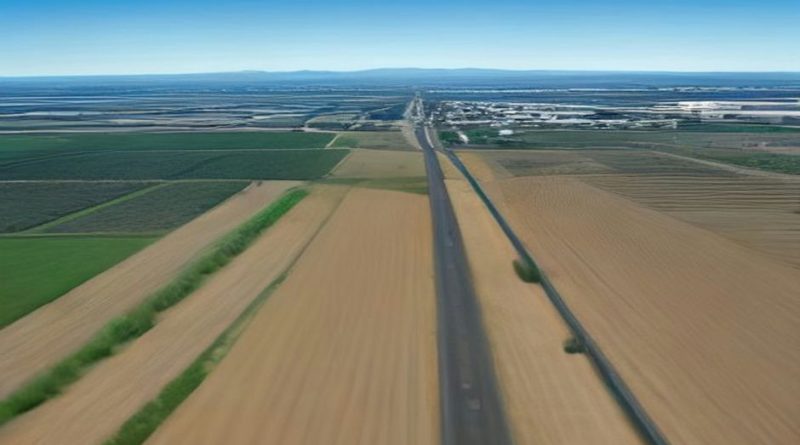
- The Plan: SEDA would have encompassed approximately 9,000 acres in southeast Fresno, eventually accommodating as many as 45,000 homes plus commercial and industrial development. A revised version concentrated initial development in a smaller “South SEDA” area, with additional phases requiring further environmental and financial analysis after hitting specified development thresholds.
- The Revenue Projection: A study by the National Association of Home Builders, released by the Building Industry Association of Fresno and Madera Counties (BIAFM) shortly before the vote, projected $3.9 billion in local government revenue against $1.4 billion in public costs over 15 years — a $2.5 billion surplus. The study assumed 1,500 homes built annually, totaling 22,500 homes over 15 years, and projected $17.7 billion in local income and 232,039 full-time job years across Fresno and Madera counties.
- The Competing Analysis: A separate analysis by Economic & Planning Systems, the city’s own consultant, examined only the initial South SEDA phase rather than the larger expansion — meaning the two studies differed in scope and cannot be directly compared.
- The Opposition Case: Dillon Savory, executive director of the Fresno-Madera-Tulare-Kings Central Labor Council, argued ahead of the vote that “there’s no money for this type of a project” given the city’s budget pressures and deferred maintenance. Savory also questioned demand for additional industrial development and argued existing growth areas could accommodate Fresno’s housing needs.
- Perea’s Reasoning: Perea said she supports long-term growth planning but could not support the proposal “in its current form” because “too many outstanding issues remained unresolved despite extensive discussions and public participation.” She said the council’s responsibility was to determine whether the proposal was right for Fresno, “not simply on how long a proposal has been under consideration.”
What This Means for You
The council’s vote to table SEDA means the question of how Fresno accommodates future growth — and who pays for it — remains unresolved. The decision turns on what you believe about cost versus revenue: the BIAFM study claimed SEDA would “pay back its infrastructure in four years and then deliver a growing surplus for decades,” while opponents argued the city can’t afford the upfront infrastructure investment while facing existing budget shortfalls and deferred maintenance. That trade-off — new development revenue versus existing-neighborhood needs — is the core question Fresno voters will continue to weigh when evaluating any future growth plan, whether SEDA returns in revised form or a different proposal emerges.
The council majority’s decision to table rather than reject outright leaves the door open for a revised proposal, but Perea’s statement that the current plan has “reached an endpoint” suggests any new version would need to resolve cost and demand questions the current proposal did not. Your vote for city council in future elections will directly shape whether and how Fresno pursues large-scale expansion versus reinvestment in existing areas.
What to Watch
The BIAFM study’s $2.5 billion surplus projection assumes 1,500 homes built annually for 15 years — but the material does not state what happens if construction falls short of that pace, or who absorbs the shortfall if revenue underperforms. The city’s own consultant analyzed only the initial South SEDA phase, not the larger expansion, meaning the council voted without a city-commissioned projection for the full build-out.
The deeper question: Fresno faces deferred maintenance and budget pressure in existing neighborhoods — Savory’s stated concern — while the BIAFM study projects revenue surplus from new development. The material does not state whether SEDA revenue would be restricted to SEDA or available citywide. A voter evaluating any future growth proposal should ask: where does the revenue actually go, who carries the risk if it underperforms, and what does the city forgo by directing capital toward new infrastructure rather than existing-neighborhood reinvestment?
Related Coverage
- District 1 Supervisor Runoff: Where Karbassi and Pacheco Stand on Libraries, Water, and Your Ballot
- Kerman Mayor Maria Pacheco Opens Commanding Lead Over Mike Karbassi in Fresno County Supervisor Race
- Two Visions for District 1: City Councilmember and Kerman Mayor Lay Out Plans for County Supervisor Seat