
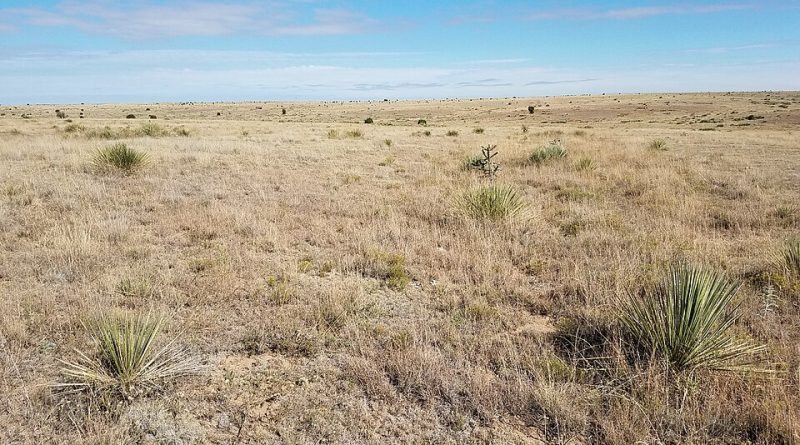
Fresno County Supervisors Approve 2,500-Home Friant Ranch Despite Confirmed Water Shortage Risk — Photo: National Trails Office (US National Park Service) — Public domain, via Wikimedia Commons
Fresno County Supervisors Approve 2,500-Home Friant Ranch Despite Confirmed Water Shortage Risk
The Fresno County Board of Supervisors voted last week to approve a 2,500-home development called Friant Ranch, even after the county’s own lawyer confirmed on the record that the project’s water plan won’t hold up in a multi-year drought like the one that hit in 2014-2015.
The board certified the project’s environmental review anyway. The deciding factor, according to the hearing, was county counsel Doug Sloan telling supervisors that the developer — not the county — would pay any legal bills if the vote gets challenged in court.
“There’s paper water, and then there’s real water,” Supervisor Luis Chavez said during the hearing.

The project, a billion-dollar age-restricted community south of Friant Dam, has been in the works for three decades. Its water plan relies on storing backup supply in Millerton Lake for multiple years. But the U.S. Bureau of Reclamation, which controls the dam, confirmed to reporting outlet Fresnoland that water can only be held there for one year — not the “multi-year surface water supply” county staff claimed in their report to supervisors.
County planners missed the gap because they relied on a 2008 water analysis, written before the 2014-2015 drought. When the county promised an updated water assessment in 2014, it later dropped that commitment. Instead, it leaned on a 2022 memo from the developer’s own consultant, which copied old data from 2008 rather than analyzing new drought scenarios.
Sloan reached out to the Bureau of Reclamation after Fresnoland reported the storage issue. At Tuesday’s hearing, he told the board he had confirmed the water cannot be stored for multiple years as county staff had assumed.
The developer’s lawyer, James Moose, initially tried to dismiss the reporting. “A newspaper article is not evidence. It’s full of hearsay,” Moose said, urging supervisors to approve the project.
After hearing from Sloan, Chavez asked the developer’s team directly: “Are you confident that even in a drought situation, you would have ample water supply for those residents?” The county took the developer’s assurance at face value.
Supervisor Garry Bredefeld said the water questions had been “adequately addressed to my satisfaction.” The board voted unanimously to certify the environmental review. Supervisor Brian Pacheco cast the only no vote on a separate zoning motion.
Pacheco, a farmer with knowledge of water law, visibly grimaced during the hearing. “I see our colleagues in Madera are putting successful project after successful project on the map,” he said. “But in our experience, we haven’t been able to do that yet.” He voted yes on the environmental review anyway.
Fresno County has a documented track record of approving foothill subdivisions whose water systems later failed. One subdivision’s water got contaminated with uranium. Pacheco said the board had dealt with “issue after issue of water” in the area in recent months.
Radley Reep, a Clovis resident working with the League of Women Voters — a nonprofit that has sued Friant Ranch before — told the board it had acknowledged “changed conditions and new information” that should have triggered an updated environmental review. “If this goes to court, the court will overturn you in two seconds,” Reep said.
If the Millerton Lake storage runs dry, the project’s fallback is a deal with the Lower Tule River Irrigation District, 80 miles south in Tulare County. That area has seen the worst land subsidence in California — more than 7.7 feet since 2015 — and the state put it on probation in 2024, with pumping now metered and charged.
The deal assumes Lower Tule can pump Tule River water into the Friant-Kern Canal to free up Millerton water for Friant Ranch. But the 2007 analysis that approved relying on Lower Tule’s water assumed growers there could fall back on groundwater wells in dry years — an assumption that no longer holds under the Sustainable Groundwater Management Act, which now restricts pumping.
If both the Millerton storage and the Lower Tule fallback come up dry, officials would be left scrambling to find emergency drinking water for the roughly 7,000 people the development is expected to house.
The Breakdown
- Friant Ranch is a 2,500-home, age-restricted (55+) development south of Friant Dam, sized to match the city of Fowler.
- The project’s water plan relies on storing a multi-year backup supply in Millerton Lake, behind Friant Dam.
- The U.S. Bureau of Reclamation confirmed to Fresnoland that water can be held there for only one year, not multiple years as county staff claimed.
- County planners based their conclusion on a 2008 water analysis, written before the 2014-2015 drought. An updated 2022 memo from the developer’s consultant copied the old data rather than analyzing new drought scenarios.
- County counsel Doug Sloan confirmed the storage issue on the record at the hearing, after reaching out to the Bureau following Fresnoland’s reporting.
- The board certified the environmental review anyway, after Sloan told them the developer would pay legal costs if the vote is challenged.
- The project’s fallback — a deal with the Lower Tule River Irrigation District in Tulare County — was analyzed in 2007 on the assumption that growers there could pump groundwater in dry years. Groundwater pumping is now restricted under state law.
- If both the storage plan and the fallback fail, officials would need to find emergency water for about 7,000 people.
What This Means for You
This vote is a test of how the five supervisors you elect handle a known public-health risk when the developer offers to cover the legal cost of approving it anyway. The county’s own counsel confirmed the water plan won’t work as described, and the board voted yes. If the project’s water runs out in the next drought, it will be this board — and whoever you elect to replace them — responsible for finding emergency water for thousands of people, not the developer who promised it would work out.
Supervisor Nathan Magsig, whose district includes the project, was asked directly whether he would approve a subdivision that wouldn’t have water in a drought. He declined to give a yes-or-no answer, saying only that he wanted to “make sure that it checks all the boxes.”
The supervisors who voted yes are Luis Chavez, Garry Bredefeld, Nathan Magsig, Steve Brandau, and Brian Pacheco (who voted no on a separate zoning motion but yes on the environmental review).
What You Can Do
Radley Reep, the Clovis resident who spoke at the hearing, works with the League of Women Voters, which has sued Friant Ranch before. Reep told the board he expects the vote to be challenged in court.
What to Watch
The county certified this environmental review knowing its water analysis was based on outdated information and a confirmed falsehood about storage capacity. That decision raises a straightforward accountability question: when officials approve a project after being told on the record that its core premise doesn’t hold, who actually pays the cost if it fails?
In this case, the answer is clear from the hearing itself. County counsel Doug Sloan told supervisors the developer would pay any legal bills if the vote gets challenged. The board voted yes immediately after. The implicit bargain — approve now, let the developer handle the lawsuit later — shifts the legal risk off the county, but it doesn’t shift the public-health risk. If Friant Ranch runs out of water in a drought, it will be county officials, not the developer’s lawyers, scrambling to find an emergency supply for 7,000 people.
The county has done this before. Supervisor Pacheco said the board has dealt with “issue after issue of water” in foothill subdivisions in recent months. One subdivision’s water got so contaminated it tested positive for uranium. The county has asked the state for bailouts when subdivision water systems failed.
Why does this keep happening? One answer is in the record: Fresno County has a documented pattern of approving subdivisions based on water plans that don’t survive the next drought, then turning to the state when the wells go dry. Another answer is in Tuesday’s hearing: when the developer offers to cover the legal cost, and the county’s own lawyer confirms the plan won’t work, the board votes yes anyway and calls the questions “adequately addressed.”
Radley Reep told the board he expects a court to overturn the vote “in two seconds” for approving the project after acknowledging the water plan had changed and new information had come in. If that challenge is filed, watch whether the developer actually pays the legal bills as promised, or whether the county ends up defending this vote on its own.
Reep works with the League of Women Voters, which sued Friant Ranch successfully once before — a lawsuit that led the California Supreme Court to throw out the project’s air quality analysis in 2018. That lawsuit is the reason the county had to redo any environmental review at all. When the court ordered the redo, the county promised to recheck the water supply too, then quietly dropped that promise in 2021. The pattern to watch is whether the county’s willingness to skip hard questions now leads to the same result later: another lawsuit, another delay, and another cycle of promises the county doesn’t keep.