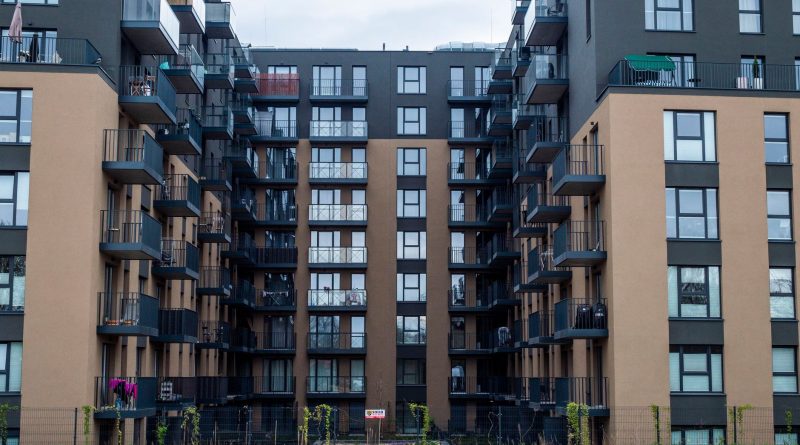
apartment construction housing development — Photo by SHOX ART via Pexels
City says South SEDA will cost taxpayers $86 million. Critics aren’t buying it.
Fresno’s putting a number on what South SEDA will cost you: $86 million, just for the sewer line. That’s what Mayor Jerry Dyer’s administration told the City Council last week. Everything else — streets, sidewalks, lights — gets built by developers as they go, city officials say, funded through impact fees.
The council’s not convinced. Neither are the project’s critics. District 5 Councilmember Brandon Vang called the numbers “mind-boggling” and said he won’t support it. District 3 Councilmember Miguel Arias said it doesn’t pass the “smell test.”
South SEDA is the scaled-down version of Dyer’s original plan to annex 9,000 acres of farmland south and east of the city for up to 45,000 new homes. This piece covers 2,000 acres — 467 for housing, 1,547 for advanced manufacturing. The city held a workshop September 18 on how to pay for it, nine months after the council demanded a financial review.

The $86 million covers building a $72 million sewer trunk line plus financing costs. A 2025 city study put total first-phase infrastructure at $672.3 million. Jennifer Clark, planning and development director, says the sewer line is the only thing the city builds upfront. Everything else happens as development happens.
Dyer, who calls himself formerly “anti-SEDA,” now says it’s “fiscally prudent” and “smart growth” because of a tax-sharing deal with the county, a special tax for police and fire on new homes, and a community benefit fund. He argues Fresno needs the manufacturing jobs and can’t afford to lose residents to Madera.
The proposal’s harshest critic, Dillon Savory of the Fresno-Madera-Tulare-Kings Central Labor Council, asked the council to weigh the net benefit against the harm to students and existing communities. “Every time there’s a new restaurant or a new thing in Fresno, we all rush towards that, and then we abandon it later,” he said. Patience Milrod, an attorney for the CLC, wants the plan sent back to the planning commission.
Resident Hester Hensley raised the question directly: “My concern is that Southwest Fresno is still getting left out and put aside and overlooked because we’re not developing in that area like we should be.”
The Breakdown
- The city hired a consultant to analyze financing options for South SEDA’s “upfront backbone infrastructure.” The firm, Economics & Planning Systems, didn’t independently evaluate whether the proposed land uses are actually feasible.
- One option: an enterprise revenue bond, repaid from water and sewer user fees. The city says it would tap the utility’s $32.8 million reserve fund to make the first debt payments — roughly $6.5 million a year for three to six years, until the project becomes “cost neutral” and pays back the reserves. Dyer separately plans to raise water and sewer rates later this year.
- Another option: a public-private partnership where a private developer funds predevelopment costs upfront and the city issues a special infrastructure tax to reimburse them.
- The financial analysis assumes 20 single-family homes per acre across 400 acres. The median American subdivision in 2016 had 4 housing units per acre, according to the National Association of Home Builders.
- The consultant’s report says South SEDA will eventually pay for itself and generate general-fund revenue. The report doesn’t independently verify that claim.
What This Means for You
You’re being asked to trust a financial projection built on assumptions the city’s own consultant didn’t independently verify — and to trust that a reserve fund meant for the sewer utility won’t turn into a rate increase when the city comes asking for more money later this year. This is your council deciding whether to approve annexing farmland for a development the mayor wants, using public money in ways two councilmembers say don’t add up. Whether this moves forward depends on how the full council votes — and whether you believe the $86 million figure is the real total or just the opening bid.
What You Can Do
The City Council hasn’t scheduled a vote yet. District 5 Councilmember Brandon Vang has said he won’t support it; District 3 Councilmember Miguel Arias is still studying it. Contact your councilmember if you have a position on whether the city should tap utility reserves to fund this project.
What to Watch
Start with the gap the city isn’t talking about: a 2025 study put total first-phase infrastructure at $672.3 million. The city now says it’s only on the hook for $86 million because developers will cover the rest. Who are those developers, and what’s their track record? The material doesn’t name them. When a city says “developers will pay for it” without naming who or showing a signed agreement, that’s a promise, not a plan.
Then there’s the density question Vang raised: 20 units per acre, five times the national median for a subdivision. Is that realistic for Fresno, or is it an assumption chosen because the math doesn’t work otherwise? The city’s consultant didn’t verify it.
Why is public money subsidizing new construction on farmland when the city has existing neighborhoods that need investment? Hensley named Southwest Fresno directly — a part of the city that’s been overlooked for decades while proposals like this one get workshops and financing plans.
If the utility reserve fund covers the first few years of debt payments, what happens when those reserves run low and the project hasn’t hit “cost neutral” yet? Dyer’s already planning a water and sewer rate increase later this year. Coincidence, or the setup?
This is the smaller version of a 9,000-acre plan the council already pushed back on once. If the city approves South SEDA based on financials that assume things will work out, does the rest of the 9,000 acres come next, or does this piece fail and leave the city holding the bill?