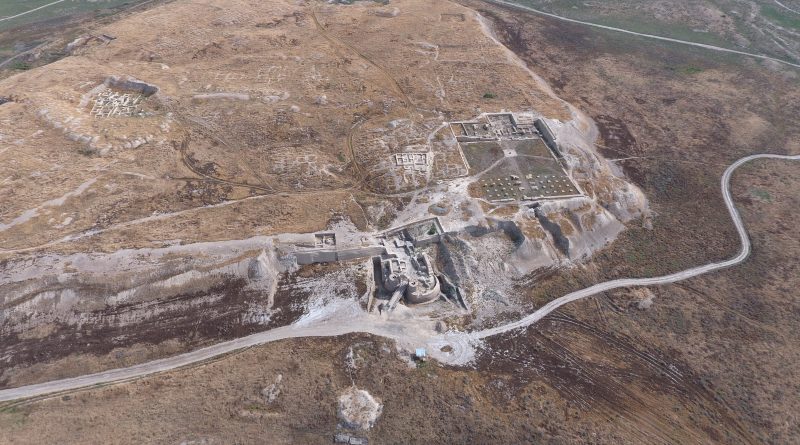
South SEDA — Photo: GaiJorayev — CC BY 4.0, via Wikimedia Commons
Mayor Dyer’s Southeast Development Plan Advances Despite $3 Billion Funding Gap and Community Opposition
Fresno Mayor Jerry Dyer has orchestrated a path forward for the Southeast Development Area — a massive expansion plan that would convert farmland into suburban housing — despite widespread community opposition and no public financing plan to cover a $3 billion infrastructure shortfall.
The Fresno City Council voted 5-2 to advance a scaled-back version of the project, known as South SEDA, after the original 9,000-acre proposal met fierce resistance from residents, unions, and education leaders. The smaller plan covers roughly 2,000 acres and would bring up to 4,800 housing units, though critics warn it’s a gateway to the full development.
Only Councilmembers Brandon Vang and Miguel Arias voted against the scaled-back plan. A majority — Nick Richardson, Tyler Maxwell, Mike Karbassi, and one other member — signaled support for the project despite its financial uncertainty.

The project’s infrastructure costs range between $3 billion and $4 billion, according to city estimates. Special financing districts and developer fees are expected to cover only 20% of those costs, leaving the remainder to be financed through bond measures that would be repaid by current Fresno residents.
“My timing is going to be dictated by whether we can get this thing passed. I don’t want to fail. It’s too important,” Dyer told a room of major developers at a May 21 meeting in City Hall, according to material from that gathering.
At that meeting, developer Darius Assemi of Granville Homes — who owns land in the SEDA area — told Dyer the project’s appeal centers on access to Clovis Unified schools. “Clovis Unified has a gorgeous, brand new toy,” Assemi said, referring to the Terry Bradley Center. “There’s going to be a lot of pressure on all of us to provide housing in that vicinity.”
Assemi owns a $3.4 million parcel near the Bradley Center, according to county tax rolls.
The Breakdown
- The original SEDA plan proposed converting 9,000 acres of farmland into 45,000 homes, commercial centers, and industrial parks.
- After months of organized opposition, the City Council voted 5-2 to advance a scaled-back version covering roughly 2,000 acres with up to 4,800 housing units.
- Infrastructure costs are estimated at $3 billion to $4 billion, with special financing districts and developer fees covering only 20% — leaving the remainder to be financed through bonds repaid by current city residents.
- The typical Fresno household cannot afford the projected $400,000 average home price in SEDA under a standard financing scenario.
- Councilmember Nick Richardson said he’s willing to use general fund dollars to extend utilities to the area, and suggested the city’s vehicle-miles-traveled (VMT) fee program could be changed to help recoup infrastructure costs — though SEDA is not currently on the approved list of VMT-reducing projects.
- Mayor Dyer proposed safeguards requiring 70% of the initial phase to be developed before any future expansion, a supplemental environmental review for future phases, and a voter referendum before expanding beyond the initial area.
What This Means for You
This is a decision about whose priorities the City Council serves — and what you’re willing to pay for. The council voted to advance a project that would subsidize new suburban housing priced beyond what most Fresno families can afford, in an area designed to attract buyers seeking Clovis Unified schools, while leaving current city residents to cover billions in infrastructure costs through higher utility bills or reduced city services.
Councilmember Richardson has said he’s open to using general fund money — the same pool that pays for police, fire, parks, and street maintenance — to extend utilities to the development. Richardson suggested the city’s VMT program, meant to reduce car traffic, could be altered to help pay for SEDA’s infrastructure, even though the project would massively increase driving.
The typical Fresno household earns less than what’s needed to afford a $400,000 home. Yet the council advanced this plan without a public financing analysis showing how the city will cover the $3 billion shortfall.
Dyer’s proposed safeguards — including a future voter referendum — rely on the council holding the line years from now, after the first phase is built and the momentum for expansion is underway. The question before you is whether you trust that process, and whether you believe this council is prioritizing your neighborhood’s needs or a developer’s investment.
What to Watch
The financial accuracy question: the city has released no public plan showing how it will cover the $3 billion to $4 billion infrastructure shortfall. Special financing districts and developer fees cover only 20% of the costs. That leaves bond measures — debt the city takes on and repays over time, likely through higher utility rates or reduced services elsewhere. A consultant’s report said the project “may not be financially feasible” due to the infrastructure cost burden. No one at Dyer’s May meeting with developers offered to cover the full costs. The city is asking you to trust that future revenues from the development will eventually pay back what current residents are asked to front — a return-on-investment timeline the mayor himself said in May would fall “on the backs of ratepayers.”
The beneficiary question: who actually benefits from this project? The homes are priced beyond what the typical Fresno household can afford. Developer Darius Assemi told the mayor the project’s appeal is access to Clovis Unified schools — meaning the market isn’t Fresno’s current residents, it’s families seeking to avoid Fresno Unified. Fresno Unified’s board president warned the project would harm city schools. Manuel Bonilla of the Fresno Teachers Association called it “an indirect expense to Fresno Unified students.”
The opportunity-cost question: why is public money going toward new suburban construction rather than toward the city’s existing housing stock? Residents at public hearings noted the city already has 8,200 acres of undeveloped infill land within current boundaries, plus the recently approved West Area plan supporting up to 55,000 housing units. Dee Barnes, a former Fresno Police Department employee, pointed to vacant lots, boarded-up buildings, and empty shopping centers across the city. “We need to fix Fresno. We need to fix the infill. We cannot afford to keep expanding,” she said.
The long-term pattern question: concentrated development on the urban edge, funded by public subsidy, is a recognized pattern in many cities. Matthew Jendian, a Fresno State sociology professor, said “Development doesn’t just happen. It follows public investment” and warned that sprawl development would come “at the expense of current city residents.” This is not a certainty about this specific project, but it is a genuine risk worth watching: whether this development stabilizes the city or stretches it further.
The council has asked city planning staff to return in about six months with a revised proposal for the scaled-back South SEDA plan. That timeline gives residents one more window to press for a real financing plan before the next vote. The question is whether the council will demand one — or whether they’ll approve the project on the same trust-us terms they used in January.