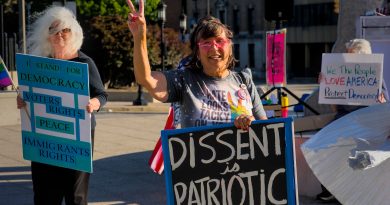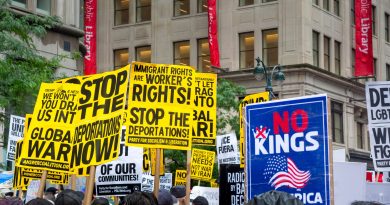
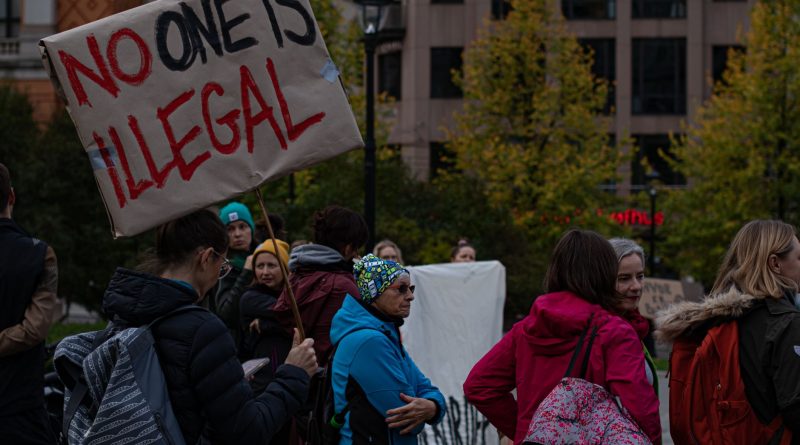
immigration civic community scene — Photo by Maciej Prus via Pexels
Central Valley Detention Center at Heart of Family Separations as ICE Enforcement Intensifies
When ICE agents detained Miguel Carino at what his attorneys expected to be a routine immigration check-in last September, his 3-year-old son Carlos stopped participating in preschool activities, cried frequently, and started calling everyone “Papi” — a term of endearment, but also the name of the father he’d lost.
Miguel was brought to a detention center in California’s Central Valley, where he spent six months before self-deporting to Mexico in March, worn down by what the family describes as brutal detention conditions and the prospect of forced removal.
The Central Valley facility — identified as Central Valley Annex, run for ICE by private prison company GEO Group — has become a focal point for families across the country navigating separation.

Miguel had lived in Los Angeles for nearly 25 years, owned a small construction business in East Los Angeles, and employed other workers. His wife Jazmin, 24, is a U.S. citizen, and Miguel had applied for an adjustment of status based on their marriage. That application was pending when he was detained.
The separation triggered immediate behavioral changes in Carlos. His early education assistant, Ana Soto, watched him withdraw. Jazmin took on extra house-cleaning shifts to cover expenses and made the five-hour round-trip to the Central Valley detention center twice a month with Carlos.
The visits were constrained — no hand-holding, no movement from seats — and saying goodbye was wrenching. “My son didn’t want to let go of him,” Jazmin said.
After Miguel self-deported to Tijuana in March, Jazmin took Carlos to visit there. But Miguel moved to Mexico City in April to find work, and the family lacks resources to fly there. Carlos hasn’t seen his father in person for three months. His earlier signs of stabilizing — wearing a hand-knit beanie his father made, reclaiming his own name when called “Papi” — have faded.
Jazmin observed the scale of family disruption firsthand in the Central Valley Annex lobby, where she saw families from as far as Florida waiting to visit detained relatives. “I recall a woman with six children, including one child with autism and a newborn,” she said. “I saw newborns from out of state visiting and being held by their fathers for the very first time.”
The pattern extends beyond individual cases. Research documents the long-term cost: a 2022 study in the Journal of Policy Analysis and Management found substantial spikes in school absences, disciplinary actions, and diagnoses of substance use disorder, depression, self-harm, and suicide attempts or ideation following a large immigration raid in Morristown, Tennessee.
A 2020 study in the Journal of Traumatic Stress found that 43% of migrant children and adolescents seen in mental health clinics were diagnosed with PTSD, and 24% with depression.
A March commentary in the New England Journal of Medicine stated the stakes directly: “Separation is not merely stressful for young children — it is toxic.”
The Trump administration’s simultaneous cuts to food assistance and other services compound the strain on families already dealing with detention and separation. Tatiana Londoño, an assistant professor of social welfare at UCLA’s Luskin School of Public Affairs, and other advocates are urging California to increase funding to organizations working to meet immigrant families’ basic needs so parents can be “emotionally available to their children.”
Another family, the Gonzalezes in San Bernardino, faces a different but related uncertainty. Marcos Gonzalez, a 50-year-old construction worker who fled El Salvador 25 years ago, obtained work authorization and deportation relief under Temporary Protected Status (TPS), a 1990 Congressional program for migrants who can’t safely return home.
The Trump administration has pushed to end the program in both terms. On June 25, the Supreme Court ruled 6-3 that the administration may end TPS for immigrants from Haiti and Syria, potentially clearing the way to strip protections from 1.3 million people — including 170,000 Salvadorans like Marcos, who could lose protected status as soon as September 9.
The uncertainty affects Marcos’s daughter Janet, 16, a U.S. citizen and high school sophomore. “At times, I am at school, and I can’t focus on my work because I am thinking about my parents and wondering if they are still home or if they have been taken away,” she said.
The family has begun discussing their “plan B” if forced to separate — preparing Janet’s older siblings, who work and attend college, to care for her and her younger sister if their parents are removed.
Los Angeles Unified School District reported attendance fell by about 7,000 more than anticipated last November as children from immigrant families stayed home, and current enrollment figures show a 4% decline in 2025-2026 from the previous year.
A December 2025 Urban Institute survey found more than 1 in 5 adults in immigrant families with children reported their families did not engage in essential activities like attending school because of immigration concerns, and over 1 in 7 reported their children experienced increased emotional distress because of immigration-related worries.
Fear of drawing attention to immigration status is also driving families away from government programs. A KFF/New York Times survey found the share of immigrant adults who avoided applying for food, housing, or health care assistance rose to 12% in 2025 from 8% in 2023.
Dennis Dacarett Galeano, a psychiatrist and assistant clinical professor at UCLA, said families are “seeking care reactively when they absolutely need it — when they can’t hold out any longer.”
Marcos Gonzalez said his family feels targeted. “Speaking Spanish or the color of our skin flags us for interrogation,” he said. He has taught his daughters their rights: stay quiet, confirm they are citizens, and offer no information about their parents.
The family has stopped going out unless necessary. Janet spends afternoons playing board games and sitting with her parents in the backyard, trying to spend as much time with them as possible. “I want to see them at my graduation,” she said. “They are the reason I am here.”
The Breakdown
- ICE detention operations in California’s Central Valley are separating families, with documented long-term mental health consequences including PTSD, depression, and anxiety in children.
- The Supreme Court ruled 6-3 on June 25 that the Trump administration may end Temporary Protected Status (a 1990 Congressional program providing work authorization and deportation relief for migrants who can’t safely return home) for immigrants from Haiti and Syria, potentially clearing the way to strip protections from 1.3 million people, including 170,000 Salvadorans who could lose status as soon as September 9.
- Los Angeles school attendance has dropped — 7,000 more absences than anticipated last November, and a 4% enrollment decline in 2025-2026 — as families stay home due to immigration concerns.
- The Trump administration is simultaneously cutting food assistance and other services that support families in distress, while advocates urge California to increase funding to fill the gap.
What This Means for You
If you’re a Fresno voter weighing federal or state leadership, this is what the current administration’s immigration enforcement looks like in practice: families detained at Central Valley facilities, children pulled out of school, and mental health consequences documented by multiple studies. The Supreme Court’s June 25 ruling gives this administration the green light to strip protections from over a million people, including 170,000 Salvadorans, as soon as September 9 — that’s a policy decision voters will face again in 2028.
At the state level, California’s response to the administration’s simultaneous service cuts will be shaped by whoever you elect to the legislature and Governor’s office — advocates are pushing for increased funding to organizations supporting immigrant families, and that funding is controlled by votes in Sacramento.
What to Watch
The September 9 deadline for potential TPS terminations is the immediate trigger — watch whether the administration actually moves forward, and whether California’s legislature and Governor respond with the increased funding advocates are requesting. Longer term, the real cost-benefit question here is one no official quoted in this story raised: who actually benefits from an enforcement posture that pulls business owners and construction workers out of their communities, strains school systems, and creates documented long-term mental health costs that California’s public services will eventually carry? The material doesn’t claim this enforcement produces a public-safety benefit, a fiscal benefit, or a labor-market benefit that offsets those costs — it documents costs without a stated return. The question a voter should be asking is whether the administration directing this enforcement, or the state officials responding to it, have any evidence-based answer to that cost-benefit calculation, or whether this is purely symbolic policy with real human and fiscal expense attached. That’s not a settled fact — but it’s a legitimate, concrete question the material raises and doesn’t answer.