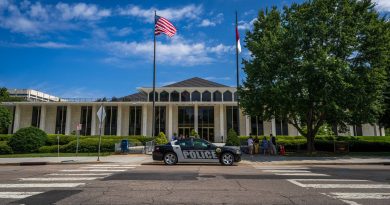
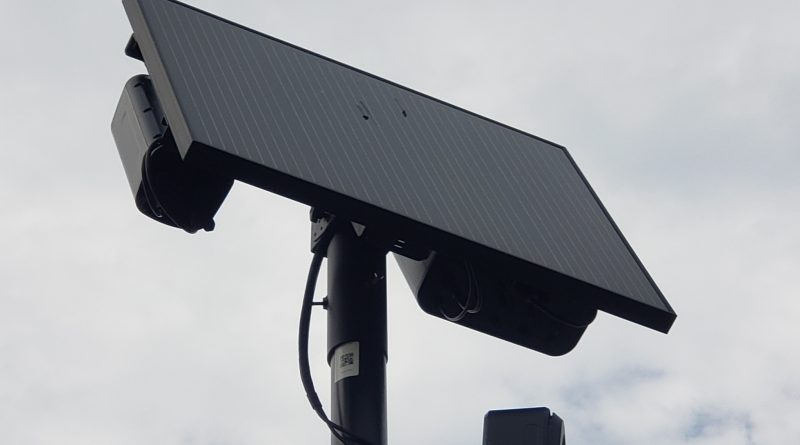
Flock Safety — Photo: Epicdeflocker64 — CC0, via Wikimedia Commons
Surveillance Camera Firm Flock Changes Rules After Officers Caught Stalking on Its System
Flock Safety — the company behind 120,000 license-plate cameras tracking drivers across the U.S. — announced new restrictions Thursday after reports that at least 50 officers used its system to stalk ex-partners, track family members, and run unauthorized searches.
The changes came after The Washington Post found dozens of officers charged or convicted of misusing the cameras. Six Savannah, Georgia police employees were fired in August over alleged Flock misuse. A North Carolina officer was arrested earlier this month for allegedly tracking her boyfriend’s ex-wife using the system.
Flock CEO Garrett Langley told the Post the company had hoped agencies would voluntarily adopt safeguards — they didn’t. Now Flock’s making them mandatory by January 1.

The new rules: officers must tie every search to a case number. The system will flag abnormal activity and lock out users pending review. Data retention drops from 30 days to seven by default. Cities can now block other agencies from searching their cameras for specific offense types — including immigration enforcement.
Langley said the changes reflect “years of work.” Civil liberties groups called them window dressing.
“Flock is still asking thousands of police departments to police themselves, despite evidence from across the U.S. that this lack of guardrails is unsafe,” said Tom Bowman of the Center for Democracy & Technology. “The fix that will actually stop the threats Flock and other ALPRs pose is the same one American privacy law has always relied on: make the government get a warrant.”
Robert Frommer of the Institute for Justice, which documented over 100 incidents of license-plate-reader abuse this week, called the changes “panic mode.” His group’s database includes stalking, wrongful stops, and non-law-enforcement use.
More than 50 agencies have canceled, suspended, or rejected Flock contracts since January, according to DeFlock, a grassroots tracker. Cameras have been vandalized nationwide. Congressional Republicans filed two bills in July to restrict the technology.
Flock also confirmed it fixed a December 2025 glitch that left some AI-powered cameras accessible to the public — “third parties were able to access live streams and footage,” Langley wrote, blaming a vendor configuration error.
The Breakdown
- Flock Safety operates a network of automated cameras that photograph every passing vehicle’s license plate and other characteristics — data that thousands of police agencies in 49 states can search and share across jurisdictions without a warrant.
- At least 50 officers have been accused, charged, or convicted of using Flock and similar systems to stalk romantic partners, track family members, or run unauthorized searches — The Post says it’s confirmed over a dozen additional cases since its August report.
- The new mandatory rules (by Jan. 1): officers must enter a case number before searching; the system will auto-flag and lock out abnormal activity; data retention drops from 30 days to 7 days by default (with an “evidence mode” for active cases); cities can block outside agencies from searching their cameras for specific offense types, including immigration enforcement.
- One-third of Flock’s customers had already adopted the audit tool that flags abnormal behavior — it “has been associated with arrests of several law enforcement officers who allegedly abused the system,” Langley wrote. Now it’s mandatory for everyone.
- Critics say the changes don’t address the core problem: police still decide who to search and when, with no judicial check. “This is window dressing that doesn’t address the fundamental problem, which is that police officers are the ones deciding who and when to search, and that should be done by judges with real warrants,” said Robert Frommer of the Institute for Justice.
What This Means for You
If your city or county uses Flock cameras — or contracts with an agency that does — your movements are being logged every time you pass one. That data can be searched by officers in other cities, other counties, other states.
The question for a voter is whether the people you elect to run your police department, your city, your county are willing to let that happen without a warrant, and whether they’re willing to keep paying for a system that just admitted it couldn’t stop its own users from turning it into a stalking tool. At least 50 jurisdictions decided the answer was no and walked away from their contracts this year. If your city or county is still paying Flock, the officials who approved that contract owe you an answer about what oversight they actually put in place — not what the company says they could do, what they actually required.
What You Can Do
Check whether your city or county has a contract with Flock Safety or uses license-plate readers from any vendor — that’s a public record. If they do, contact your city council member or county supervisor and ask what restrictions are in place, what audit process exists, and whether the jurisdiction has considered canceling the contract in light of the documented abuses. DeFlock maintains a national tracker of Flock use and cancellations at deflock.me.
What to Watch
Flock says the safeguards are now mandatory — but the company also said it “hoped” agencies would adopt them voluntarily, and they didn’t. The enforcement mechanism is still Flock deciding to lock someone out, not a judge deciding whether the search was legal in the first place. That’s the gap civil liberties groups are pointing to: no warrant requirement, no external check, just the company and the agencies trusting each other to follow rules the public can’t see being enforced in real time.
The broader question is whether any of this is constitutional. The Institute for Justice and the ACLU both argue that a system tracking every car, every day, everywhere, with no warrant and no probable cause, is exactly what the Fourth Amendment was written to prevent. Courts haven’t settled that yet — but the fact that over 50 jurisdictions walked away from their contracts this year suggests the politics are moving faster than the law.
Flock commissioned an independent security review from Bishop Fox, with results due in September.