
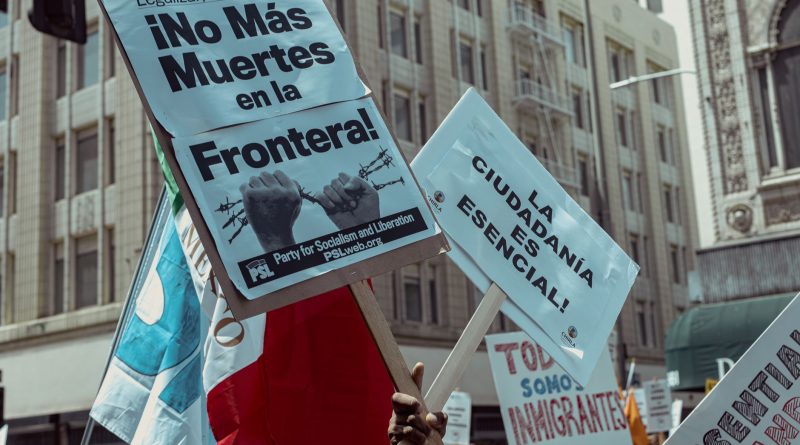
immigration civic community scene — Photo by Selvin Esteban via Pexels
Central Valley Detention Center Where Fresno-Area Families Visit Loved Ones Linked to Child Trauma in New Report
A Central Valley detention center where families from across the state — and the country — come to visit loved ones detained by ICE is at the center of a new report documenting severe mental-health harm to children whose parents are held there.
The report, published by MindSite News, follows a Los Angeles family whose father was detained by ICE agents last September and held at Central Valley Annex, the massive detention center run for ICE by private-prison company GEO Group. The family made the five-hour round-trip from Los Angeles to the Central Valley twice a month for six months. The mother, Jazmin, says she saw families from as far away as Florida in the lobby waiting to visit detained spouses.
The report documents immediate changes in the couple’s 3-year-old son Carlos after his father was detained: he refused to participate in circle time at preschool, cried frequently at school and home, and started calling everyone “Papi.” When the father self-deported in March “exhausted by the brutal conditions at the detention center,” the child showed signs of improvement during brief visits to Tijuana. But when the father moved to Mexico City in April to find work, those visits stopped — the family doesn’t have the resources to fly there. The child’s confidence and ease are fading again.

“We couldn’t hold hands, we couldn’t get up from our seats,” Jazmin said of the detention-center visits. “When it was time to say good-bye, my son didn’t want to let go of him.”
The report cites research documenting what it calls “toxic stress” from immigration enforcement: a 2022 study in the Journal of Policy Analysis and Management found “a substantial spike in absences from school in the month of the raid and significant increases in exclusionary disciplinary actions and in diagnoses of substance use disorder, depression, self-harm, suicide attempts or ideation, and sexual abuse” among children of immigrants following a Tennessee immigration raid. Another study found 43% of migrant children and adolescents seen in mental-health clinics were diagnosed with PTSD and 24% with depression.
“Even a small separation from parents, no matter how short, can have a rupture on that child’s developmental well-being,” says Tatiana Londoño, a UCLA assistant professor whose work focuses on how Latino immigrants navigate detention and deportation. “We are leaving a long-term, potentially multi-generational impact on these families.”
The report notes that the Trump administration is also cutting food assistance and other services that help support families in distress. Londoño and other advocates are urging California to increase funding to organizations working to meet immigrant families’ basic needs so parents can be “emotionally available to their children.”
Carlos is one of every five children in California living in mixed-status families in which at least one member is undocumented. Nationwide, there are 4.7 million such households.
The Breakdown
- ICE detained the father during what his attorneys assumed would be a routine check-in with U.S. Citizenship and Immigration Enforcement (USCIS) — he had lived in Los Angeles for nearly 25 years, owned a small construction business, and had applied for an “adjustment of status” based on his marriage to a U.S. citizen.
- The family made the five-hour round-trip to the Central Valley detention center twice a month for six months before the father self-deported in March.
- The detention center involved — Central Valley Annex — is run for ICE by GEO Group, a private prison company.
- Research cited in the report documents lasting harm: children separated from parents by immigration enforcement show increased risk of PTSD, depression, substance use disorder, self-harm, and suicide attempts or ideation.
What This Means for You
This is what immigration-enforcement policy looks like in practice in the Central Valley: families traveling hours to visit detained loved ones under conditions where they can’t hold hands or get up from their seats, children showing immediate behavioral changes, and GEO Group running the facility where it happens. Londoño’s call for California to increase funding to support families in distress is a state-budget question — one California voters and their representatives will decide.
What to Watch
The report explicitly names the Trump administration as cutting food assistance and other services that help support families in distress at the same time ICE enforcement is creating the trauma. The research cited here doesn’t hedge: separating young children from parents causes “preventable, policy-driven trauma with long-term consequences for child health and development.”