
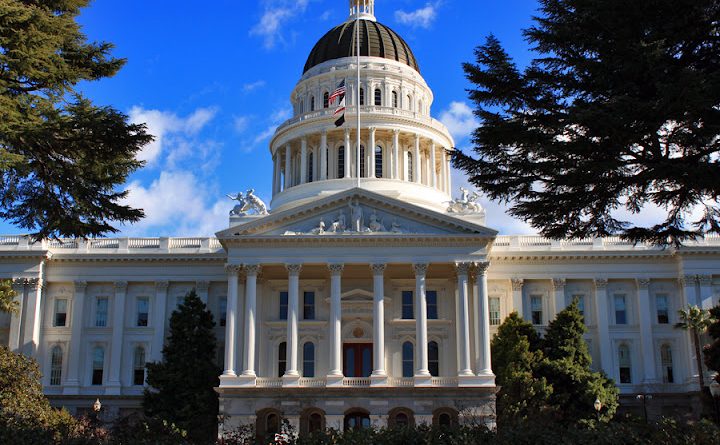
California State Capitol — Photo: Christopher Padalinski — CC BY-SA 3.0, via Wikimedia Commons
California lawmakers advance new restrictions on police license plate cameras after Newsom veto
The California Legislature is moving forward with Senate Bill 1013, authored by Riverside Democratic Sen. Sabrina Cervantes, which would impose new limits on how police agencies collect, retain, and share data from automated license plate readers. The bill advanced through committee with only Republicans voting against it and now awaits consideration by the Assembly Appropriations Committee.
At least 230 California police and sheriffs’ departments currently use the technology. Fresno-area agencies are among them, though the provided material does not specify which local departments operate the cameras or how many they’ve deployed.
The measure comes after Gov. Gavin Newsom vetoed similar legislation last year. At least 39 police agencies and officers’ unions oppose the current bill. Combined, those organizations have spent at least $5.6 million on legislative campaigns since 2000, according to CalMatters’ Digital Democracy database.

The Breakdown
- SB 1013 would generally limit agencies to retaining license plate data for 30 days, with exceptions for active investigations and searches for missing people.
- The bill would prohibit police from contracting with camera companies that provide default access to federal or out-of-state agencies. This provision responds to Flock Safety, a prominent vendor, previously allowing federal authorities to search local data through a pilot program without informing local departments.
- Flock Safety states on its website that it no longer operates federal pilot programs, does not work with immigration agencies, and that sharing with federal agencies is disabled by default. The company says local agencies maintain total control over data collected by Flock readers.
- The bill would add requirements for training and search tracking, and would limit who can access the data within agencies.
- A California Department of Justice audit program included in the bill would be contingent on future funding — addressing one of Newsom’s stated concerns with last year’s version.
What This Means for You
As a California voter, this bill is a direct test of how your state legislators balance law enforcement’s investigative tools against privacy protections — and whether they’re willing to restrict technology that police say has become central to solving crimes. The vote record shows which lawmakers sided with police opposition and which voted to impose limits. If the bill reaches Newsom’s desk again, his decision will signal whether his stated budget concerns from last year were the actual obstacle or whether he simply opposes restricting the technology at all.
For Fresno-area voters specifically: if you live in a jurisdiction that has deployed these cameras, this bill would determine how long records of your vehicle’s movements can be stored and who can access them. The statewide debate over the technology directly affects every voter whose local agency has adopted it.
What to Watch
Police agencies cite real investigative successes. Berkeley reported its robbery clearance rate climbed from 34% to 49% after installing 52 Flock cameras, and Tustin’s police chief described using 102 readers to quickly rule out a wrongly-suspected ex-husband and apprehend the actual murder suspect at the Mexico border within one weekend.
The opposing record is also real. California officers have repeatedly violated an 11-year-old state law prohibiting them from sharing plate data with federal authorities and out-of-state agencies. A Texas officer searched a national license plate database to try to locate a woman who had an abortion, raising the question of whether conservative states that criminalize abortion are accessing California data to hunt down patients or providers. California police have used the data to stalk or harass innocent people in documented cases.
The central tension: does a 30-day retention limit meaningfully protect privacy without crippling investigations, or does it simply force agencies to justify keeping data they would otherwise store indefinitely? Police argue the technology is indispensable. Privacy advocates counter that ubiquitous surveillance creates “mountains” of data on law-abiding residents with no clear endpoint. Which concern should carry more weight when your legislator votes?