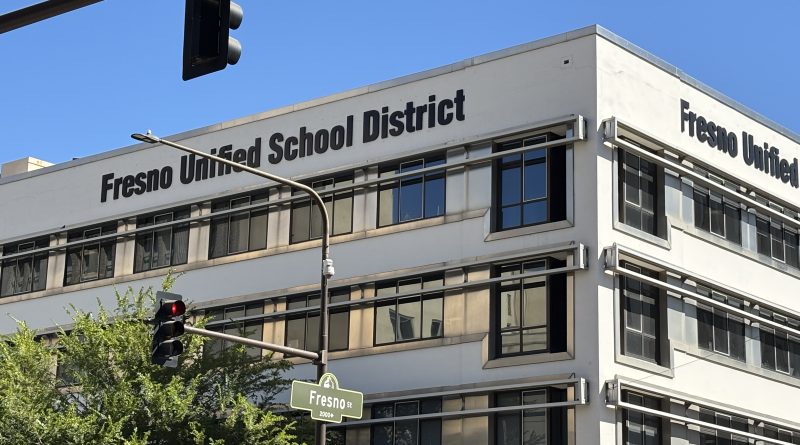
Fresno Unified School District — Photo: Jengod — CC0, via Wikimedia Commons
California’s $151 Billion School Budget: What Fresno Families Need to Know
Your child’s classroom this school year looks different because of a spending decision Governor Gavin Newsom made this summer. The state budget he signed put $151.4 billion toward California’s public schools — money that’s funding free transitional kindergarten, literacy coaches, and community school programs that families can access right now.
That total includes $91.1 billion from the state’s general fund and another $60.3 billion from other state-managed accounts. The money flows to public school districts across California.
“It wasn’t just about making investments,” Newsom said at an August press conference in Hayward. “It wasn’t just about getting back on top in terms of making per-pupil investments. It wasn’t just about spending money. We had a plan.”
The expanded programs target the state’s youngest and most vulnerable students — the children most likely to fall behind without early support.
But at least one analyst isn’t convinced the increased spending will deliver lasting results. A researcher from the Pacific Research Institute, a Pasadena-based think tank, said there might not be long-term benefits from the additional taxpayer money.
The Breakdown
- The $151.4 billion budget covers transitional kindergarten through 12th grade across California’s public schools
- New or expanded programs include free transitional kindergarten statewide, literacy coaches placed at schools, and community school programs
- $91.1 billion comes from the state’s general fund; $60.3 billion comes from other state-managed funds
What This Means for You
This budget was a decision made by the Governor you elected — and it’s spending your tax dollars on programs your child can use this school year. Transitional kindergarten is now free statewide. If your child’s school has a literacy coach, that position exists because of this funding. When you’re deciding whether to support Newsom’s priorities in future elections, or whether to support candidates who promise similar education spending, you’re looking at what that money actually bought: early childhood programs and support staff in local schools.
What to Watch
The real question is whether this money makes a measurable difference in your child’s classroom. $151.4 billion is a staggering amount — but a statewide budget like this gets divided across thousands of schools and millions of students. By the time it reaches your child’s school, what does it actually buy? How many more teachers, smaller class sizes, or hours of one-on-one reading support does a family actually see?
And here’s the harder question: does spending more automatically mean better outcomes? The analyst who raised doubts about long-term benefits wasn’t just being contrarian — there’s a real pattern in education policy where funding increases don’t always translate to test scores, graduation rates, or college readiness rising in step. Money matters, but how it’s spent matters more.
Watch whether your local district reports specific results from these programs — not just that they exist, but whether they’re working. Are literacy coaches measurably improving reading levels? Are community schools producing results? If the state is going to keep spending at this scale, families deserve to know what it’s producing.