
Fresno Council Set to Vote on $4 Billion SEDA Project Thursday — With $3 Billion Still Unfunded — Photo: Frank John Aleksandrowicz — Public domain, via Wikimedia Commons
Fresno Council Set to Vote on $4 Billion SEDA Project Thursday — With $3 Billion Still Unfunded
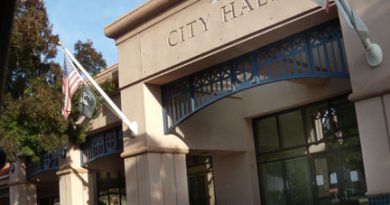
The Fresno City Council meets Thursday to take a final vote on Mayor Jerry Dyer’s Southeast Development Area — a $4 billion, 45,000-home expansion plan with a $3 billion funding shortfall the administration has not yet closed after three years of effort. The vote comes days after election results showed anti-SEDA candidates holding early leads in three council races, and just as many of the council members who will decide it prepare to leave office.
Not a single council candidate this fall told voters they supported SEDA. Billboards reading “Stop SEDA” alongside “End City Hall Corruption” appeared around town during the campaign. Councilmember Mike Karbassi, described as the council’s “most full-throated endorser of sprawl,” said in late September: “We’ve explored the heck out of it, and I don’t think it pencils out. If I had to guess, I’m pretty sure it’s going to fail.”
Yet in a May backroom meeting with developers Darius Assemi, John Bonadelle, and others, Dyer said his timing would be “dictated by whether we can get this thing passed. I don’t want to fail. It’s too important.” Dyer told them he wouldn’t bring the 45,000-home proposal to the council until he knew he had the votes.
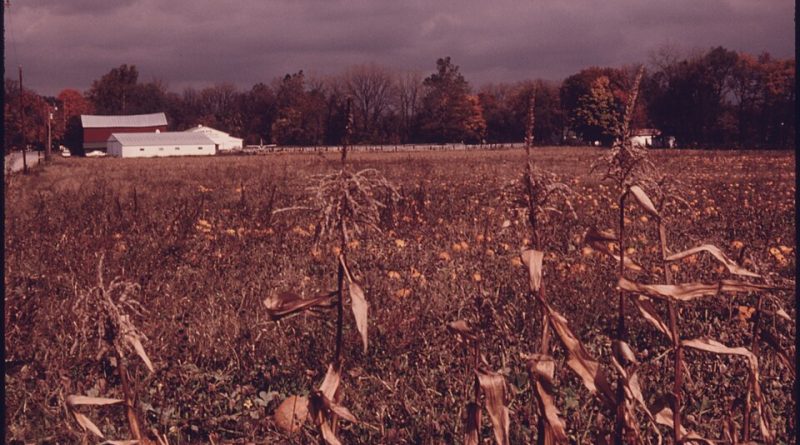
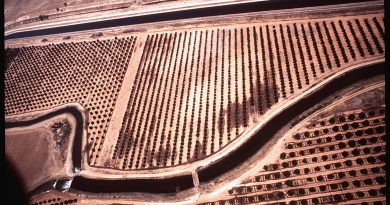
Thursday’s vote will decide whether to approve final planning documents for SEDA — a 9,000-acre annexation of mostly farmland in unincorporated Fresno County, bounded by the Gould Canal on the north, McCall and Highland on the east, Jensen and North on the south, and Temperance and Minnewawa on the west. Phase 1, called South SEDA, sits east of Temperance and south of Jensen.
Phase 1 has a $440 million funding shortfall, which Dyer has not solved despite three years of work. A city-commissioned report projects Phase 1 could add $12 million annually to the city’s $535 million General Fund — a 2.2% increase — but much of that money could be eaten up by promises Dyer made to pay for water and sewer hookups for existing rural residents in the SEDA area. Those upgrades cost over $100,000 per house, according to Dyer officials at city planning meetings, and there are thousands of already existing homes in the area. Dyer has yet to tally the total cost of those hookups, but even a rough tally shows the costs will be hundreds of millions of dollars.
Councilmember Brandon Vang, who represents the southern part of SEDA, opposes the plan. “Based on my recollection of the people who sent me here to represent them, they were loud and clear that they are against SEDA,” Vang said earlier this year. A yes vote Thursday will likely come from council members from other parts of town going against Vang’s constituents.
Nick Richardson, identified as a crucial swing vote, received a $500 donation from a shell company owned by Ed Kashian, a SEDA backer whose Fancher Creek regional mall “needs SEDA’s rooftops.” $500 is the maximum allowed under the state’s pay-to-play laws.
Nearly every school district in the Fresno area opposes SEDA. The Superintendent of Sanger Unified, where Phase 1 homes will be placed, has publicly voiced opposition. Fresno Unified and Central Unified both took formal votes to oppose SEDA, citing fears of a repeat of the 1970s-80s white flight era. After the St. Agnes Hospital area was approved for new homes in Clovis Unified, Fresno Unified enrollment dropped 20%.
Fresno Unified has estimated SEDA could shut down 11 schools — including two middle schools and a high school — resulting in mass layoffs and a budget loss of $200 million per year. Over the same 15-year period analyzed in a Building Industry Association report, that’s a $3 billion loss to FUSD alone. The last time Fresno Unified enrollment cratered like this, property values did not grow in the district for 20 straight years, and today Clovis Unified’s tax base has grown while Fresno Unified’s is short over $50 billion versus its pre-1985 trend.
A report commissioned by the Building Industry Association of Fresno and Madera Counties, released to local media this week, estimated SEDA could generate “a total of $2.5 billion of revenue in excess of costs for local governments in the Fresno Metro area.” That figure represents economic activity surrounding SEDA, but does not account for “the long-known effects of sprawl hallowing out Fresno’s existing neighborhoods.”
A 40-page letter filed last week by local attorney Patience Milrod argues the city council does not fully understand SEDA’s risk-reward profile. The city’s financial analysis assumed a housing density that is illegal under SEDA’s specific plan, and did not stress-test how fast homes will actually sell. “If South SEDA develops more slowly… the city incurs steeply climbing and significant additional expense,” Milrod wrote. “Before you adopt the plan, your council must understand, in dollars, the magnitude of the risk that subsidies will extend and that reimbursement will not materialize.”
The Fresno Planning Commission voted 6-1 in August to recommend the updated SEDA plan to the City Council. An estimated 160 people attended that meeting, with a vast majority of public commenters speaking in opposition. Many raised questions about the plan’s new financial analysis, which had not yet been released to the public at that time.
The Breakdown
- The vote: Fresno City Council will hold a public hearing Thursday to decide whether to adopt final planning documents for the Southeast Development Area (SEDA).
- The project: SEDA is a plan to annex 9,000 acres of mostly farmland in unincorporated Fresno County and rezone it for up to 45,000 housing units and an estimated 30,000 to 37,000 jobs. The $4 billion project has a $3 billion funding shortfall.
- Phase 1 (South SEDA): The first phase, located east of Temperance Avenue and south of Jensen Avenue, has a $440 million funding shortfall that Dyer has not solved after three years of work.
- Projected revenue: A city-commissioned report estimates Phase 1 could add $12 million annually to the city’s $535 million General Fund — a 2.2% increase. Much of that could be consumed by paying for water and sewer hookups for existing rural residents, which cost over $100,000 per house.
- Opposition: Nearly every school district in the Fresno area opposes SEDA, including Fresno Unified and Central Unified, which took formal votes against it. Fresno Unified estimates SEDA could force the closure of 11 schools and cost the district $200 million per year — a $3 billion loss over 15 years.
- Developer involvement: Nick Richardson, a crucial swing vote, received a $500 donation — the legal maximum under state pay-to-play laws — from a shell company owned by Ed Kashian, a SEDA backer whose Fancher Creek regional mall “needs SEDA’s rooftops.”
- Timing: The vote comes days after election results showed anti-SEDA candidates holding early leads in three council races, and just as many current council members prepare to leave office.
What This Means for You
The council members you elected — or did not elect — will decide Thursday whether to commit the city to a $4 billion expansion with a $3 billion funding gap, over the objections of the area’s own representative, the city’s school districts, and voters who just chose anti-SEDA candidates in three races.
If SEDA is approved, Fresno Unified could close 11 schools, lay off staff, and lose $200 million per year. The last time this happened, property values in Fresno Unified did not grow for 20 straight years. The city’s financial analysis did not stress-test what happens if homes sell more slowly or at lower prices than assumed, meaning the risk to the rest of the city is unknown.
Your vote for council in the races just decided was partly a referendum on SEDA. The candidates who opposed it are winning. The council members voting Thursday know that, and are doing it anyway.
What You Can Do
The Fresno City Council will hold a public hearing Thursday. Public comment at the August Planning Commission meeting was limited to two minutes per speaker when 160 people attended.
What to Watch
Specific beneficiaries: developers Darius Assemi and John Bonadelle, Ed Kashian (whose Fancher Creek regional mall “needs SEDA’s rooftops”), and the Building Industry Association, which commissioned a report projecting $2.5 billion in economic activity. Nick Richardson, identified as a crucial swing vote, received a $500 donation — the legal maximum under pay-to-play laws — from a shell company owned by Kashian. The question is whether Richardson’s vote Thursday reflects his constituents or his donors.
Specific parties who bear the cost: Fresno Unified, which could lose $3 billion over 15 years and close 11 schools; homeowners in Fresno Unified, whose property values did not grow for 20 years the last time enrollment cratered like this; and taxpayers in the rest of Fresno. The city has not stress-tested what happens if SEDA sells more slowly than the city’s best-case financial analysis assumed, according to attorney Patience Milrod’s 40-page letter filed last week.
A pattern: Dyer told developers in May he wouldn’t bring SEDA to the council until he knew he had the votes. He scheduled the final vote days after an election in which anti-SEDA candidates took early leads in three races, and just as many current council members prepare to leave office.
Two unanswered questions: (1) How much will it actually cost taxpayers to pay for water and sewer hookups for thousands of already existing homes in the SEDA area, at over $100,000 per house? Dyer has not tallied it, but even a rough tally shows the costs will be hundreds of millions of dollars. (2) What happens if homes sell more slowly or at lower prices than the city’s financial analysis assumed? The analysis did not stress-test that scenario, meaning the risk to the rest of the city is unknown. Milrod’s letter argues the council must understand “in dollars, the magnitude of the risk that subsidies will extend and that reimbursement will not materialize” before voting.
Finally, a recognized pattern in Fresno’s history: the last time the city approved a major development that drew enrollment away from Fresno Unified — the St. Agnes Hospital area in the 1970s-80s — enrollment dropped 20%, property values in Fresno Unified did not grow for 20 straight years, and Clovis Unified’s tax base exploded while Fresno Unified’s is now short over $50 billion versus its pre-1985 trend.
SEDA is projected to do the same thing again. The question is whether the council will repeat that pattern, or whether the outcome this time will be different — and what evidence the council has to support a different outcome.

Pingback: Fresno City Council kills Mayor Dyer's $4 billion SEDA proje