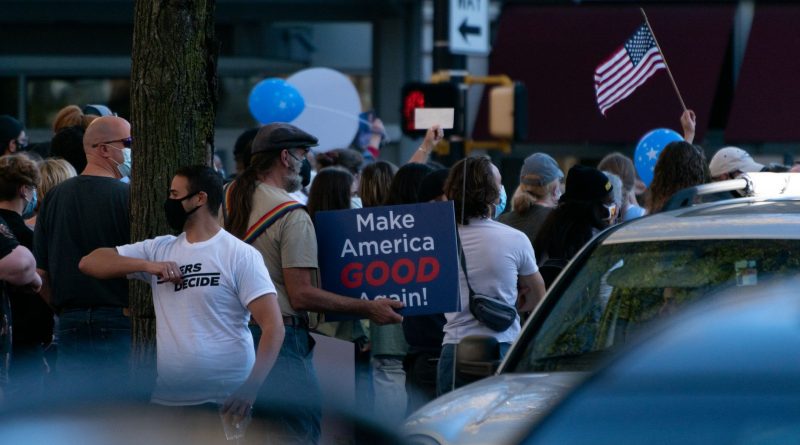
immigration civic community scene — Photo by Drew Anderson via Pexels
Rep. Valadao Ties Immigration Reform to Central Valley Cost of Living in New Op-Ed
Rep. David Valadao and LIBRE Institute President Daniel Garza are making the case that fixing the country’s immigration system isn’t just a border issue — it’s an economic one that directly affects what Central Valley families pay for food and other basics.
In an op-ed published September 15, Valadao frames two immigration bills he’s working on in Congress as part of a broader strategy to lower costs for his constituents, alongside tax cuts and housing policy. The argument: when the Valley’s farm, construction, and hospitality employers can’t find workers, production slows, supply chains tighten, and prices go up.
“When employers can’t find enough workers, crops go unharvested, projects are delayed, supply chains tighten, and businesses face higher costs,” the op-ed states. “When input costs for producers go up, we see higher prices for everyday goods.”
Valadao represents California’s 22nd Congressional District, which covers Kings, Kern, and Tulare Counties. He was elected to his current term in 2020 after previously serving from 2013 to 2018.
The Breakdown
- The DIGNITY Act would increase mandatory funding for border control while creating an earned pathway to legal work status for Dreamers and other long-term undocumented residents who meet strict requirements. The bill does not grant amnesty, according to Valadao, but creates a process for those with no criminal record who have been contributing to communities for years.
- The Securing Agriculture’s Workforce Act overhauls the H-2A farm labor visa system — the first major update in nearly 40 years. It updates the system to work for year-round industries (not just seasonal agriculture), creates predictable wage requirements, and gives producers workforce certainty.
- Both bills have bipartisan support, according to the op-ed. Huron, Kerman, and other Central Valley communities have passed resolutions supporting the DIGNITY Act, joining more than 100 organizations nationwide.
- Valadao also highlights last year’s tax reform bill, which he describes as “the largest tax reform bill in a decade” that prevented what he calls “the biggest tax hike in American history,” expanded deductions, and resulted in the largest tax refunds for families in years, according to 2026 filing data.
What This Means for You
If you’re a Central Valley voter deciding whether Rep. Valadao’s approach to immigration actually matches your priorities, this op-ed lays out his pitch: that legal immigration reform is about your grocery bill and job market, not just border security. His argument is that a stable, legal workforce keeps food production steady and costs down — a claim you’ll want to weigh against your own sense of what’s driving prices and whether these bills would actually deliver that.
The op-ed also frames last year’s tax cuts as already delivering results for families. Whether you’re seeing that in your own refund, and whether you think the trade-offs in that bill were worth it, is part of what you’re weighing when you vote for or against Valadao in the next election.
What to Watch
Valadao frames both immigration bills as bipartisan and economically sensible, with local support from Central Valley communities. That’s his framing. A real question worth watching: who actually benefits most from these bills — the workers they’re framed around, or the employers who’ve been pushing for a more flexible, available workforce for decades?
A reliable labor supply can mean lower costs for consumers, as Valadao argues. It can also mean downward pressure on wages and working conditions if the system tilts bargaining power too far toward employers. The H-2A overhaul, in particular, is being sold as “predictable wage requirements” and “workforce certainty” for producers — which raises the question of whether “certainty” for producers means stability for workers, or leverage for employers to control terms.
The DIGNITY Act’s “earned pathway” language is doing a lot of work here. Valadao is careful to say it’s not amnesty and requires strict conditions — but what those conditions actually are, how high the bar is, and whether the process is genuinely accessible or designed to fail are all details this op-ed doesn’t get into. That gap is where the real debate will land.
Also worth watching: Valadao positions himself as a counterweight to “Sacramento politicians” raising costs, pointing to the state’s new gas tax and health insurance tax. But the tax reform bill he touts was a federal GOP priority, and whether those refunds you’re seeing (if you are) outweigh other changes in the same bill — changes that might hit differently depending on your income bracket — is a question this op-ed naturally doesn’t raise.