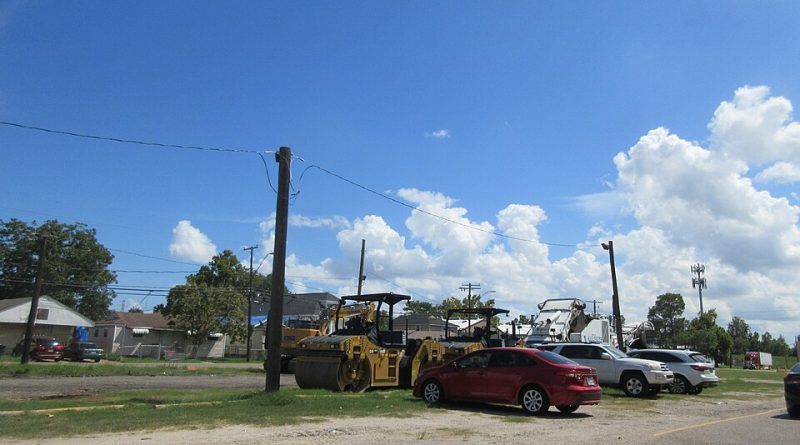
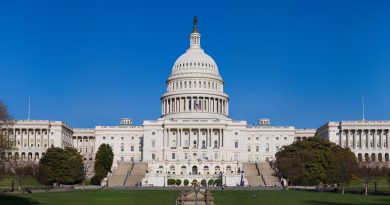
Feds Charge Fresno County Paving Contractor With Illegal Voting — Legal Experts Question Case Strength — Photo: Infrogmation of New Orleans — CC BY-SA 4.0, via Wikimedia Commons
Feds Charge Fresno County Paving Contractor With Illegal Voting — Legal Experts Question Case Strength
The Justice Department’s first federal courtroom test of its election-fraud push landed in downtown Fresno Wednesday when Camilo Giles Jimenez, a 51-year-old paving-company owner who has lived outside Kerman since at least 2017, pleaded not guilty to three misdemeanor counts of voting as a noncitizen. The complaint alleges he voted in three elections despite being a legal permanent resident from Mexico, not a U.S. citizen.
Jimenez is one of 40 California residents charged in late October as part of what the Trump administration called a coordinated effort to “root out fraud” in U.S. elections. Seven of those charged are from Fresno County and the Central Valley. Twenty-three are from Southern California, six from the Bay Area, and four from the Sacramento region.
Federal prosecutors face a steeper evidentiary bar than the charges might suggest. To win a conviction, the government must prove Jimenez and the other defendants knowingly and willfully broke the law — not merely that they voted or registered.
“In order to violate the statute, there has to be proof that the person did so intentionally,” UCLA law professor Rick Hasen said. “That is, they knew they were not eligible, and they did it anyway.”
That standard leaves room for doubt when a government office — such as the DMV — mistakenly offers a noncitizen the chance to register, Hasen said. Even a defendant’s own statement acknowledging they voted does not automatically prove intent.
“Suppose you are told by a government official you can register to vote, even if you’re not a citizen, and the person registers, then they might be doing so knowing that they registered but not knowing that they were violating the law,” Hasen added.
The government alleges Jimenez submitted a voter registration application to the Fresno County Registrar in 2022 and checked a box indicating he is a U.S. citizen. According to the complaint, Jimenez told agents he registered to vote after receiving his green card and had been voting since 2023, though he denied ever claiming he was a citizen.
The criminal case carries a maximum penalty of one year in prison, a fine, or both. Immigration consequences are harsher and operate on a different standard. Unlawful voting and falsely claiming citizenship — including by signing a voter registration form — are grounds for deportation and denial of naturalization applications, regardless of whether a defendant intended to break the law.
“The fact that these individuals can be criminally prosecuted, barred from naturalization, subject to deportation, all demonstrates why, as a general rule, noncitizen voting is not a problem,” Stanford law professor Jennifer Chacón said, “because there are many, many consequences to it, and people are generally aware of that.”
Many of the people charged have lived in the U.S. legally for years and are in the process of applying for citizenship, according to the federal complaints. That path may now be closed to them even if the government does not move to deport them.
Acting Deputy Attorney General Trent McCotter framed the charges as evidence of a wider problem. “Every illegal vote cancels out the vote of a lawful American citizen,” he said in a news release. “Each of the 28 defendants charged today appears on the list of more than 20,000 likely noncitizen registrants we provided to California election officials last week. California refused to look at that list.”
California Attorney General Bob Bonta pushed back on the scale of the alleged problem. With 23 million registered voters in California, he said, those charged are “just a drop in the bucket numerically, and it makes the point that there is no widespread voter fraud.”
A federal judge sided with California Wednesday by rejecting a bid by the Trump administration to separate out ballots sent in from people on the DOJ’s list. U.S. District Judge David Carter’s 26-page decision called the federal effort unprecedented.
“Never before in American history has the federal government, on the eve of an election, sought to coerce a state and local government to abandon their own Constitutional elections procedures and bend to the will of the Executive Branch,” Carter wrote. “In bringing this lawsuit, the Executive would have this Court believe that it reigns as a sole sovereign. But California and its people are sovereign, too.”
The Supreme Court denied a DOJ appeal Monday.
Jimenez’s 10-minute hearing before Judge Stanley A. Boone drew no comment from Jimenez or his federal public defender, Erin Snider, who told the court Jimenez owns a paving company. More court appearances for other defendants are set for the coming days and weeks.
The Breakdown
- The Justice Department charged 40 California residents with voting-related offenses in late October, including seven from Fresno County and the Central Valley. Many are charged with illegally registering to vote or lying on naturalization applications, not with actually voting.
- To convict on illegal-voting charges, prosecutors must prove the defendant knowingly and willfully violated the law — a higher bar than merely proving the person voted. Legal experts say successful prosecutions are rare.
- Immigration consequences operate on a different standard: unlawful voting or falsely claiming citizenship can result in deportation or denial of naturalization regardless of intent.
- The DOJ claims the 40 charged are part of a list of more than 20,000 “likely noncitizen registrants” in California. California officials dispute the scale of the problem, noting those charged represent a fraction of the state’s 23 million registered voters.
- A federal judge rejected the Trump administration’s attempt to separate out ballots from people on the DOJ’s list, calling the move unprecedented. The Supreme Court denied a DOJ appeal.
What This Means for You
The Trump administration is using federal prosecutorial authority to advance a claim — that noncitizen voting is widespread — that California officials and legal experts say the numbers do not support. Whether you see this as a necessary enforcement action or as political theater aimed at undermining confidence in state-run elections depends on whether you believe the federal government’s 20,000-name list represents real fraud or a data-quality problem the state is right to question.
The stakes for the people charged are severe regardless of conviction — many are legal permanent residents who could lose their path to citizenship or face deportation even if prosecutors cannot prove criminal intent. For Fresno County voters, this is a test of how much control the federal executive branch should have over state election systems, and whether the administration’s stated justification — election integrity — matches the scale of the problem the evidence actually shows.
What to Watch
The Justice Department says it is investigating “thousands of more similar cases throughout the nation.” That claim should be measured against what prosecutors can actually prove in court — not just that someone voted, but that they knowingly and willfully broke the law. The gap between those two standards is where the government’s case will live or die.
The administration’s public framing — “every illegal vote cancels out the vote of a lawful American citizen” — assumes the outcome it claims to be investigating. The actual conviction rate, compared to the number of people charged, will show whether the enforcement action was built on solid evidence or on a list the state said it had good reason not to trust.
Who benefits from this prosecution wave? The administration gains a narrative tool for the midterm election, regardless of conviction outcomes. Who bears the cost? Legal permanent residents who may lose their immigration status whether or not they intended to break the law, and state election officials forced to defend their processes in federal court on the eve of an election.
UCLA’s Rick Hasen framed the question directly: “What I think they’re actually trying to do is to project the image that there’s a widespread voter fraud problem in this country, and to kind of mimic the claims that President Trump has made, that noncitizens are voting in droves and affecting the outcome of elections.” The coming months will show whether the prosecutions produce convictions that support that claim, or whether they collapse under the intent standard the law requires.

Pingback: Trump DOJ's Voter-Roll Crusade Hits 0-28 Record in Court — B
Pingback: DOJ Drops California Ballot-Challenge Suit After Midterm Los