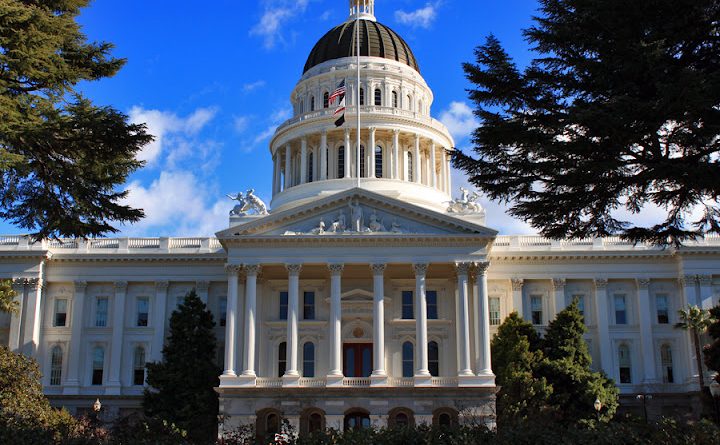
California State Capitol — Photo: Christopher Padalinski — CC BY-SA 3.0, via Wikimedia Commons
California Legislature Votes to Keep Cocktails-to-Go Through 2029
Your favorite Fresno restaurant might keep sending you home with that margarita a little longer. The California Legislature passed Assembly Bill 2663 this week, extending restaurants’ ability to sell cocktails for takeout through 2029 — but only if Gov. Gavin Newsom signs it.
The current law, which lets restaurants sell sealed alcoholic drinks alongside meals, expires at the end of this year. AB 2663 would give it another three years.
What started as a pandemic lifeline — helping local spots stay open when indoor dining shut down — has turned into something families seem to want to keep. The rules require cocktails to come in manufacturer-sealed containers (like canned drinks) or containers with secure lids. You have to order food with them.

“What began as a lifeline for neighborhood restaurants has become a convenient, popular option for consumers,” said Adam Smith, vice president of state government relations at the Distilled Spirits Council.
California is one of only a few states still treating cocktails-to-go as temporary. Thirty-two states and Washington, D.C., have already made the policy permanent since the pandemic started. New Jersey allows it without setting an end date. New York’s version runs through April 2030.
The Breakdown
- AB 2663 extends California’s cocktails-to-go policy from its current December 2026 expiration through 2029
- Restaurants can sell cocktails in sealed manufacturer containers (like cans) or containers with secure lids
- Every cocktail order must include a meal
- The bill is now on Gov. Newsom’s desk — it becomes law only if he signs it
- The policy was first allowed during COVID-19 pandemic lockdowns to help struggling restaurants survive
What This Means for You
This is a straightforward question about what your state government thinks local businesses need and what families want. The Legislature’s vote signals they see this as worth keeping — at least for now — but Newsom gets the final call. If he signs, your neighborhood spot in Fresno can keep offering that option when you’re picking up dinner. If he doesn’t, it ends in December.
The bigger question behind it: whether what was sold as an emergency measure during a crisis becomes a normal part of how California regulates alcohol and restaurants. That’s a real policy choice, not just about convenience — it shapes what kind of flexibility businesses have and what trade-offs come with it.
What to Watch
Thirty-two states made this permanent since the pandemic. California is extending it as a temporary measure instead. The materials don’t say why, but the pattern is worth noticing. A temporary extension means the Legislature revisits this every few years instead of settling it — which keeps it as a lever, something that could be pulled back if problems emerge or priorities shift.
What problems? The materials don’t name any, but alcohol-to-go does raise real questions other states presumably weighed before going permanent: Does it increase impaired driving when people drink takeout cocktails in cars instead of at home? Does it undercut the state’s three-tier alcohol system (manufacturers, distributors, retailers kept separate by law) if restaurants become de facto liquor stores? Does it hurt neighborhood bars that can’t also sell food?
None of those are answered here. But a voter watching Newsom’s decision — and the Legislature’s choice to extend rather than make permanent — might reasonably ask what’s still unresolved that keeps California in the “temporary” column while most of the country moved on.