
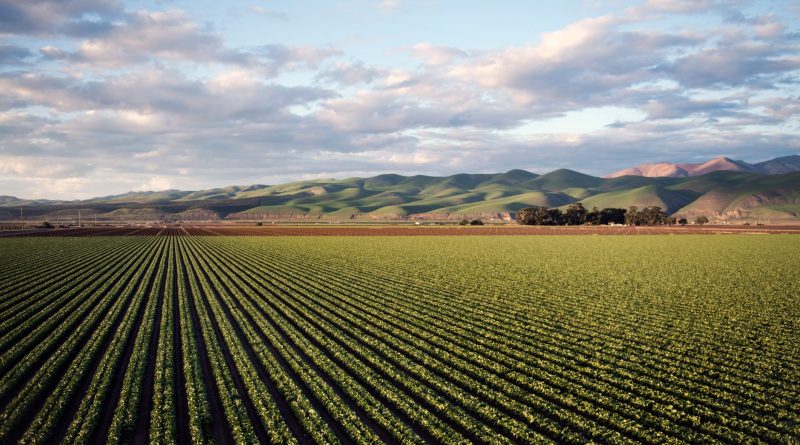
farm agriculture field California — Photo by Tim Mossholder via Pexels
Fresno Growers Press Congressman Costa on Trade Rules as U.S.-Canada Tariff Fight Threatens Valley Exports
Farmers whose livelihoods depend on cross-border sales gathered at the Fresno County Farm Bureau last week to tell U.S. Rep. Jim Costa and state agriculture officials they need predictable trade rules — not the tariff chaos unfolding between Washington and Ottawa.
The timing was stark. Days after the Fresno roundtable, negotiations between the U.S. and Canada collapsed on Aug. 21, and the U.S. imposed 50% tariffs on about $20 billion in Canadian goods. Canada announced retaliatory tariffs on U.S. steel, dairy, agricultural equipment and other products, set to take effect Sept. 8.
That bilateral dispute is separate from the U.S.-Mexico-Canada Agreement itself, which remains in force. But it’s exactly the kind of disruption Fresno County growers said they can’t plan around.

“Canada and Mexico are the San Joaquin Valley’s closest and most important customers,” Costa said at the event. “As the Joint Review moves forward we need to keep that focus so our growers can be price makers rather than price takers. Reliable trade with our closest neighbors is also a matter of national security.”
Fresno County recorded $9.03 billion in agricultural production in 2024, making it the top-producing agricultural county in the United States. California as a whole exported $8.2 billion in agricultural products to Canada and Mexico in 2025, supporting an estimated 40,700 jobs, according to Farmers for Free Trade, the organization that convened the roundtable. The Business Journal could not independently verify those figures.
Growers representing table grapes, almonds, pistachios, citrus, cotton, dairy and processed tomatoes attended the discussion, which was moderated by Costa, California Department of Food and Agriculture Secretary Karen Ross, and Farmers for Free Trade Executive Director Brian Kuehl.
The roundtable focused on the USMCA’s Joint Review, which began July 1, 2026. The U.S., Mexico and Canada did not confirm a full 16-year extension at that review, moving the agreement into annual reviews while it remains in force.
Beyond tariffs, participants raised concerns about maximum residue levels, sanitary and phytosanitary standards, protection of common food names, and Canada’s dairy tariff-rate quotas. Specialty crop representatives specifically flagged proposals to introduce seasonality and regionality standards into trade remedy law, which they said could disrupt the year-round supply system California growers rely on.
The discussion also touched on truck emissions rules affecting cross-border freight, labor and immigration policy, and financial pressures facing the farm economy.
“California farmers and ranchers help feed families across North America, and they do it through supply chains that depend on predictable rules,” Ross said. “The longer disruptions continue, the more our customers look for alternatives, which is why continuing USMCA matters so much.”
Data presented at the event showed California exported $205 million in lettuce to Canada in 2025 — 76% of the state’s lettuce exports worldwide. Mexico bought $76 million in California poultry, or 59% of that category’s worldwide exports. Those figures came from Farmers for Free Trade.
The Breakdown
- The U.S.-Mexico-Canada Agreement (USMCA), which governs most agricultural trade across North America, is in its Joint Review period. The U.S., Mexico and Canada did not confirm a 16-year extension at the July 1, 2026 review, so the agreement now operates under annual reviews while remaining in force.
- A separate U.S.-Canada trade dispute escalated after Aug. 21, with the U.S. imposing 50% tariffs on about $20 billion in Canadian goods. Canada responded with retaliatory tariffs on U.S. steel, dairy, agricultural equipment and other products, effective Sept. 8.
- Fresno County’s $9.03 billion agricultural economy is directly exposed to both the USMCA review process and the bilateral tariff fight — Canada and Mexico are California’s top two agricultural export markets.
- Growers at the Fresno roundtable raised concerns beyond tariffs, including proposals to introduce seasonality and regionality standards into trade remedy law, which could fragment the year-round supply chain Valley growers depend on.
What This Means for You
If you’re deciding how to vote for Congress, this is what Rep. Jim Costa’s work on trade policy looks like in practice: a $9 billion county agricultural economy whose growers need stable export rules. The tariff fight that erupted days after this roundtable is exactly the kind of disruption growers told Costa they can’t absorb — when Canada retaliates against U.S. dairy and ag equipment starting Sept. 8, and when buyers in Canada and Mexico start looking for suppliers outside California during trade disruptions, as Secretary Ross warned, growers face lost market share. California Secretary of Agriculture Karen Ross was at the table representing the state administration.
What to Watch
The material here centers on what growers and officials said they need, not on what they’re actually getting. Costa framed reliable trade as “a matter of national security,” but the bilateral tariff war that started days later is exactly the opposite of reliability — it’s a 50% tariff wall that went up in one day, with Canadian retaliation landing Sept. 8.
The longer-term risk Ross named explicitly: “the more our customers look for alternatives.” That’s not a vague concern — it’s a market-share warning. If Canadian buyers who’ve been purchasing 76% of California’s lettuce exports start sourcing from another country because of trade disruptions, California growers risk losing those sales. The same applies to Mexico, which buys 59% of California poultry exports.