
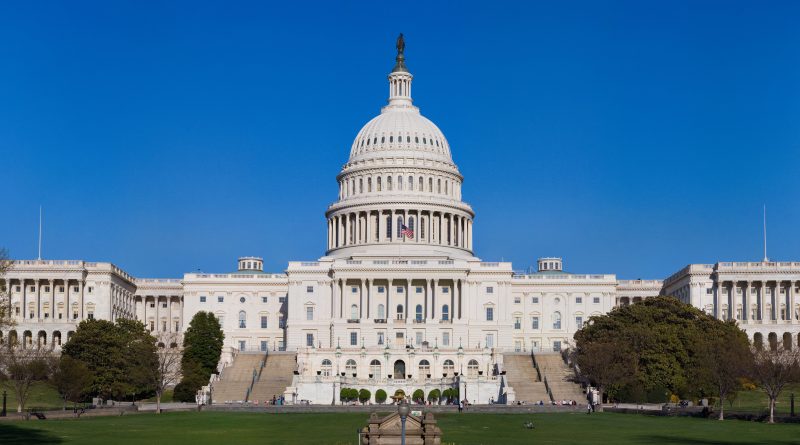
United States Capitol building — Photo: Noclip — Public domain, via Wikimedia Commons
House Ethics Committee’s Male Majority Shielded Costa From Public Admonishment, Sources Say
The House Ethics Committee investigated Rep. Jim Costa (D-California) in 2023 over allegations he made inappropriate advances to two congressional interns — then voted against a formal probe and never disclosed the investigation publicly, according to two sources familiar with the matter.
The committee’s four female members pushed to publicly admonish Costa despite the decision not to pursue a full investigation, the sources told NOTUS. The panel’s six male members argued against going public, stating they didn’t want to “sully somebody’s reputation” without “great evidence,” one source said. The male members held the majority vote.
The committee ultimately recommended Costa take special anti-harassment training privately. The investigation remained secret until NOTUS reported it this week — three years after the fact.

The case underscores what female lawmakers say is a structural problem: the Ethics Committee has always been dominated by men, which they argue limits its ability to police sexual misconduct. The 10-person panel has never had more than four women serving simultaneously.
“I think that would certainly help every time you have significant representation of women. Then, I think you’re going to get better results,” Rep. Linda Sánchez (D-California), who served as the committee’s top Democrat for three consecutive terms, told NOTUS.
The allegations against Costa involved advances he allegedly made in 2020 and 2021 to two young interns. One female committee member told colleagues she personally witnessed Costa engaging in inappropriate behavior with young female staffers on a congressional delegation trip, according to a source familiar with the discussions.
The committee has previously issued letters of admonition when it determines an investigation isn’t warranted but finds alleged behavior problematic. In Costa’s case, discussions took place among members about whether to issue such a statement, two sources said. It’s unclear when or where those discussions occurred — a person familiar with the committee’s deliberations said they did not happen in “executive session proceedings.”
“At no point in the Committee’s executive session proceedings was there any gender divide, nor did any Member of the Committee push for a public letter of admonishment at any time during those proceedings,” that person said.
The Ethics Committee released a rare statement in April encouraging anyone who experienced sexual misconduct by a House member or staffer to report it. The statement revealed the panel had initiated 20 investigations into sexual misconduct allegations against House members since 2017.
That statement followed the resignations of Reps. Eric Swalwell (D-California) and Tony Gonzales (R-Texas) over sexual misconduct allegations. The committee is currently investigating Reps. Cory Mills (R-Florida) and Chuck Edwards (R-North Carolina) for similar allegations.
Female lawmakers in the House have launched a bipartisan task force to spell out clearer ethics policies and reporting requirements. They’ve complained that anti-harassment training for members is “laughable.”
Rep. Andrea Salinas (D-Oregon), who serves in Democratic Women’s Caucus leadership, said evening out the gender balance would help because men “inherently have less sensibilities about women’s issues and sexual misconduct.” She called it “gross” getting stared at by older male lawmakers while working as a House staffer from 1996 to 2008.
“You’re just like ‘Ew. I want to go take a shower,'” she said.
Closing the gender gap faces practical obstacles. Members don’t typically seek Ethics Committee assignments — leadership historically makes them as a dues-paying requirement. The committee currently has three women: Reps. Deborah Ross (D-North Carolina), Ashley Hinson (R-Iowa), and Sylvia Garcia (D-Texas).
Former Republican Rep. Charlie Dent said former Speaker John Boehner tapped him for Ethics as a stint on the way to a more desirable committee assignment. “I guess nobody wants to police their colleagues,” Dent said. “That’s not why you ran for Congress, to be head of internal affairs of the police department for Congress.”
One former Republican staffer who worked for an Ethics Committee member said female lawmakers are already stretched thin across committee assignments, press conferences, and caucus memberships. With only 128 women serving in the House — around 29% of members — adding a gender-parity requirement could make finding committee members even harder.
Rep. Kat Cammack (R-Florida), who chairs the Republican Women’s Caucus, said to expect “pretty big changes” to Ethics Committee work but expressed doubt about gender parity. “Membership will always change, but if you have the structure in place, that’s what I’m more concerned with maintaining, rather than … what box someone checks,” she said.
Rep. Mark DeSaulnier (D-California), the top Democrat on Ethics who hopes to chair it if Democrats win the House majority in November, said he’s evaluating the idea of adding more women. “As a general rule, I think healthy public bodies in a democracy should reflect their constituents,” he said.
Former Speaker Nancy Pelosi, who served on Ethics in the 1990s, told NOTUS she doesn’t think the gender gap is a problem. “No one’s turned away from participating. It’s not a decision to have more men,” she said.
The Breakdown
- The House Ethics Committee investigated Rep. Jim Costa in 2023 over allegations of inappropriate advances to two interns
- The committee voted against a formal investigation but its four female members pushed to publicly admonish Costa
- The panel’s six male members — holding the voting majority — argued against going public without stronger evidence
- The committee privately recommended anti-harassment training for Costa; the investigation was never disclosed until NOTUS reported it three years later
- The Ethics Committee has never had more than four women serving simultaneously on the 10-person panel; it currently has three
- Female lawmakers are pushing for reforms but face structural obstacles: members don’t seek Ethics assignments, and women make up only 29% of the House
What This Means for You
The House Ethics Committee is the accountability mechanism voters rely on to police misconduct by the representatives they elect. When that committee buries an investigation into alleged sexual harassment — particularly when female members wanted public disclosure but were outvoted by male colleagues — voters don’t get information about their elected officials’ conduct before casting their next ballot for Congress.
What to Watch
Rep. Mark DeSaulnier, the top Democrat on the committee, could become chair if Democrats win the House majority in November — he’s evaluating whether to add more women to the panel. Rep. Kat Cammack said to expect “pretty big changes” to Ethics Committee work in coming months, though she doubts gender parity will be part of them.
Whether either party’s leadership actually changes the committee’s composition is the concrete test of whether this concern translates into action, or remains talk.