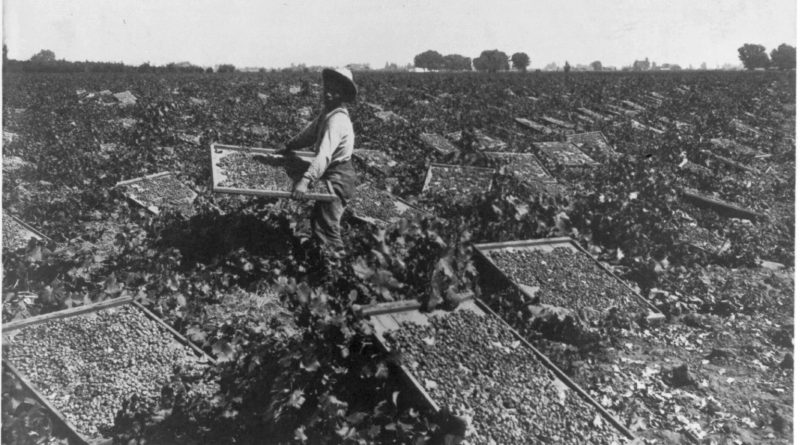
Fresno County agriculture — Photo: Miscellaneous Items in High Demand, PPOC, Library of Congress — Public domain, via Wikimedia Commons
Fresno Lawmakers Backed $19.75 Farm Wage Floor. Here’s How They Voted.
AB 2646 cleared the California Legislature and now sits on Gov. Gavin Newsom’s desk. The bill sets a $19.75-per-hour wage floor for temporary farmworkers brought in on federal H-2A permits — and for California residents doing the same work — starting Jan. 1, 2027. Newsom has until Sept. 30 to decide.
Four Fresno-area Democrats voted yes: Assemblymembers Joaquin Arambula (D-Fresno) and Esmeralda Soria (D-Fresno), and Sens. Anna Caballero (D-Merced) and Melissa Hurtado (D-Sanger). Two Republicans voted no: Assemblymember David Tangipa (R-Clovis) and Sen. Shannon Grove (R-Bakersfield). Assemblymember Alexandra Macedo (R-Visalia) did not vote.
The $19.75 wage sits on top of costs H-2A employers already carry under federal rules: free housing, transportation to and from job sites, and either three meals a day or free cooking facilities.
The Nisei Farmers League counts more than 60 agencies regulating California agriculture. In the San Joaquin Valley, farmers must comply with over 90% of the roughly 670 rules the local air district enforces.
California had 63,134 farm operations in 2022, down from 77,857 in 2012 — nearly one in five gone in a decade.
The Breakdown
- AB 2646 sets a $19.75-per-hour minimum wage for H-2A temporary farmworkers and California residents doing the same jobs, effective Jan. 1, 2027.
- H-2A employers already must provide free housing, transportation, and meals or cooking facilities under federal Department of Labor rules.
- The Legislature passed the bill; Gov. Newsom has until Sept. 30 to sign or veto.
What This Means for You
You voted for every legislator named above. The yes votes came from lawmakers representing farm districts — Fresno, Merced, Sanger — where the impact will hit first. Newsom’s decision on this bill is one more data point on how the administration balances competing priorities.
What to Watch
The cost question runs two directions. One: does a wage floor this high push more farms to quit or move production out of state? Two: do food prices for California shoppers actually go up as a result, or do farms and distributors absorb it without passing it through?
And the political question: voters rejected a minimum-wage increase at the ballot box in 2024 for the first time in state history. The Legislature just passed one anyway, in a sector where costs are already layered thick. Does that disconnect matter to a Fresno-area voter weighing a legislator’s re-election, or not?