
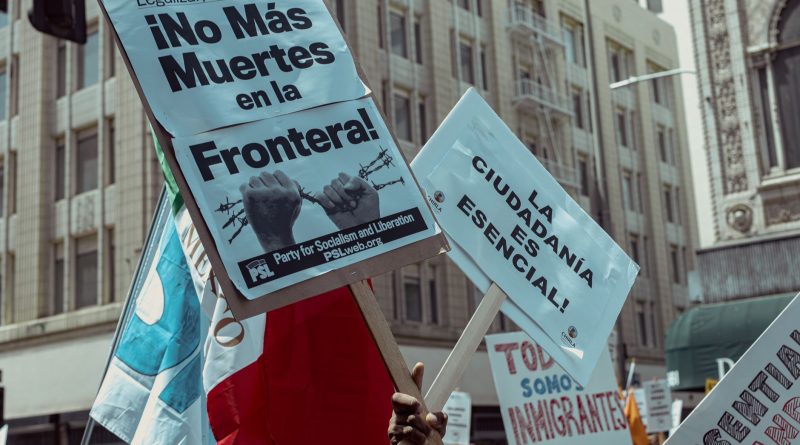
immigration civic community scene — Photo by Selvin Esteban via Pexels
Three-Year-Old in LA Copes With Father’s ICE Detention in Central Valley — What Research Shows About the Damage
When ICE agents arrested Miguel Carino in Los Angeles last September and moved him to a Central Valley detention center, his three-year-old son Carlos immediately stopped participating in preschool circle time. He cried constantly. He started calling everyone “Papi.”
The family — Miguel had lived in LA for nearly 25 years, owned a construction business, and had applied for legal status through his marriage to a U.S. citizen — spent six months fighting in court while Jazmin, his wife, made five-hour round trips to the Central Valley twice a month for visits where they couldn’t hold hands or leave their seats.
In March, facing likely deportation and what the material describes as “brutal conditions” at the detention center, Miguel self-deported to Tijuana, then moved to Mexico City to find work. Carlos hasn’t seen his father in person for three months. His confidence is fading again.

The story, reported by MindSite News and co-published by LA Public Press, centers on one family. The research it cites isn’t about one family.
A 2022 study in the Journal of Policy Analysis and Management tracked children near Morristown, Tennessee after a massive immigration raid. Researchers found “a substantial spike in absences from school in the month of the raid and significant increases in exclusionary disciplinary actions and in diagnoses of substance use disorder, depression, self-harm, suicide attempts or ideation, and sexual abuse.”
Another study, 2020 in the Journal of Traumatic Stress, looked at 458 migrant children in mental health clinics. 43% were diagnosed with PTSD. 24% with depression. Of those, nearly half — 49% — showed three or more serious behavioral problems: academic failure, skipping school, substance use, suicidal thoughts or attempts, physical aggression.
A March commentary in the New England Journal of Medicine put it plainly: “Separation is not merely stressful for young children — it is toxic.”
Tatiana Londoño, a UCLA professor studying how Latino immigrants navigate detention and deportation, says even short separations “can have a rupture on that child’s developmental well-being.” Children learn their most reliable person “is no longer my secure base,” she says. “They learn that no one is safe for them.”
The material notes the Trump administration is cutting food assistance and other services that help families in distress at the same time ICE enforcement is creating the trauma. Londoño and other advocates are pushing California to fill the gap by funding organizations that help immigrant families meet basic needs so parents can be “emotionally available to their children.”
Carlos is one of every five children in California living in a mixed-status family — at least one member undocumented. Nationwide, 4.7 million households fit that description.
Jazmin has seen families from as far as Florida in the lobby of Central Valley Annex, the detention center run for ICE by private prison company GEO Group. “I recall a woman with six children, including one child with autism and a newborn,” she said. “I saw newborns from out of state visiting and being held by their fathers for the very first time.”
Carlos turned three in May. His preschool threw a party. The family video-called Miguel in Mexico City. To Jazmin, it was his first birthday without his Papi.
The Breakdown
- ICE arrested Miguel Carino in Los Angeles during what his attorneys believed would be a routine check-in, despite his pending application for legal status through marriage to a U.S. citizen.
- He was detained at Central Valley Annex, a facility run by private prison company GEO Group, where conditions were severe enough that he chose to self-deport after six months rather than continue fighting his case.
- The research cited tracks measurable harms: school absences spiking after raids, sharp increases in disciplinary actions and diagnoses of substance use disorder, depression, self-harm, and suicide attempts or ideation in communities where enforcement actions occurred.
- One in five California children live in mixed-status families; nationwide, 4.7 million households do.
- The Trump administration is cutting food assistance and other support services at the same time federal immigration enforcement is separating families, according to advocates quoted in the material.
What This Means for You
Federal immigration policy is set by the President you elect. The research here isn’t speculative — it tracks what happened to kids in communities where ICE conducted enforcement actions. School performance dropped. Mental health diagnoses spiked. Behavioral problems multiplied. This is the documented outcome of the enforcement approach an administration chooses to take.
If you’re a Fresno voter weighing a presidential candidate’s immigration platform, or a member of Congress’s approach to funding ICE operations or family-support programs, this is what the choice looks like on the ground: a three-year-old who won’t let go of his father at the end of a detention-center visit where they can’t hold hands, and the measurable, long-term damage researchers are tracking in communities where this becomes routine. The question isn’t whether enforcement happens — it’s what kind, at what scale, with what safeguards, and what happens to the families and kids in the path of it.
What to Watch
The material explicitly ties this family’s experience to the Trump administration’s current policy direction — both the enforcement actions themselves and, separately, cuts to food assistance and other services that help families cope with the fallout. If you’re trying to evaluate an administration’s overall approach to immigrant families, watch both sides of that: not just the enforcement operation, but whether the same administration is simultaneously cutting the programs that stabilize the families and kids left behind.
The broader pattern: immigration enforcement that separates parents from young children produces measurable, documented harm — this isn’t advocacy, it’s what the peer-reviewed research shows. The policy choice is whether that harm is an acceptable cost of the enforcement approach being used, or whether a different enforcement model (prioritizing serious criminal cases, using alternatives to detention for parents with pending legal claims, funding family-support programs rather than cutting them) could achieve enforcement goals without creating the specific trauma pediatric and mental-health researchers are documenting. That’s the substantive policy debate buried in a story about a three-year-old’s beanie.