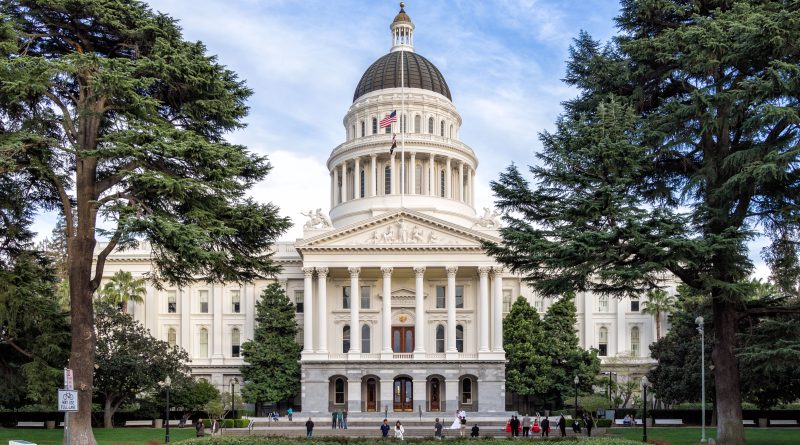
California State Capitol — Photo: Andre m — CC BY-SA 3.0, via Wikimedia Commons
State Senate Committee Kills Fresno Lawmaker’s Bill to Ban Sex Offenders from Running for Office
A proposal written by Fresno Democratic Assemblymember Esmeralda Soria to bar registered sex offenders from running for public office in California died in a State Senate committee last month after the chairman voted against it and two other Democratic senators abstained.
The State Senate’s Elections Committee rejected AB 2753 in a 2-1-2 vote on Tuesday. Democratic State Sen. Sabrina Cervantes and Republican State Sen. Steven Choi voted yes. Democratic San Francisco State Sen. Scott Wiener, the committee’s chairman, voted no. Democratic Santa Ana State Sen. Tom Umberg and State Sen. Ben Allen abstained.
The bill had passed the State Assembly unanimously — 60-0 on the Assembly floor on May 7 — before reaching the Senate.
Soria wrote the proposal after registered sex offender Rene Campos tried to run for Fresno City Council in the June 2 election. He pleaded no contest in 2018 to a misdemeanor charge of being in possession of child sex abuse material and hosted his campaign kickoff in front of an elementary school. He fell short of the necessary votes.
“My office received dozens of calls from our residents asking how this could be allowed,” Fresno City Council President Nelson Esparza said at the committee meeting. “AB 2753 closes this loophole.”
Wiener, the committee chairman, said he would only support the bill if it applied exclusively to Tier Three offenders — those on the sex offender registry for life. Soria declined to accept the amendment, and the bill failed.
“I am deeply disappointed and disheartened after the Senate Elections Committee has failed to advance AB 2753,” Soria said in a statement after the vote. “I made a promise to my community that I would do everything in my power to ensure they would never have to go through something like this again. Accepting additional amendments to this bill would have jeopardized that promise.”
When asked why she refused the committee’s amendments, Soria said all offenses in each tier should disqualify anyone from holding public office. Tier One, for example, includes child molestation and enticing a child to prostitution, with 10 years on the registry. Tier Two includes incest and sodomy with a minor, and 20 years on the registry.
Wiener raised concerns about the bill’s broad scope during the committee meeting. He pointed to committee analysis showing the bill could affect so-called “Romeo and Juliet” couples — those close in age, such as a 19-year-old and a 17-year-old — if the younger partner sent sexually explicit digital content to the older partner, a misdemeanor that could ban the older partner from public office for life under the bill.
The analysis also noted the registry, which dates to 1947, could include LGBTQ+ offenders from decades ago who were convicted of offenses that are no longer crimes. Wiener mentioned civil rights strategist Bayard Rustin being placed on the California sex offender registry after being arrested by Pasadena police for having consensual sex with another man in 1953.
“Without the amendment contained in the analysis, I will be voting ‘no’ on this bill and recommending that the committee vote ‘no’,” Wiener said at the hearing.
Sen. Allen wrote in an emailed statement Thursday that he “shared the concerns about the bill being too broad, and the slippery slope arguments that have been raised. We need to be really careful about how we might restrict the will of the public in electing their own community leaders.” He added that he supported Wiener’s suggestion to focus the bill on Tier 3 offenders.
The same committee advanced a separate bill, AB 2961, which prohibits individuals convicted of felony sex crimes from running for office — but primarily if the victims are adults. The committee amended the bill to allow people convicted of felony child sex crimes, such as rape and sodomy, to still run for positions like school board, city council, or state legislature.
Democratic San Luis Obispo Assemblymember Dawn Addis, who wrote the original version of AB 2961, accepted the changes. “We didn’t want to unintentionally wrap in what’s known as Romeo and Juliet kinds of situations into this elections bill,” Addis said. “That’s really about younger people. You’re dating someone, you turn 18, you’re still dating that person, and there are things that may happen in the criminal justice system. We didn’t want to unintentionally wrap into this bill.”
“But I will reemphasize I still think more work needs to be done,” Addis said. That proposal still has steps to go before reaching the governor’s desk.
The Breakdown
- AB 2753 would have prohibited anyone listed in California’s three-tiered sex offender registration system from running for state or local office. Tier One offenders remain on the registry for up to 10 years, Tier Two for up to 20 years, and Tier Three for life.
- The bill passed the Assembly 60-0 but failed in the Senate Elections Committee 2-1-2 after Chairman Scott Wiener voted no and two Democratic senators abstained.
- Wiener offered to support the bill only if it applied exclusively to Tier Three (lifetime) offenders. Soria refused the amendment.
- The committee advanced a different bill, AB 2961, that bars felony sex offenders from running for office when victims are adults, but amended it to allow those convicted of felony child sex crimes to still run for school board, city council, or state legislature.
What This Means for You
This was a decision by state lawmakers — your elected representatives in Sacramento — about who can run for the offices you vote on, from school boards to city councils to the legislature itself. The committee chairman and two other Democratic senators chose to block a bill that would have made it impossible for a registered sex offender to appear on your ballot, the same situation Fresno voters faced when Rene Campos ran for city council after pleading no contest to possessing child sex abuse material.
That means the issue isn’t settled. The law stays as it is now: nothing in state law prevents a registered sex offender from running for office in Fresno or anywhere else in California.
What You Can Do
Soria is running for State Senate in November. If this issue matters to you as a voter, that race is where it lives now.
AB 2961, the separate bill that advanced but was amended to allow those convicted of felony child sex crimes to still run for office, still has steps before reaching the governor’s desk. Lawmakers return from summer recess for one more month of lawmaking, during which they could pass or reject it.
What to Watch
The material states Chairman Wiener’s concern was that the bill was “too broad” and could catch people convicted under outdated laws or in situations like an 18-year-old dating a 17-year-old. That framing treats the problem as over-inclusion — sweeping in people who shouldn’t be on a registry at all.
The decision to reject Soria’s bill outright, rather than narrow it or pair it with registry reform, means the status quo holds: a registered sex offender can run for school board, city council, or any other office in California, and voters won’t know whether that person is on the registry for a conviction under a repealed law from 1953 or for possession of child pornography in 2018.
Why was one law disqualifying crimes against children rejected, while another law disqualifying crimes against adults passed? When election time rolls around, Fresno voters are invited to remember which lawmakers are making decisions in the best interest of the community.