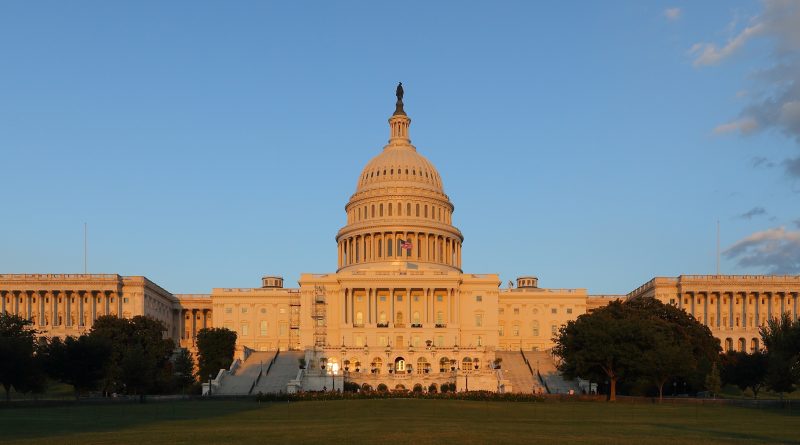
United States Capitol building — Photo: Martin Falbisoner — CC BY-SA 3.0, via Wikimedia Commons
House Panel Demands Answers After Federal Watchdog System Found Missing Deadlines, Skipping Reviews
The House Oversight and Government Reform Committee is demanding documents from the Council of the Inspectors General on Integrity and Efficiency after a Government Accountability Office audit found the body tasked with investigating senior-level misconduct within inspector general offices systematically missed legal deadlines, discarded complaints without required reviews, and failed to properly document conflicts of interest.
The committee gave CIGIE a July 15 deadline to provide a list of actions taken to address the GAO findings, communications between staff, and a plan to fix the problems. As of a week ago, CIGIE acknowledged receipt but had not responded.
Between fiscal years 2021 and the first half of 2025, CIGIE’s Integrity Committee received 16,245 complaints. It opened 460 cases for review. It completed 15 investigation reports.

Federal law requires investigations into inspector general misconduct be completed within 150 days. Of the five completed investigations GAO examined, covering October 2020 through March 2025, none met that deadline. Investigation lengths ranged from 427 days to 1,246 days — some cases took more than three years to resolve.
The committee also failed to provide mandatory updates to Congress when cases exceeded legal time frames, a requirement under the Inspector General Act of 1978.
GAO estimates only 24 percent of cases met all time frame requirements for opening and review. The remaining 76 percent fell short, including failing to provide legal analyses to committee members before scheduled meetings.
A CIGIE staffer is currently discarding complaints deemed “frivolous” without the secondary review by legal counsel that internal policy requires. Without that step, a single individual determines whether to pursue a complaint, even if the determination is incorrect.
The committee’s case summaries are missing required information, including whether members recused themselves due to conflicts of interest. If there is no record of a recusal, there is no way to verify the investigation was handled fairly.
When CIGIE relied on other offices of inspectors general to conduct investigations on its behalf, oversight was minimal. In 37 of 90 instances — approximately 41 percent — assisting offices failed to provide required monthly status updates. The committee’s final reports did not always reflect the conclusions reached by the assisting office, and when differences existed, the committee failed to provide detailed explanations for why it diverged from the assisting office’s findings.
When assisting offices requested reimbursement for investigations, supporting documentation was inconsistent and incomplete in the five cases GAO reviewed. “Controls are not in place to ensure that reimbursement requests are properly reviewed for accuracy and to ensure that all costs are necessary and allowable,” GAO wrote. “Rather, payments are made as requested.”
The GAO report was released publicly in June following a September 2024 request from the House Oversight Committee. CIGIE Chair Cheryl Mason, also the Veterans Affairs Department inspector general, agreed with all eight GAO recommendations but argued in a letter attached to the report that the committee’s effectiveness is undermined by structural problems, including regular leadership changes and reliance on other IGs for investigations.
House Oversight Chairman James Comer, R-Ky., along with subcommittee chairmen Reps. Pete Sessions, R-Texas; Clay Higgins, R-La.; and Andy Biggs, R-Ariz., wrote in their letter to Mason: “These systemic failures force the committee to consider all options at its disposal, including removing or modifying the duty to investigate wrongdoing within offices of inspectors general from CIGIE.”
The Breakdown
- Federal law requires inspector general misconduct investigations be completed within 150 days. None of the five completed investigations GAO examined met that deadline — the shortest took 427 days, the longest 1,246 days.
- CIGIE’s Integrity Committee received 16,245 complaints between fiscal 2021 and early 2025. It opened 460 cases. It completed 15 investigation reports.
- A single CIGIE staffer is discarding complaints labeled “frivolous” without the required secondary legal review, meaning one person determines whether a complaint advances, even if the determination is wrong.
- Case summaries are missing required information, including whether committee members recused themselves due to conflicts of interest.
- When other inspector general offices conducted investigations on CIGIE’s behalf, 41 percent failed to provide required monthly status updates. CIGIE’s final reports sometimes contradicted the assisting office’s conclusions without explaining why.
- When assisting offices requested reimbursement, CIGIE made payments as requested without properly reviewing whether costs were necessary or allowable.
- GAO issued eight recommendations. CIGIE agreed with all of them. The House Oversight Committee is now demanding documents and a plan of action by July 15.
What This Means for You
Inspectors general are supposed to be the government’s internal check against waste, fraud, and abuse in federal agencies. When the system meant to police inspectors general breaks down — missing deadlines, skipping reviews, failing to document conflicts — there is little recourse for accountability at the highest levels of federal oversight. The House committee’s response signals Congress may take legislative action to strip or modify CIGIE’s investigative authority if the problems persist. That means the structure of federal accountability itself is on the table, shaped by how the officials you elect to Congress choose to respond to this breakdown.
What You Can Do
The House Oversight and Government Reform Committee set a July 15 deadline for CIGIE to respond to its document request. Contact the committee’s members — Chairman James Comer and subcommittee chairs Pete Sessions, Clay Higgins, and Andy Biggs — to ask what action they plan to take if the response is inadequate, or to weigh in on whether legislative reform of CIGIE’s authority is the right path forward.
What to Watch
This story centers on federal money being spent without proper review. When assisting inspector general offices requested reimbursement for investigations, CIGIE made payments as requested without verifying whether costs were necessary or allowable — GAO found supporting documentation was “inconsistent and incomplete.” That is not a paperwork problem. It is a control failure that raises the value-for-money question directly: how much federal funding went to unnecessary or unallowable costs because no one checked?
The deeper question is whether the structure itself is salvageable. CIGIE Chair Cheryl Mason argues the committee’s effectiveness is undermined by structural constraints — rotating leadership, reliance on other IGs for investigations, members holding full-time positions elsewhere. If those constraints are real and unfixable, the House Oversight Committee’s threat to strip or modify CIGIE’s investigative authority is not just posturing — it is the logical next step. Whether Congress follows through, or whether CIGIE’s agreement with GAO’s recommendations translates into actual compliance, will determine whether this oversight body retains its role or loses it.