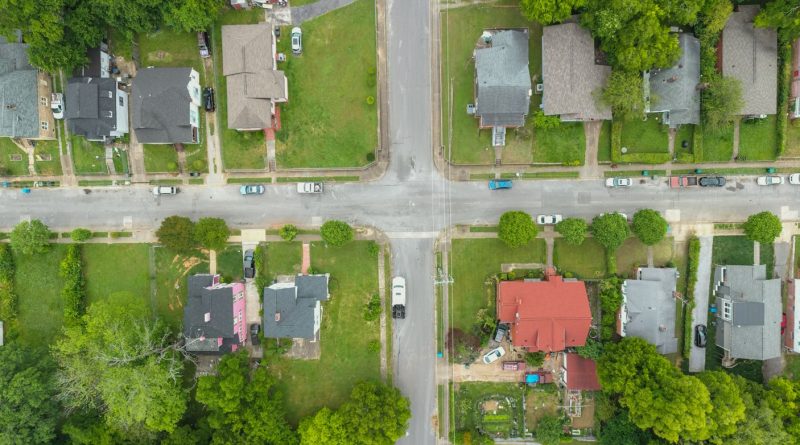
residential neighborhood houses — Photo by K via Pexels
State Awards Fresno $32.6 Million for 84 Supportive Housing Units Under Prop 1
California awarded the City of Fresno and developer Parkway Prime LLC $32.6 million to convert an existing interim housing project into 84 permanent supportive homes, nine of them reserved for veterans, Gov. Gavin Newsom announced July 23.
The award, drawn from voter-approved Proposition 1 funds through the state’s Homekey+ program, was the largest of four projects totaling $109.6 million across Bakersfield, Contra Costa County, Sacramento, and Fresno. Statewide, the awards will create 278 permanent supportive housing units, including 103 reserved for veterans experiencing or at risk of homelessness.
The Fresno project, Parkway Terrace, will convert 106 interim housing units originally funded under an earlier Homekey round into 84 permanent homes. Upgrades include a modernized on-site laundry facility, property management and case management offices, reconfigured community spaces, elevator improvements, full ADA compliance in select units and common areas, and unit-level kitchenettes, flooring, lighting, and bathroom fixtures.

Since its launch, Homekey+ has allocated $968.4 million to 54 permanent supportive housing projects expected to create 2,749 affordable homes statewide, including 723 homes reserved for veterans, according to state officials.
The Breakdown
- The $32.6 million award to Fresno and Parkway Prime LLC will convert 106 interim housing units at Parkway Terrace into 84 permanent supportive homes, including nine units reserved for veterans.
- Proposition 1, approved by California voters, authorized a $6.4 billion bond to expand housing, treatment facilities, and behavioral health services for people experiencing homelessness and living with behavioral health challenges.
- The Homekey+ program allocates Proposition 1 funds to permanent supportive housing projects, with regional funding based on proportionate share of veterans and others experiencing homelessness and by share of extremely low-income households paying more than half their income in rent.
- Statewide, the July 23 awards total $109.6 million for 278 units across four projects in Bakersfield, Contra Costa County, Sacramento, and Fresno, including 103 units reserved for veterans.
- An additional $2.3 million will support three previously awarded Homekey+ projects in Olivehurst, Sanger, and Stockton, primarily for operating costs and increased veteran housing.
What This Means for You
California voters approved Proposition 1 to expand permanent supportive housing for people experiencing homelessness and behavioral health challenges — this award directs those funds to Fresno. The $32.6 million in state bond dollars will finance 84 units that will provide housing and behavioral health services to some of the city’s homeless population, including nine units specifically for veterans.
The per-unit cost of the Fresno project is approximately $388,000 when calculated against the 84 permanent units being created, though the sources do not separately state what portion of the total award is public contribution versus private financing, tax credits, or other non-public funds typically layered into supportive housing developments.
What to Watch
The underlying numbers raise a value question: at roughly $388,000 per unit of permanent supportive housing created, why is public money going toward conversion projects rather than toward reducing the cost of Fresno’s existing housing stock, which the private market has already built?
The existing facility had already been refurbished under Homekey funds. Why demolish and start over? What kind of “affordable” apartment building costs $32 million and does not include laundry in each unit? What type of environment is being created when disabled vets must still live a laundromat life and pay rent on top of the $32 million gift to developers?
Why is the city eliminating free temporary homeless shelters in favor of permanent housing that residents must pay for? What is being done to address the need for emergency shelter being created in the homeless community?
Concentrated supportive housing developments — projects that group low-income or vulnerable residents in a single location — are a recognized pattern of concern in many cities’ housing histories, including Fresno’s.
The question a voter watching this project should keep in mind is whether it’s more likely to stabilize the surrounding neighborhood or to concentrate poverty and strain local public services over time. The sources offer no long-term outcome data, and this is a real, documented risk worth tracking as the project moves forward, not a certainty about this specific site.
A second angle the sources do not address: who actually benefits most from a project structured this way? The residents who will live there are the stated beneficiaries, but a developer converting an interim project into permanent housing with nearly $33 million in public subsidy is also a direct financial beneficiary.
So is any employer or industry whose wages are low enough that “affordable housing” becomes necessary in the first place — supportive housing programs can function, in practice, as an indirect wage subsidy, allowing employers to pay less because the public sector is covering part of their workers’ cost of living. None of that makes the project illegitimate, but it is a policy tension the sources’ official framing does not name.
Finally: if the goal is to house 84 people, and the cost is $32.6 million in public funds, what else could $32.6 million buy in Fresno’s housing market, and why is this the better use of that money?