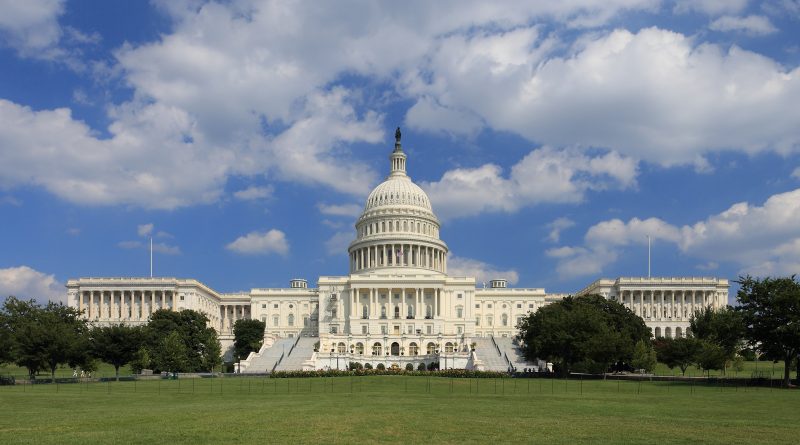
United States Capitol building — Photo: Martin Falbisoner — CC BY-SA 3.0, via Wikimedia Commons
Trump Administration Freezes $867M in California Medicaid Payments Over Fraud Claims
The Trump administration halted $867 million in federal Medicaid payments to California on Tuesday. Health and Human Services Secretary Robert F. Kennedy Jr. cited suspected fraud in the state’s In-Home Supportive Services program.
“We are not sending Medicaid dollars out the door until we have confidence that they are being spent lawfully and appropriately,” Kennedy stated during a press conference.
Centers for Medicare & Medicaid Services Administrator Mehmet Oz said California’s spending for in-home services ran at twice the national average over the past two years. CMS flagged billing patterns it described as suspicious: providers submitting claims more than a year after services, billing four or more patients simultaneously, or ranking among the top 2.5% of billers nationwide.

The In-Home Supportive Services program pays caregivers — often family members — to assist elderly and disabled residents at home rather than in facilities. California has more than 500,000 IHSS recipients, according to Haywood Talcove, CEO of LexisNexis Risk Solutions for Government, who estimated fraud accounts for roughly 20% of the program.
Talcove described the fraud mechanism as applicants claiming to need in-home care, designating a caregiver, then persuading a healthcare professional to falsely certify the need in exchange for payment. “The state doesn’t have the technology, doesn’t have the people, and doesn’t have the systems to validate it,” Talcove said.
California Governor Gavin Newsom rejected the fraud claims. “We take fraud seriously,” Newsom said. “We don’t politicize it like these guys.” He characterized the decision as “pure politics” and an attack on Xavier Becerra, the Democratic gubernatorial candidate and former HHS chief under President Biden.
A spokesperson for Newsom’s office stated that California’s approach “saves federal and state taxpayers money” — approximately $100,000 per person annually versus nursing facility care. The spokesperson cited a 2020 California State Auditor report finding no program integrity concerns.
The administration also froze roughly $200 million in Minnesota Medicaid payments. In May, the Trump administration withheld $1.3 billion in California Medicaid funding over hospice and home-health agency concerns, bringing the total over $2 billion.
Payments remain frozen until California substantiates its claims from the past quarter audit.
The Breakdown
- The Trump administration froze $867 million in California Medicaid payments and roughly $200 million in Minnesota payments, citing suspected fraud.
- The California freeze targets the In-Home Supportive Services program, which pays caregivers to assist elderly and disabled residents at home.
- CMS flagged providers who submitted late claims, billed multiple patients simultaneously, or ranked among the top 2.5% of national billers.
- California’s IHSS spending ran at twice the national average over the past two years, according to CMS Administrator Oz.
- Payments will remain frozen until California provides documentation that the claims are legitimate.
- This follows a $1.3 billion hold on California Medicaid funding announced in May, bringing the total over $2 billion.
What This Means for You
The freeze affects Medicaid-funded in-home care payments to California providers and caregivers, though the material does not state whether current services to recipients will continue during the review period or what happens if payments remain frozen.
Newsom characterized the freeze as targeting Democratic gubernatorial candidate Xavier Becerra, who previously ran HHS under Biden. The dispute centers on whether California’s IHSS program represents genuine cost savings versus institutional care or functions as a vehicle for fraud that federal oversight should halt.
What to Watch
This is the Trump administration’s second Medicaid funding hold on California, totaling over $2 billion. Two questions matter: whether California can substantiate the claims CMS flagged quickly enough to restore payments before providers or recipients experience disruption, and whether the stated fraud-detection criteria (late claims, simultaneous billing, high billing volume) actually identify fraud or simply flag the operational reality of running a large-scale in-home care program.
The numbers surface a basic tension the material itself highlights but doesn’t resolve: Talcove, the fraud expert quoted, claims the program’s structure — “federally funded, state-administered” with “virtually no auditing” — makes fraud inevitable. Newsom’s office counters that the program saves $100,000 per person annually versus institutional care and passed a 2020 state audit with no integrity concerns.
If both are true, the question becomes whether tightening oversight is compatible with maintaining a program large enough to keep 500,000 Californians out of nursing facilities, or whether the Trump administration’s stated concern about fraud is functionally a mechanism for dismantling a program it opposes on other grounds.