Early Voting Surges in Central Valley Congressional Races as Democrats Push Turnout
Early voting is running well ahead of 2022 levels in Central Valley congressional districts, including the race where Rep. David Valadao, R-Bakersfield, is defending his 22nd District seat against progressive challenger Randy Villegas. Through Tuesday, 12% of voters in that district had returned ballots — up from just 7% at the same point four years ago, according to Political Data, a Sacramento political data analysis firm.
The jump follows a recent campaign visit by Rep. Alexandria Ocasio-Cortez, D-N.Y., who stumped for Villegas in a district redrawn by Proposition 50, the 2025 ballot measure that temporarily altered California’s political boundaries. Democrats now make up 42% of voters in the 22nd District, Republicans 26%, and no-party-preference voters 24%.
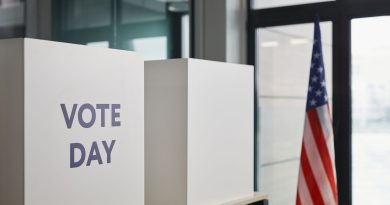
Statewide, California is on pace for 60% turnout and the most ballots ever cast in a gubernatorial race, despite what Political Data vice president Paul Mitchell called a “lackluster governor’s contest” and 14 ballot measures on the ticket. Sixteen percent of registered voters statewide have turned in ballots through Wednesday, compared with 14% in 2022.
“I think the blue wave is on track,” Mitchell told the San Francisco Chronicle Wednesday. “It seems to be on track that we’re going to have a really strong turnout.”
In the 13th Congressional District — which includes portions of San Joaquin, Merced, Stanislaus, Madera and Fresno counties and where Rep. Adam Gray, D-Turlock, won by 187 votes two years ago — 14% of voters had turned in ballots by Wednesday, up from 12% in 2022. Latino turnout is up in that district, which Political Data attributes to “the poor economy and ICE raids that have terrified immigrant communities.”
Mitchell, who architected Proposition 50, said the five key redrawn districts are on track to produce Democratic victories, with only the 22nd — Valadao’s seat — in serious question. “That number of Democrats in any other district in the state would be a super safe Democratic seat,” Mitchell said, citing historically low Democratic turnout in the area and moderate Democrats who cross over to vote Republican.
President Donald Trump’s approval rating stands at 37% among likely voters in the San Joaquin Valley, down from 40% a year ago, according to a September Berkeley IGS Poll. Statewide, his approval is 27%.
Republicans have mounted an unprecedented late advertising push — $700 million for House races nationwide over the final two months — and Trump has sought to suppress turnout by falsely claiming California’s vote-by-mail system is rife with fraud. There is no credible evidence of widespread voter fraud in the state.
State Treasurer Fiona Ma, running for lieutenant governor, said Tuesday that only 40% of registered voters cast ballots in the June primary. An October Public Policy Institute of California study found that infrequent voters — who are more likely to be Democrats (42%) or Independents (34%) than Republicans (22%) — are less motivated this cycle, with only 28% saying voting this year matters more to them than in past midterms.
The Breakdown
- Early ballot returns are up in the 22nd Congressional District (Valadao vs. Villegas), from 7% at this point in 2022 to 12% through Tuesday 2026.
- Early returns are also up in the 13th District (which includes portions of Fresno County), from 12% in 2022 to 14% this cycle.
- Statewide, 16% of registered voters have returned ballots through Wednesday, compared with 14% in 2022. Latino turnout statewide is 10%, up from 7% four years ago.
- Proposition 50, approved by voters in 2025, temporarily redrew California’s political boundaries in an attempt to send more Democrats to Congress. The 22nd District now has 42% Democrats, 26% Republicans, and 24% no-party-preference voters.
- Trump’s approval in the San Joaquin Valley is 37%, down from 40% a year ago; statewide it’s 27%, per a September Berkeley IGS Poll.
What This Means for You
If you live in the 22nd or 13th Congressional Districts, your vote will help decide key House races. The 22nd, redrawn by Prop 50 to favor Democrats on paper, is the one redrawn district analysts consider a real toss-up, despite its 16-point Democratic registration advantage. Your turnout matters more this cycle than it has in years.
If you’re among the infrequent voters who skipped the June primary, you’re part of a group that leans Democratic but is less motivated this year than in past midterms, according to PPIC. That gap between enthusiasm and registration is exactly what could decide these races.
What You Can Do
If you have not returned your ballot, do so immediately — drop it at any official ballot drop box, mail it (though this close to Election Day a drop box is safer), or vote in person at your polling location on Election Day. You can track your ballot’s status at wheresmyballot.sos.ca.gov.
What to Watch
The 22nd District’s Democratic registration advantage would be “a super safe Democratic seat” in any other part of California, according to Mitchell — so why is it in question here? The answer: historically low Democratic turnout in the Central Valley, and a pattern of moderate Democrats crossing over to vote Republican. That pattern means registration numbers alone don’t tell you the outcome. Watch whether the 12% early-turnout figure — nearly double 2022’s pace — actually translates to Democratic votes, or whether those ballots break the way past Central Valley elections have.
Latino turnout is up sharply in the 13th District, which Political Data links directly to “the poor economy and ICE raids that have terrified immigrant communities.” If that’s the driver, the question is whether those voters break as strongly Democratic as past cycles, or whether economic anxiety cuts the other way. Gray won by 187 votes two years ago — a margin that small means every bloc matters.
Republicans have poured $700 million into House races nationwide over the final two months, an unprecedented late push. That money doesn’t appear in the early-voting numbers yet, but it’s designed to move late deciders and Election Day voters. If infrequent voters — who skew Democratic but are less motivated this year, per PPIC — don’t turn out at the end, that GOP spending could erase the early Democratic lead.
Trump has falsely claimed California’s vote-by-mail system is rife with fraud, despite no credible evidence of widespread voter fraud in the state. The goal of that messaging is suppression — making voters distrust the system enough to skip voting. Watch whether turnout in Republican-leaning precincts stays flat or drops, and whether Democratic turnout climbs enough to overcome it.