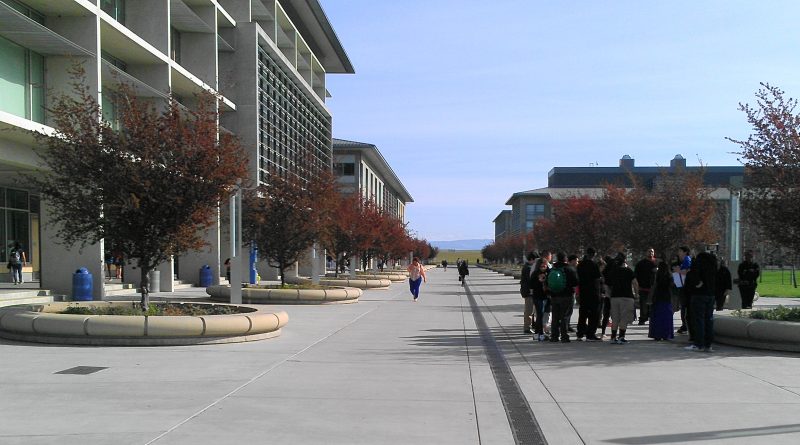
UC Merced — Photo: Qymekkam — CC BY-SA 3.0, via Wikimedia Commons
Newsom vetoes Central Valley medical school study; UC Merced program timeline extends to 2034
Gov. Gavin Newsom vetoed Assembly Bill 1547 this month, rejecting Assemblymember Jasmeet Bains’ third attempt to compel the University of California to study a medical school in Kern County. The bill carried a $2.9 million price tag Newsom called too costly.
The veto comes as UC Merced’s timeline to open a standalone medical school stretches to around 2034 — roughly a decade away. The eight-county San Joaquin Valley, home to 4.3 million residents, currently has no standalone M.D.-granting medical school.
The region has about 200 physicians per 10,000 residents, according to the California Healthcare Foundation. The Bay Area’s ratio is more than twice that figure.
Newsom also vetoed a bill by Assemblymember Juan Alanis, a Modesto Republican, that sought to establish an emergency department in Patterson without an attached hospital. State law requires emergency departments to be hospital-based, and Newsom cited safety concerns in his veto message.
In the same veto letter for AB 1547, Newsom noted he had signed one of Bains’ earlier bills in 2024, which created a fund for a potential medical school. That fund holds $1 million — all from Kern County, according to Bains.
Bains, a Bakersfield Democrat and practicing physician, said the vetoes leave the valley with “short term solutions” while the region “continues to suffer.” She argued Kern County, whose largest city Bakersfield sits 110 miles south of Fresno, needs its own training hospital.
The University of California is focusing resources on the “multi-year, intensive process” of creating a medical school in Merced, according to Elizabeth Wells, a spokesperson for the UC Office of the President. The system has been largely silent or opposed to legislative proposals for a Kern County medical school.
State lawmakers approved $2 million this month for a medical school at the University of the Pacific in Stockton, set to open in 2030. That would make Pacific the first institution in the San Joaquin Valley to grant M.D. degrees, four years before UC Merced’s projected launch.
UCSF operates a Fresno campus where medical students complete clinical rotations and residencies. In 2023, the UC started an eight-year program where students complete undergraduate and medical education in the valley, starting at UC Merced and finishing at UCSF Fresno. The first cohort of about 15 students will transition to medical school this spring. The program aims to reach 50 or more students annually.
Next year, UC Merced will open a new medical education building — the largest state-funded UC construction project in history. Peter Chin-Hong, a UCSF professor and associate dean, said the building, expanded residency programs, and years of accreditation work are all groundwork for UC Merced’s eventual standalone school.
The only current medical school in the eight-county region is California Health Sciences University in Clovis, a private for-profit institution that grants doctorates in osteopathic medicine, a less traditional medical degree.
The Breakdown
- AB 1547 would have required the UC to conduct a feasibility study for a medical school in Kern County, at a cost of nearly $3 million. Newsom vetoed it as too expensive.
- A separate bill by Assemblymember Alanis to create an emergency department in Patterson without an attached hospital was also vetoed, with Newsom citing state law requiring emergency departments to be hospital-based.
- The UC system projects a standalone medical school at UC Merced will open around 2034, following a lengthy accreditation process and need for additional hospital training sites.
- The University of the Pacific in Stockton received $2 million in state funding this month to create a medical school opening in 2030 — four years before UC Merced’s timeline.
- UCSF’s Fresno campus and UC Merced’s joint eight-year undergraduate-to-medical-school program are interim steps, training about 15 students in the first cohort with a target of 50 annually.
What This Means for You
The veto of AB 1547 and the extended UC Merced timeline mean Central Valley voters will not see a new medical school serving their region for at least another six years, and a UC Merced school not until roughly 2034. These are decisions shaped by the Governor’s veto power and the UC system’s resource allocation — both ultimately accountable to voters through the Governor’s office and the Legislature’s oversight of UC funding. Assemblymember Bains has now made three legislative attempts to compel the UC to study a Kern County medical school, all blocked either by veto or by the UC system’s stated priorities. For a voter in Kern, Fresno, Merced, or any Central Valley county, this timeline determines how long the region’s physician shortage — 200 per 10,000 residents compared to the Bay Area’s 400-plus — persists, and whose judgment on that tradeoff to trust in future elections.
What to Watch
The $2 million approved for Pacific’s medical school in Stockton and the funding already committed to UC Merced’s medical education building represent the state’s bet on which institutions and timelines will address the valley’s shortage. UC Merced’s 2034 target assumes continued state funding, successful accreditation, and enough hospital partnerships for clinical training — all of which took UC Riverside 40 years to secure. If any step delays, the timeline extends further.
Assemblymember Bains’ argument that Kern County, 110 miles south of Fresno with distinct demographics and health challenges, needs its own infrastructure raises questions about state investment.
The UC’s stated rationale is that a “multi-year, intensive process” requires focus, but Bains and Kern County officials dispute whether one centralized school serves a 250-mile region equally well.
Who benefits: The University of the Pacific in Stockton will operate the valley’s first M.D.-granting program by 2030. UC Merced, once operational, will be the UC system’s only valley-based medical school. UCSF Fresno, already operating residency and clinical programs, continues its role in the eight-year joint program.
Who bears the cost: Central Valley residents, particularly in Kern County, continue to face a physician shortage for at least another decade under the current timeline.
Kern County has contributed $1 million to a state-created medical school fund — the only money in that fund — with no guarantee the UC will ever study or pursue a Kern County school. The veto of AB 1547 leaves that question unexamined.