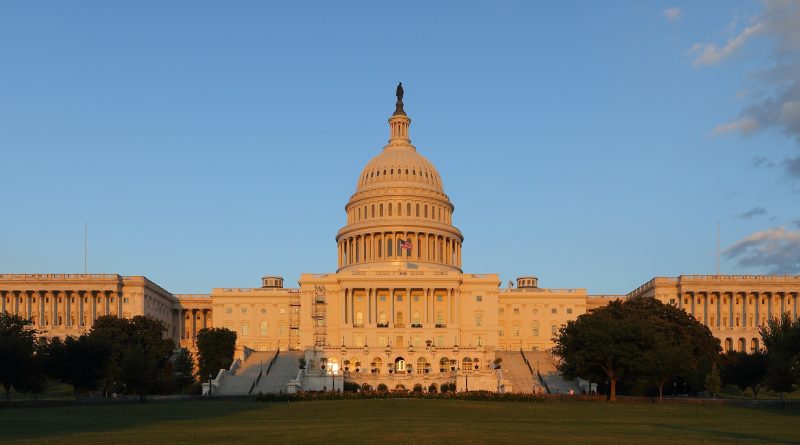
United States Capitol building — Photo: Martin Falbisoner — CC BY-SA 3.0, via Wikimedia Commons
Supreme Court Allows Trump Mail-Ballot Order to Advance, but Legal Fight Far from Over
The Supreme Court handed President Donald Trump a procedural victory this week in his effort to restrict mail voting, but the decision leaves the underlying question — whether a president can unilaterally rewrite election rules — unresolved and almost certain to return to the justices soon.
The Court’s unsigned Monday order permits Trump to move forward with a controversial March executive order targeting mail ballots. But it does not settle whether the order is legal. The president’s plan for the U.S. Postal Service remains blocked nationwide by a separate federal court ruling, and further court action is expected within days.
Trump’s executive order directs the Department of Homeland Security to compile state-by-state lists of voters it deems U.S. citizens using federal databases. It also orders the Postal Service to require states to upload every mail-ballot recipient’s name and address to a federal portal before ballots can be sent, adopt standardized envelopes with machine-readable barcodes, and reject any ballot not added to the portal. States that refuse would lose USPS ballot-delivery services for federal general elections.
The order couples the citizenship-list requirement with a directive that the Attorney General “prioritize the investigation and, as appropriate, the prosecution of State and local officials” who send ballots to voters not on the Trump administration’s list — a list the Justice Department has conceded would “necessarily be incomplete.”
Federal records don’t track name changes such as when a woman changes her name at marriage, raising the prospect that lawful voters could be excluded.
The Supreme Court’s conservative majority concluded that 23 Democratic states challenging the order had sued too early, before the Trump administration had taken steps to implement its plans. “The executive order makes no demand of the states,” the unsigned decision read. The Court did not disclose the vote count.
Justice Ketanji Brown Jackson dissented, warning the administration might “game the system.” “The court has held for a while now that even valid election-related legal claims can come too late,” Jackson wrote. “Today’s revelation is that such claims can also come too early — never mind that an election is looming and related harms are presently occurring.”
Trump did score a cleaner win on the citizenship-list provision. DHS will be allowed to move forward with creating those lists, though the order doesn’t require states to do anything with them.
Meanwhile, the Postal Service published a final rule last week spelling out how it would carry out the president’s mail-ballot directives. The agency downplayed concerns from election officials — including some Republicans — that the policy could create major logistical problems, fuel voter confusion, and give Trump fresh grounds to challenge results. USPS wrote that “the visibility and law-enforcement benefits of the rule” outweighed “any logistical or financial difficulties states may face.”
But USPS says it won’t implement the rule before the midterms without federal court approval. The White House has made clear it wants the system in place for November.
A separate federal court ruling from Judge Indira Talwani in Massachusetts, in a case brought by the American Civil Liberties Union and other voting-rights groups, currently blocks the USPS directives nationwide. That block remains in effect despite Monday’s Supreme Court decision. Late Monday, the Justice Department told Talwani it would appeal her order unless she reversed it by late Tuesday afternoon.
Three separate federal judges have now blocked key provisions of Trump’s election executive orders, each ruling that the Constitution gives states and Congress — not the president — authority over elections. “The court is very clear that the Constitution gives no authority to the president to do any of these things, and that federal law doesn’t either,” Derek Clinger, a senior staff attorney with the University of Wisconsin Law School’s State Democracy Research Initiative, said of the latest ruling.
The Justice Department has filed 23 lawsuits against states unwilling to provide unredacted voter data to the federal government, citing Trump’s executive order. The administration has also signaled it is likely to appeal the latest adverse rulings, setting up a potential Supreme Court showdown on whether a president can unilaterally change how states conduct their mail-voting programs.
Time is critical for both sides. If litigation drags closer to November, the Justice Department is expected to invoke the “Purcell principle” — a judicial doctrine warning federal courts against making last-minute changes to voting rules. The administration could argue it’s too late for courts to stop implementation before the midterm.
For now, voters who expect to cast mail ballots in the midterm elections do not need to change their plans.
The Breakdown
- The “Purcell principle” is a judicial rule that warns federal courts against making last-minute changes to voting rules close to an election.
- Trump’s March executive order directs DHS to create state-by-state citizenship lists using federal databases and share them with states.
- The order directs USPS to require states to upload every mail-ballot recipient to a federal portal, use standardized envelopes with barcodes, and reject ballots not on the portal — with states losing USPS service if they refuse.
- The order directs the Attorney General to prioritize prosecuting state and local election officials who send ballots to voters not on the Trump administration’s incomplete citizenship list.
- The Supreme Court ruled Monday that 23 Democratic states sued too early, before the order was implemented, but did not rule on whether the order is legal.
- A separate federal court ruling in Massachusetts currently blocks the USPS directives nationwide; that block remains in effect.
- Three federal judges have now ruled that the Constitution gives states and Congress — not the president — authority over election procedures.
What This Means for You
This case centers on who has the power to decide how you cast your ballot in a federal election. The Constitution gives that authority to your state legislature and to Congress — not to the president acting alone.
For Fresno voters who vote by mail — and for the county election officials who administer that process — the immediate question is whether the federal government can require California to upload your name to a federal portal before your ballot can be mailed, and whether the Postal Service can reject your ballot if it’s not on that list.
What You Can Do
The case is still in active litigation. The ACLU and other voting-rights groups are challenging the order, and their updates are publicly available on their websites.
What to Watch
The Justice Department’s own brief to the Supreme Court conceded that the Trump administration’s citizenship list would be “necessarily be incomplete” — and federal records don’t track name changes such as when a woman changes her name at marriage. Women are more likely to vote for Democrats than men.
The order couples that incomplete list with a directive to prioritize prosecuting state and local election officials who send ballots to voters not on the list. That creates a real risk: an election official who follows state law and sends a ballot to a lawful voter whose name doesn’t appear on the federal list could face prosecution, even though the voter is eligible and the list is admittedly incomplete.
Democrats have been more likely to vote by mail than Republicans since at least the 2020 election, and that trend has continued. Any policy that makes mail voting harder — requiring states to upload names to a federal portal, standardizing envelopes, rejecting ballots not on the portal — will disproportionately affect the party that relies on mail voting more.
There’s also a timing question worth watching closely. If the Justice Department drags this litigation out closer to November and then invokes the Purcell principle — the judicial doctrine against last-minute voting-rule changes — the administration could argue it’s too late for courts to stop implementation before the midterm.
That would mean a policy no court has ruled legal could still take effect, simply because the legal fight ran long enough. Justice Jackson warned the administration might “game the system” this way. Whether the courts allow that to happen will tell you a lot about whether procedural rules serve justice or simply whoever can run out the clock.