
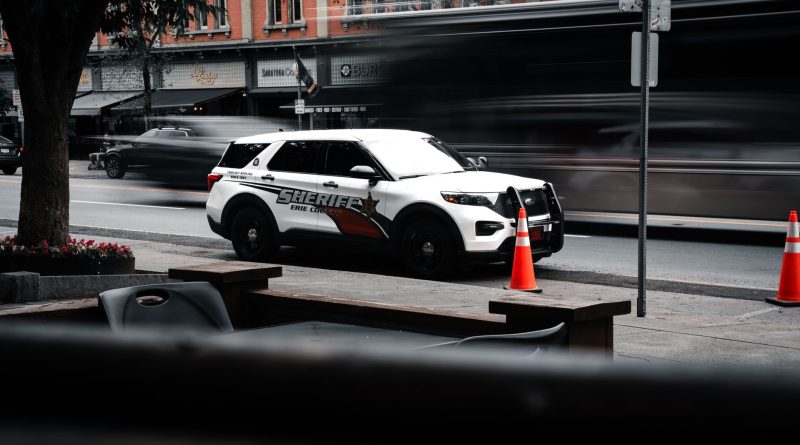
police car patrol city street — Photo by Connor Scott McManus via Pexels
At Least 50 Law Enforcement Officers Charged With Using Crime Cameras to Stalk Exes
A network of license-plate cameras built to fight crime became a stalking tool in the hands of at least 50 law enforcement officers, according to charges filed against them.
The system is called Flock. Police departments across the country use it to track vehicles by scanning their license plates at roadside cameras. The idea: catch criminals by following their movements.
But officers with access turned it on people they knew instead.

Marci Bakely, 50, says her ex-boyfriend — a police chief in a small town outside Atlanta — “watched every single move I made” using Flock. When she went to buy groceries, go on a date, or see a doctor, he’d text her about it within minutes, even though he worked 15 miles from her home.
“I didn’t think you would slip up,” he messaged her one day in 2024, after incorrectly suspecting she’d gone to see another man, according to texts she shared with The Washington Post.
Bakely installed three cameras around her home to see if he was staking out her street. She bought a hidden-camera detector and nervously waved it down every wall. Three times she drove her Kia to a mechanic’s shop, asking them to scan for tracking devices.
She couldn’t find one. The tracking was happening through the camera network he had official access to as a police chief.
The Breakdown
- Flock operates a network of roadside cameras that scan license plates to track vehicle movements, marketed to police departments as a crime-fighting tool.
- At least 50 law enforcement officers have been charged with or accused of misusing the system to track people they knew personally, including ex-romantic partners.
- Officers with authorized access to the system used it to monitor where their targets went — grocery stores, doctor’s appointments, dates — sometimes texting about their movements within minutes.
- Victims described feeling constantly surveilled, installing their own cameras and searching their vehicles for trackers, not realizing the tracking was happening through a police surveillance system their abusers had legitimate access to.
What This Means for You
This isn’t about whether the cameras work for catching criminals — it’s about whether the people with access to them can be trusted not to abuse that access. When you vote on budgets that fund these systems, or on sheriffs and district attorneys who oversee how they’re used, you’re voting on whether the accountability mechanisms around them are strong enough to catch and punish this kind of misuse.
What to Watch
The fundamental question: who’s watching the watchers? A surveillance system powerful enough to track anyone’s movements in near-real-time is only as safe as the audit logs, access restrictions, and internal-affairs processes that prevent misuse. Fifty charged officers didn’t all get caught the same day — they got caught over time, which means the abuse was happening long before anyone noticed.
Does your local department log every search? Does anyone review those logs who isn’t part of the same department? Is there a penalty for accessing records without a legitimate law-enforcement purpose, and does it actually get enforced? The technology works exactly as designed when an officer uses it to stalk an ex — the design is the problem if there’s no real check on who uses it and why.