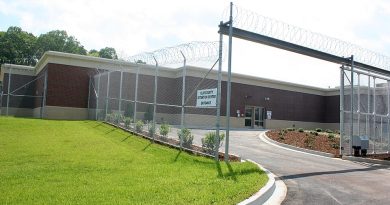
Fresno Father Detained by ICE, Family Says He Was Denied Medical Care During 22-Day Detention — AI-generated illustration
Fresno Father Detained by ICE, Family Says He Was Denied Medical Care During 22-Day Detention
Luis Arreguin, a Fresno father of four who has lived in the United States for 50 years, was detained by Immigration and Customs Enforcement agents on Oct. 1 at 5 a.m. as he drove to work. He was deported to Mexico 22 days later.
Arreguin was stopped by ICE agents in unmarked cars on his way to the same workplace he had worked at for 30 years, according to his daughter Elaina Salazar. The detention came hours after Arreguin had returned from the emergency room with his wife, who had been dealing with heart issues.
“Man, I wish I would’ve been smarter,” Arreguin said. “I wish I would’ve just stayed home.”

Arreguin’s detention and deportation occurred during Operation Safe California, an unannounced 45-day ICE enforcement campaign sweeping California from San Diego and Los Angeles to the Central Valley. The Washington Examiner first reported the raids on Oct. 7, citing an insider source who claimed ICE agents were tasked “to arrest all illegal immigrants they encounter, regardless of whether an individual has a criminal history.”
A Department of Homeland Security spokesperson declined to discuss details of the operation, stating only: “For operational security and the safety of our officers, ICE will not disclose or discuss law enforcement operations. Every day, DHS enforces the laws of the nation across the country, including in California.”
The operation is taking place weeks before the Nov. 3 midterm election. East Bay Rep. Lateefah Simon, a Democrat, stated in an email to KQED: “We know what Republicans are trying to do — intimidate Latino citizens so they stay at home and don’t exercise their right to vote.”
Alleged Mistreatment During Detention
Arreguin’s family alleges he was denied medical care and subjected to inhumane conditions during his 22-day detention across multiple facilities in California and Texas.
According to Arreguin, he was taken to an ICE office in downtown Fresno, where he and other detainees were shackled for three to four hours before being transferred. He said detainees were not allowed to use the restroom for bowel movements while shackled, only for urinating.
“Half of them, immigrants in there, had work clothes on from the fields,” Arreguin said. He said the majority of people picked up were farmworkers who had come out of Costco and Vallarta Supermarkets in Fresno.
Arreguin’s family was able to visit him for 15 minutes after a five-hour wait. “I was in shock,” Salazar said. “We see a lot in the news about people dying in these detention facilities or being ‘lost’ and that was terrifying to me.”
Medical Emergency and Transfers
When Arreguin arrived at Central Valley Annex in McFarland, near Bakersfield, a medical evaluation found his blood pressure was 180 over 160 — dangerously high. After pressure from his daughter and wife, he was taken by ambulance to an emergency room in Bakersfield, where he stayed for six hours.
He was then placed in the infirmary for eight days and given a supply of five different medications.
Arreguin was later transferred back to Fresno’s detention center for a day, where he said he was not given his medication. “And because I spoke English, they proceeded to go back and get medicine, and he throws it at me,” Arreguin said.
He recalled another man who needed insulin and medication but did not receive it.
Arreguin was then transferred to Camp East Montana in El Paso, Texas, a facility that has been reported as neglectful of detainees and where three detainee deaths have been documented.
According to Arreguin, Camp East Montana had no medical treatment when he arrived. He said the only reason he had blood pressure medication was that medical staff in Bakersfield had given him a three-month supply.
Conditions During Transport
Arreguin said detainees were shackled on the plane to Mexico, meaning they couldn’t go to the restroom for bowel movements during the flight.
“You just shit yourself if you have to, they don’t care,” Arreguin said.
The plane, transporting about 300 people, did not have medical staff, according to Arreguin. There were 22 women and a 14-year-old on the plane.
“What about if somebody has a heart attack or somebody has a seizure?” Arreguin said. “They are diabetic people that needed meds and just because I spoke English and say these people need their meds.”
Arreguin also said he lost over $200 in cash while being transferred from facility to facility. He said guards told him they would return the money to the sender, but his family never received it.
City Response
On Oct. 22, the Fresno City Council approved reestablishing the Immigration Legal Defense Fund and allocating $1 million for the 2027 budget process. This fund was previously opened in 2021 with an allocation of $200,000.
Fresno City Council Vice President Miguel Arias recommended that undocumented people and families limit activity and record interactions with ICE or federal agents.
“I think the best resources that I would offer people is to make sure that they travel the least as possible, if they’re undocumented,” Arias said. “If they’re Hispanic with documents, record any interaction you have with ICE or masked officers, and make sure that you know you vote on election day.”
The Breakdown
- Luis Arreguin was detained by ICE agents in Fresno on Oct. 1 at 5 a.m. as he drove to work.
- He was held for 22 days across multiple facilities in California and Texas before being deported to Tapachula, Mexico, a city bordering Guatemala.
- His family alleges he was denied medical care despite dangerously high blood pressure and was subjected to inhumane conditions, including being shackled for hours without access to restrooms and being transported on a plane with no medical staff.
- The detention occurred during Operation Safe California, an unannounced 45-day ICE enforcement campaign across California that is taking place weeks before the Nov. 3 midterm election.
- On Oct. 22, the Fresno City Council approved reestablishing the Immigration Legal Defense Fund with $1 million allocated for the 2027 budget process to help immigrant families navigate the immigration system.
What This Means for You
The Fresno City Council’s decision to allocate $1 million to the Immigration Legal Defense Fund is a local policy decision made by officials you elected locally. How you weigh that spending decision will shape how you vote in future local elections.
What You Can Do
If you are undocumented or know someone who is, Fresno City Council Vice President Miguel Arias recommends limiting travel as much as possible and recording any interaction with ICE or federal agents. If you are Hispanic with documents, record interactions as well.
The Fresno City Council has allocated $1 million for the Immigration Legal Defense Fund, which is intended to help immigrant families access legal representation. Contact the city for information on how to access those resources.
Vote on Nov. 3.
What to Watch
ICE’s own website states that “Detention is non-punitive,” meaning detention facilities are not intended to be prisons. Salazar points out that in a prison or jail, detainees are allotted certain rights, including the right to purchase food and personal items and make phone calls. The question is whether the conditions Arreguin and his family describe — being shackled for hours without access to restrooms, being denied medication, being transported without medical staff, losing money that was never returned — meet that non-punitive standard, or whether they amount to punishment without due process.
A second question: who is actually being targeted in Operation Safe California? The Washington Examiner’s source claimed agents were tasked to arrest all undocumented immigrants “regardless of whether an individual has a criminal history.” Arreguin said the majority of people picked up with him were farmworkers coming out of stores in Fresno. According to federal authorities, Arreguin had been deported five times before — but that fact, on its own, does not answer whether the enforcement operation is prioritizing people with serious criminal records or sweeping up anyone it encounters, as the insider source claimed.
A third question: why is this operation happening now, weeks before a midterm election? DHS and ICE have refused to comment on the timing. Rep. Simon states flatly that Republicans are trying to intimidate Latino citizens so they stay home and don’t vote. The evidence that would settle it — internal communications, operational directives, or a transparent explanation of the timing and targeting criteria — has not been made public.
Finally, there is the question of what actually happened to Arreguin and the other detainees in these facilities. The allegations his family makes — denial of medication, lack of medical staff on transport, inhumane conditions — are serious. ICE has not responded to them. The records that would confirm or rule them out — medical logs, incident reports, transport manifests, the names and credentials of staff present — are in ICE’s possession, not the public’s.