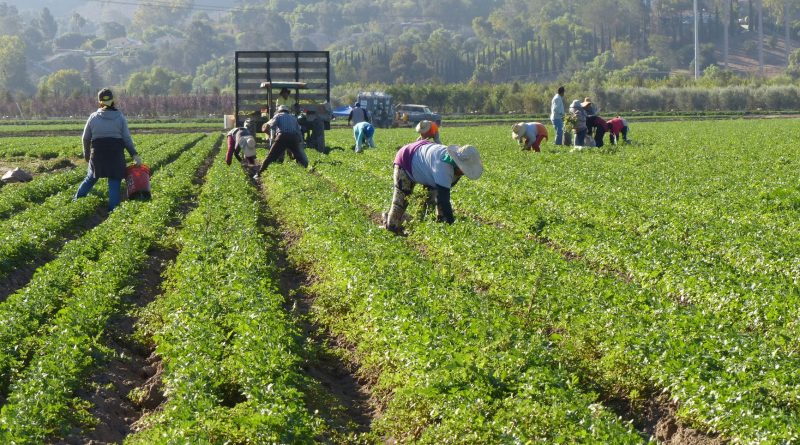
farm agriculture field California — Photo by Circe Denyer via Pexels
Federal Judge Rules Trump Administration’s Farmworker Wage Cuts Unlawful
A Fresno federal judge has ruled that the Trump administration violated federal law when it slashed wages for foreign guest farmworkers — a decision that cut pay for both H-2A visa holders and the U.S. farmworkers who work beside them.
U.S. District Judge Kirk E. Sherriff found Wednesday that the Department of Labor failed to consider whether cutting H-2A wages would harm American farmworkers, as the law requires. The rule, which took effect in October, dropped wages in California from $19.97 to $16.90 per hour — a 15% cut that applied to foreign guest workers and U.S. workers on the same contracts.
“This decision recognizes the important and essential work of the men and women who put food on our tables and that farm workers should get paid fairly,” said Teresa Romero, president of the United Farm Workers, which brought the lawsuit alongside more than a dozen farmworkers from six states.

Judge Sherriff ordered the Labor Department to create a new wage formula that actually protects U.S. workers, as federal law demands. He also directed the agency to notify employers that they may owe back pay to both H-2A workers and American farmworkers if the corrected wage rates are higher than what they’ve been paying.
The rule remains temporarily in effect while the agency develops a replacement — meaning the lower wages continue for now, though employers face potential back-pay obligations once a lawful rate is set.
The Breakdown
- The Trump administration’s rule cut H-2A guest worker wages by $3 to $7 per hour, depending on the region
- In California specifically, the hourly rate fell from $19.97 to $16.90 — affecting both foreign visa holders and U.S. workers doing the same jobs
- The Department of Labor estimated the rule would save employers $2.46 billion yearly; the union called it “a transfer of wealth from the workers to their employers”
- Judge Sherriff ruled the agency failed to reasonably consider whether the cuts would harm U.S. farmworkers’ wages, as federal law requires
- The Department of Labor must now create a new methodology for setting H-2A wages that satisfies that legal requirement
- Employers may owe back pay to both H-2A and U.S. workers once corrected rates are issued
What This Means for You
The H-2A program — and how much it pays — is set by the federal executive branch, not by employers acting on their own. That means the wage floor for foreign guest workers is a direct policy choice made by the administration voters elected in 2024. When that floor drops, U.S. farmworkers on the same contracts see their own pay drop to match it, as the lawsuit documented in California.
This ruling says the administration’s method for setting that wage floor broke the law. But the lower wages remain in place while the agency rewrites its formula — so the effect of that 2024 vote is still playing out in farmworkers’ paychecks right now, and will continue until the corrected rate is issued and any back pay is made whole.
What to Watch
The first question is whether the administration appeals. The Department of Justice did not respond to a request for comment on that — and this is the second time a UFW lawsuit has blocked a similar Trump-administration wage cut, the first attempt coming in 2020.
The second is what the “corrected” wage formula actually looks like when the Labor Department produces it. Judge Sherriff ordered the agency to satisfy its legal duty to protect U.S. workers’ wages — but he didn’t specify a dollar figure or a method. That leaves the same administration that wrote the original rule now tasked with writing its replacement, under court supervision.
The third is back pay. Employers were told they may owe the difference between what they’ve been paying and whatever the new lawful rate turns out to be — but “may owe” is not the same as a payment already issued. Whether workers actually see that money, and how long it takes, is worth following.
Finally, the tension named by plaintiff Crisanto Serrano: “More growers just want to hire H-2A workers, who they can keep trapped on their property, instead of us local workers, who live here and who pay taxes here and have decades of experience.” The wage rate is one lever, but the program’s structure — tying a worker’s visa to a single employer, with deportation as the consequence of losing that job — is another. A wage increase doesn’t by itself change that imbalance of power, and a program designed that way creates an incentive for employers to prefer the more vulnerable worker over the local one. That’s a feature of the program itself, not just this one wage rule.